This is a busy time for Brother Solomon George of Mukti Aradhnalaya Church in Pitampura. On Good Friday, he leads solemn prayers, when a large number of Christians gather to remember the crucifixion of Jesus Christ. It is a day of reflection, fasting, and prayer.
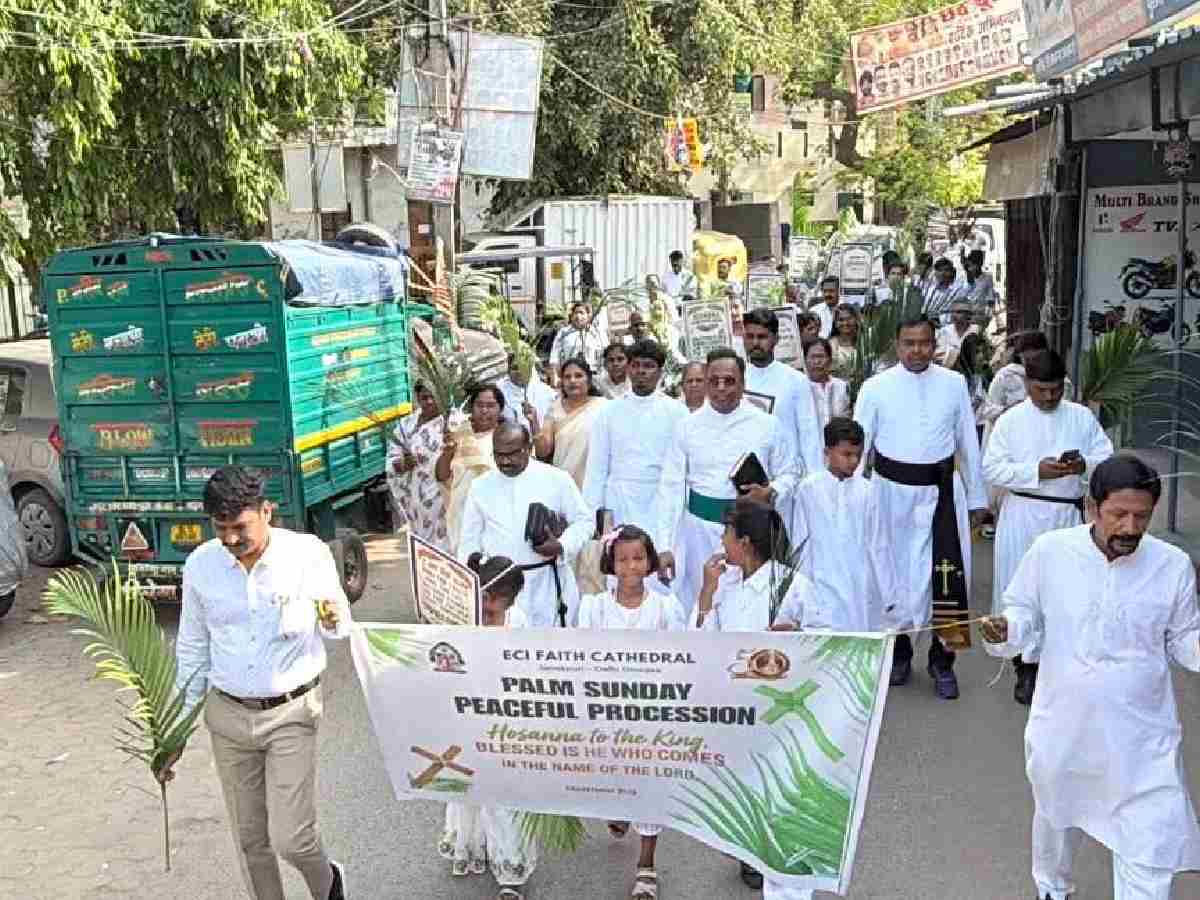
For almost two weeks, Brother George has been meeting people and sending WhatsApp messages, inviting them to join the procession from Karol Bagh’s Baptist Church to Christ Methodist Church at Tis Hazari on Palm Sunday. For nearly 80 years, people of all age groups have taken part in this procession. They sing hymns and carry the cross. Both Karol Bagh and Tis Hazari have large concentrations of old Christian families in Delhi.
Such processions take place across the capital, though the Karol Bagh–Tis Hazari procession is among the largest.
“This observance traces its roots to the story of sacrifice that has travelled through centuries and continents to find a home in India’s diverse capital,” says Brother Solomon.
Good Friday falls on the Friday before Easter Sunday and commemorates the day Jesus was crucified at Calvary. In Delhi, this narrative unfolds in a uniquely Indian setting, blending colonial-era churches with local devotion.
The tradition in Delhi has grown alongside the city’s Christian community. Christianity reached these lands early through traders and missionaries, but it took firmer root during British colonial times. Churches like St James’ in Kashmere Gate, built in 1836 by Colonel James Skinner, stand as witnesses to this history. Skinner, an Anglo-Indian soldier, constructed the octagonal church with its golden dome as a personal vow of faith.
“On Good Friday, the compounds of churches fill with families walking the Stations of the Cross. Devotees pause at each station, reading prayers and reflecting on suffering, hope, and forgiveness,” says Rev Dr Norbert Hermen of St Sebastian Church, Tahirpur, Dilshad Garden.
As the morning progresses, the Sacred Heart Cathedral near Gol Dak Khana Place becomes a focal point. This structure, designed by British architect Henry Medd, features white pillars and a dome. The Archbishop often leads the service. The church lights dim, hymns rise softly, and the veneration of the Cross takes centre stage. People kneel — some touching their foreheads to the wood — whispering prayers.
Nearby, the Cathedral Church of the Redemption on North Avenue offers another quiet space. From noon to 3 pm, many observe the Three Hours’ Agony, meditating on Jesus’ last words on the cross. Silence fills the air during these hours. Here, prayers take place under the watch of Paul Swarup, Bishop of Delhi.
“Fasting is central to the observance. Many skip meals or eat only simple vegetarian food until after the afternoon service. Hot cross buns, marked with a cross and spiced with tradition, appear in some homes as a modest break. Families gather later to share stories of faith passed down through generations,” says Ajay Solomon, a transporter.
Delhi’s Christian community is diverse. South Indian communities in RK Puram, Mayur Vihar, and Hauz Khas bring Malayalam- and Tamil-language prayers to churches such as St Thomas on Mandir Marg and the Free Church on Parliament Street.
The tradition’s simplicity is reflected in practices across churches. Statues and images are covered in purple or black cloth, symbolising mourning. Candles are extinguished one by one, representing the darkness at the time of the crucifixion. Yet hope remains — Easter’s promise of resurrection is only two days away. Youth groups sometimes organise community service, visiting the sick or helping the poor.
As evening descends, observances across Delhi wind down quietly. Families return home, carrying the day’s solemnity. Lights remain dim, and conversations turn reflective. The cross, once a symbol of suffering, becomes one of faith and sacrifice.
“In Delhi’s ancient-yet-modern embrace, this Good Friday tradition endures — not as mere ritual, but as a living thread connecting believers to a story of love that changed the world,” says author J Gathia.
From cathedrals to neighbourhood prayer halls, the capital observes Good Friday with quiet dignity. In simple acts and shared rituals, the day serves as a reminder of faith, reflection, and renewal.
Coforge opened its first library in Noida in February 2024; it now claims a combined…
Of the 237 spa centres across 10 zones with valid MCD licences, the South East…
CTI chairman Brijesh Goyal said the Rahul Gandhi rally could affect wholesale and retail markets…
Established to mark the university’s 25 years, Jubilee Hall has witnessed generations of student life.…
Delhi inaugurates the 70th National School Games, hosting over 14,000 participants in 14 sports across…
Delhi High Court asked "Doosra" filmmakers to respond to Sourav Ganguly's plea over alleged violation…



