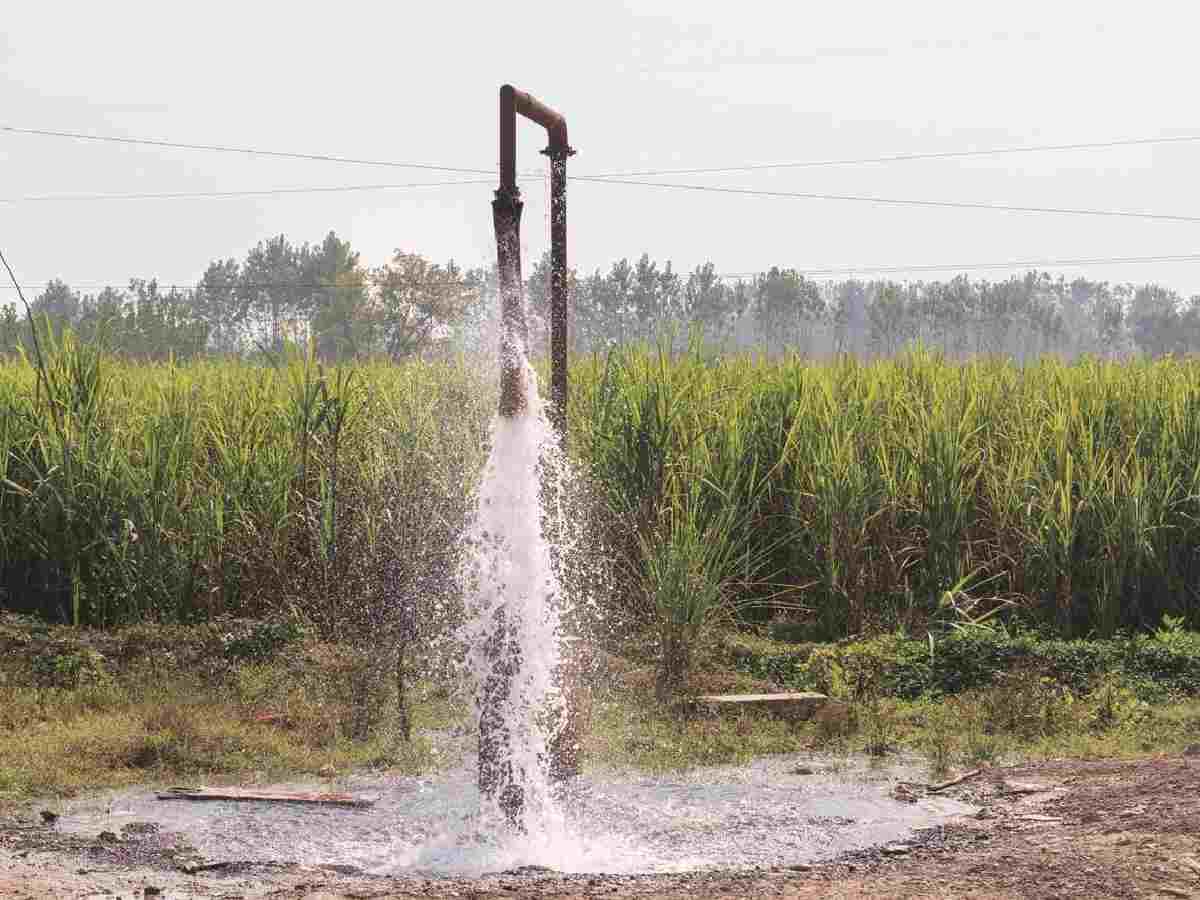
Delhi’s groundwater, a lifeline for nearly 20% of the city’s population that still depends on borewells and tubewells, is now facing a worsening salinity crisis. The recently released Annual Ground Water Quality Report 2025 by the Central Ground Water Board (CGWB) places the national capital among the poorest-performing regions in India when measured by Electrical Conductivity (EC), which indicates the level of salinity and dissolved solids present in water.
The findings are serious. Nearly 33.33% of groundwater samples collected from Delhi recorded EC levels above 3000 µS/cm. This is the maximum permissible limit set by the Bureau of Indian Standards. Water that crosses this threshold is considered unfit for drinking and harmful for long-term agricultural use, soil productivity and aquifer stability.
A snapshot of rising salinity
The report categorises groundwater based on BIS (IS 10500:2012) standards. The acceptable EC limit is 750 µS/cm. The upper limit of 3000 µS/cm is allowed only when no alternative water source is available. In Delhi, nearly one in three samples crossed this higher limit.
Delhi has now become the second-worst region in the country after Rajasthan, where nearly 47% of samples were above the permissible level. For a city already battling fast-depleting aquifers, the continued rise in salinity indicates deepening groundwater distress.
The national average stands in sharp contrast. Across India, only 7.23% of samples recorded EC levels above 3000 µS/cm. Delhi’s proportion is more than four times higher, placing it in a distinctly high-risk category.
Pre- and post-monsoon trends show no relief
One of the most concerning observations in the report is that monsoon rains did little to improve groundwater salinity in the capital. Rainfall normally dilutes contaminants, but in Delhi the opposite trend was recorded.
Across 86 monitoring locations assessed before and after the 2024 monsoon, only a few samples fell within the desirable EC range of less than 750 µS/cm. More than half the samples remained between 750 and 3000 µS/cm, which is technically permissible but far from safe. High-EC samples, meaning those above 3000 µS/cm, actually increased from 37 to 38 after the monsoon.
This slight but significant rise suggests that Delhi’s groundwater recharge is too weak to dilute pollutants effectively. Dense construction, low natural recharge, paved surfaces and existing contamination loads are likely obstructing the natural cleansing cycle.
By comparison, states such as Kerala, Himachal Pradesh and those in the Northeast reported zero exceedances in both seasons. This contrast highlights the depth of Delhi’s groundwater decline.
Environmentalists raise alarm
Earth Warrior, a civil society group, has written to the Delhi Government, the Lieutenant Governor and several authorities to highlight the gravity of the CGWB findings. The group warned that exposure to heavy metals can cause fluorosis, methaemoglobinaemia and chronic health disorders. It also pointed out that the Delhi Jal Board (DJB) operates more than 5,500 tubewells and supplies over 450 million litres of untreated or minimally treated groundwater every day in several parts of the city.
The group has demanded that the government immediately publish updated water quality test results for all tubewells and ranney wells. It has also sought clarity on whether any treatment measures, such as RO filtration, aeration, defluoridation or blending, are being used before supply. One of its key demands is a publicly accessible list of tubewells where no treatment or only basic chlorination is undertaken despite evidence of contamination.
According to the letter, citizens have a right to know the quality of water entering their homes, particularly when scientific data points to widespread chemical pollution. The group has urged authorities to release the information with “the urgency it deserves” in the interest of public health.
Environmentalists outside the group have raised similar concerns. Pankaj Kumar said the combination of rising salinity, chemical contamination, weak monsoon dilution and unchecked groundwater extraction may push Delhi’s aquifers towards a critical tipping point.
“With groundwater already shrinking and becoming increasingly saline and toxic, the capital’s long-term water security stands at serious risk unless immediate corrective measures are implemented,” Kumar said.
Himanshu Thakkar, Coordinator of the South Asia Network on Dams, Rivers and People, said, “The high level of electrical conductivity (EC) in Delhi’s groundwater should be a cause for concern, especially in areas where the trend shows increasing values. While part of the elevated EC levels may be due to natural factors such as weathering and rock–water interactions, overall it is an indication of (A) decreasing groundwater recharge, (B) increasing groundwater extraction, and (C) rising pollution caused by seepage from industrial and urban effluents, along with leaching from solid waste dumping sites.”
Thakkar noted that none of the locations in Delhi appear in the CGWB list of hotspots, even though many sites show high EC levels. He said the fact that some post-monsoon samples recorded higher EC suggests that groundwater recharge is extremely low. According to him, the CGWB should investigate the causes and health implications more thoroughly. He added that it was surprising that CGWB had not issued any alert on high EC levels in Delhi during the period covered in the report.
Doctors warn of health risks
Medical experts have also expressed concern over the deteriorating state of Delhi’s groundwater. The latest CGWB report shows severely high EC levels, which directly affect human health.
“The latest CGWB report is a serious warning for Delhi, as the high Electrical Conductivity (EC) levels show that our groundwater is becoming dangerously saline,” Dr Tushar Tayal, Associate Director, Internal Medicine, CK Birla Hospital, Gurugram, said.
Dr Tayal explained that EC measures how salty or mineral-heavy water has become. Water that crosses 3000 µS/cm is unsafe for drinking and even harmful for crops. “In Delhi, one out of every three samples has crossed this limit, a clear sign that our groundwater is becoming too saline to use safely,” he said.
He added that high-salinity water can strain the kidneys, raise blood pressure, corrode pipelines and degrade soil fertility. The fact that Delhi’s numbers are more than four times the national average makes the situation even more alarming. According to him, poor rainwater harvesting and the mixing of wastewater have aggravated the crisis.
Also Read: Only one in three disabled in Delhi eligible for workplace compensation
Dr Tayal also warned that consuming saline water can increase the risk of hypertension, kidney disorders and other health complications. The crisis is likely to worsen unless immediate steps are taken to manage groundwater sustainably.
Dr Goma Bali Bajaj, Consultant and HOD, Emergency Department, Fortis Hospital, Greater Noida, said the salinity crisis will have serious agricultural and economic consequences as well. She explained that soil degradation and reduced crop yields will threaten food security and livelihoods. Households and farmers will face higher expenses for water treatment, healthcare and agricultural inputs. She added that the long-term depletion of freshwater resources poses a threat to future generations.
“There is an urgent need for sustainable groundwater management and strong salinity-mitigation strategies, including large-scale rainwater harvesting, revival of lakes and ponds and strict control on borewell usage, before the situation becomes irreversible,” Dr Bajaj said.
Elected to the Delhi Golf Club general committee, Mansher Singh says he wants to build…
A $780 million market built on pavements, where the pleasure of reading meets the price…
Supreme Court advocate Abhishek Pawar alleges women were denied washroom access for seven to eight…
Each day of closure costs shops in Khan Market and Connaught Place between Rs 60,000…
Delhi generates nearly 15,000 tonnes of waste daily, prompting the government to deploy 1,000 mechanical…
Delhi Police has issued an NOC for the Congress rally at Ramlila Maidan on November…
