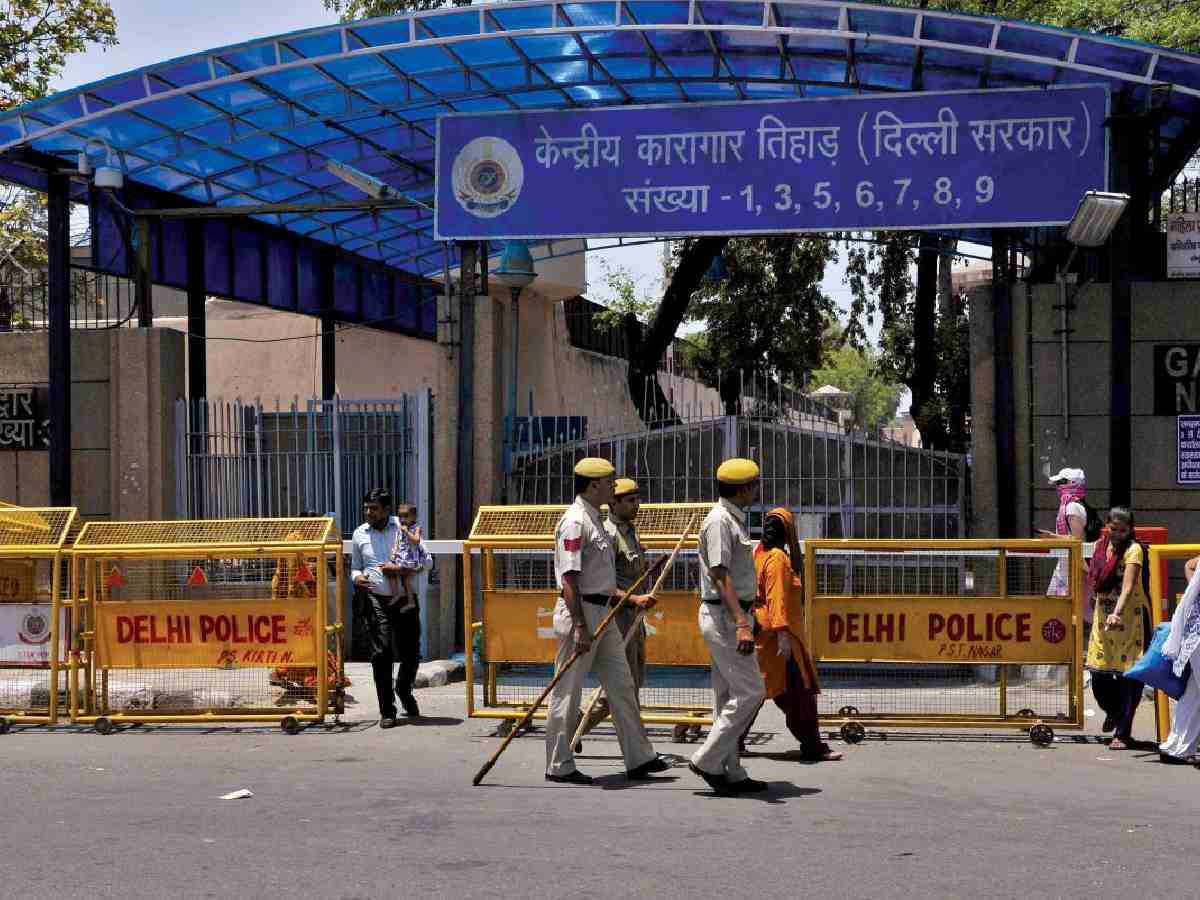
The rising number of deaths in Delhi’s prisons has sparked serious concerns about custodial safety and accountability. India’s largest prison complex, Tihar, has witnessed repeated incidents of deaths, including suicides, over the past months.
Custodial deaths in Delhi prisons spark alarm over safety lapses
On July 14, undertrial prisoner Ramesh Karmakar was found hanging from a window at the prison hospital. Karmakar, who had been lodged in Jail Number 4, was undergoing treatment in the hospital at Jail Number 3 since May 28.
In another case, Saquib Nachan, a terror accused linked to the Islamic State (ISIS), died at Safdarjung Hospital while in judicial custody. Nachan, convicted for the 2002 and 2003 Mumbai bomb blasts, had been lodged at Tihar since 2023. The National Investigation Agency (NIA) described him as a habitual offender and the self-styled Amir-e-Hind of ISIS in India. In June 2024, he was charged along with 16 operatives for allegedly recruiting and radicalising youth and producing improvised explosive devices in the Delhi-Padgha ISIS module case.
NHRC records 15 custodial deaths this year
According to the National Human Rights Commission (NHRC), 15 custodial deaths have been recorded in Delhi between January 1 and July 26, 2025, compared to 23 deaths in the same period last year. While several deaths were due to medical complications, some were suicides, and a few remain unexplained.
The NHRC has repeatedly complained about delayed or missing reports despite mandatory reporting requirements. Deaths at Deen Dayal Upadhyay Hospital prompted the Commission to seek detailed reports from the Prison Department, the District Magistrate, and the Deputy Commissioner of Police (DCP) of West district. None have been submitted so far.
One such case involved the death of Brijesh, an undertrial prisoner who died during treatment on February 27. The NHRC sought a detailed report, including medical records, post-mortem findings, and a magisterial enquiry, but its directive of March 28 was ignored.
Similarly, the death of Mohammed Shabaj on March 19 in Tihar Jail also saw no compliance. The NHRC had set a six-week deadline for the District Magistrate, DCP West, and the Superintendent of Jail Number 3, but no documents were received.
A senior Tihar official, speaking on condition of anonymity, said most reports were prepared on time by the prison department but were delayed at the magistrate’s office. “Hospitals also take time to prepare medico-legal case reports, especially in cases of violence or suicide, which delays our submissions,” the official said.
Ugandan prisoner’s case drags on for months
The custodial death of Moureen Katusiime, a Ugandan prisoner who died on January 10, 2024, remains unresolved. The NHRC has repeatedly complained of missing documents, including medical records, post-mortem reports, and an explanation for a 15-day delay in conducting the post-mortem.
The NHRC noted that while the forensic report cited cardiac arrest due to coronary artery disease, there were no records of treatment for cardiac issues, only for minor ailments. The Commission has warned that if the pending reports are not submitted within six weeks, it will invoke its coercive powers under Section 13 of the Protection of Human Rights Act, 1993.
“Pursuant to earlier directives, the Commission received a magisterial enquiry report and inquest report dated March 24, 2025, from ACJ/ARC, North-West District, Rohini Courts, but some documents are illegible, and the complete medical treatment record and postmortem examination CD remain pending. The Commission now issues a fresh reminder to the District Magistrate, West District, Delhi, the Deputy Commissioner of Police, West District, Delhi, and the Superintendent, Central Jail No. 6, Tihar, to submit or clarify the complete medical treatment record, the postmortem examination CD, and an explanation for the 15-day postmortem delay within six weeks, failing which the Commission will invoke its coercive powers under Section 13 of the PHR Act, 1993,” the order read.
Also Read:Inmate’s Instagram reels reveal smuggling inside Tihar jail
Relatives of deceased prisoners have alleged apathy and delays in handing over bodies. “We kept asking for my brother’s body, but they delayed for over 15 days, saying a post-mortem was pending. It almost felt like they were hiding something,” said a family member of a deceased undertrial.
Custodial safety under scrutiny
The National Crime Records Bureau’s Prison Statistics India report showed Delhi recorded 13 unnatural deaths in prisons in 2022. The recent spate of deaths, coupled with alleged bureaucratic delays and lack of transparency, has further raised questions over custodial safety in the capital’s prisons.
Elected to the Delhi Golf Club general committee, Mansher Singh says he wants to build…
A $780 million market built on pavements, where the pleasure of reading meets the price…
Supreme Court advocate Abhishek Pawar alleges women were denied washroom access for seven to eight…
Each day of closure costs shops in Khan Market and Connaught Place between Rs 60,000…
Delhi generates nearly 15,000 tonnes of waste daily, prompting the government to deploy 1,000 mechanical…
Delhi Police has issued an NOC for the Congress rally at Ramlila Maidan on November…
