“No one truly knows a nation until one has been inside its jails. A nation should not be judged by how it treats its highest citizens but its lowest ones.”
Through this the judgement for the strengthening of the Open Correctional Institutions began. A Nelson Mandela quote that speaks about not just dignity, but the form that is equitable across the board.
Supreme Court flags underuse of open prisons
Earlier, on February 26, 2026, the Supreme Court (SC) observed that Open Correctional Institutions (OCIs), or open prisons, were not being utilised to their fullest capacity. It found that almost none of the States had taken proactive measures to strengthen and ensure the efficient working of the OCI initiative.
Accordingly, the SC has issued directions to all States and Union Territories to expand and strengthen OCIs.
These facilities operate as minimum-security centres without boundary walls or bars restricting the movement of inmates. These prisons also allow prisoners to serve their sentence under minimal supervision while participating in daily activities within the facility. They are permitted to engage in various social activities, which underscores the priority of rehabilitation, personal responsibility, and reintegration into formal society. In such spaces, the bounds of prison walls become almost negligible.
A Bench comprising Justice Vikram Nath and Justice Sandeep Mehta noted that overcrowding remains a critical issue across the country. The Bench recorded that, according to the National Crime Records Bureau’s Prison Statistics India 2023, prisons are operating at 120.8% occupancy, with some States reporting figures exceeding 150%. States such as Uttar Pradesh, Maharashtra, Madhya Pradesh, and Delhi exhibit particularly high levels of congestion.
“Such chronic overcrowding is not merely an index of administrative strain, but has profound implications for human dignity, prison safety, access to healthcare, prospects of rehabilitation, and adherence to the constitutional guarantees,” the judgement read.
However, the judgement also emphasised the necessity of OCIs.
The Apex Court observed that OCIs are financially more viable for States. The study titled The Open Prisons of Rajasthan, published by the Rajasthan State Legal Services Authority, indicates that the monthly expenditure for a prisoner is just around Rs 500, as opposed to Rs 7,094 inside a closed prison. The essence of reform lies at the heart of OCIs.
However, these facts remain engraved only on paper.
Only 3% of Delhi’s open prison capacity used
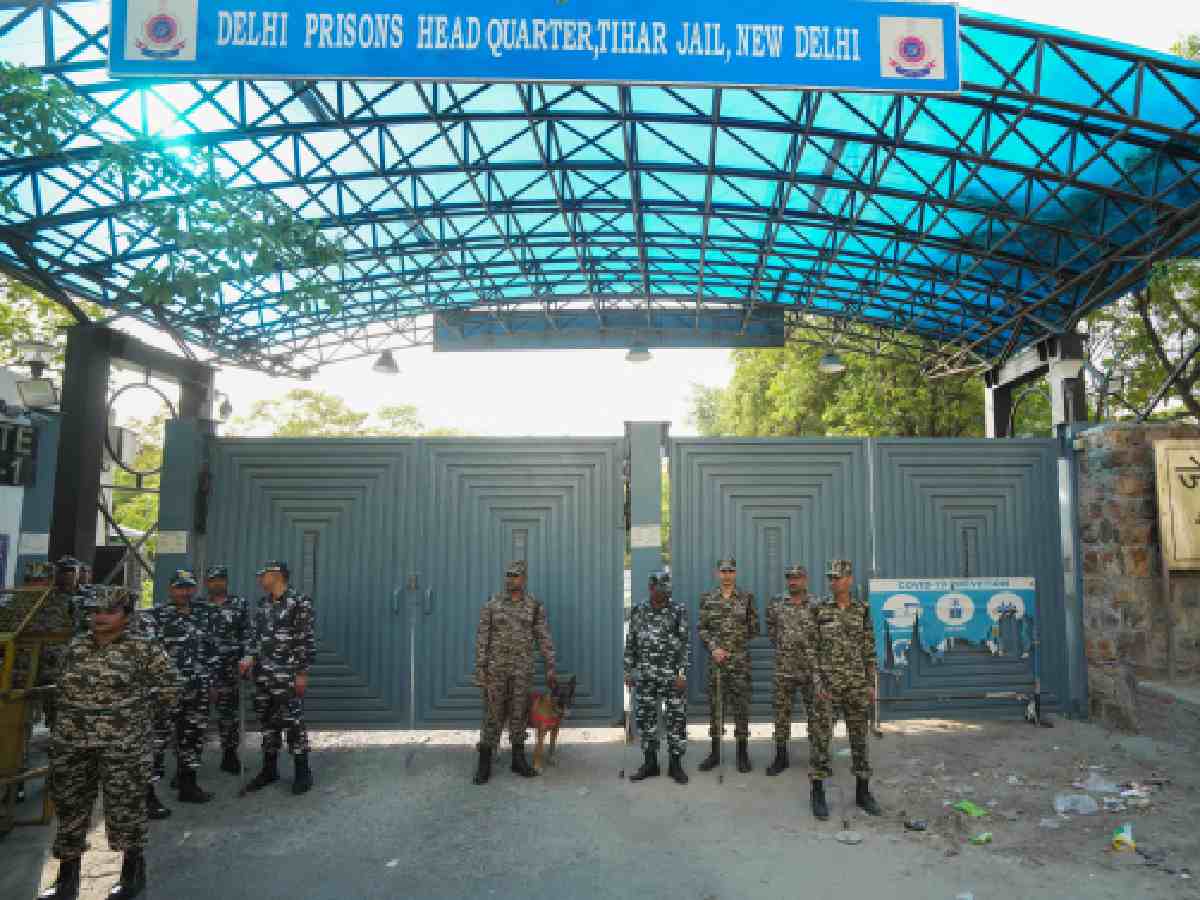
Presently, as of March 10, 2026, there exists one open jail and one semi-open jail for men, and another semi-open jail for women in Delhi, functioning under its Prison Department. However, while present, they remain underutilised. The open jail for men, with a capacity of 100 inmates, according to the National Prisons Information Portal’s ePrisons Live dashboard, has only 11 persons living inside. The semi-open jail for women currently has no inmates despite having the same capacity.
Thus, out of a total capacity of 300 inmates, only 3.6% of OCI capacity is currently occupied in Delhi. On the other hand, with a total occupancy of 19,790 inmates, only 0.05% of them are registered under OCIs.
Similarly, the total occupancy has crossed the maximum capacity of 10,026 inmates, with present occupancy running just shy of 200%.
The situation is more or less similar across the board. Some States perform better, but none have reached full capacity, apart from Bihar, which has surpassed the maximum capacity of its OCI as well at 136%.
Occupancy rates in functioning open prisons vary widely, with Delhi at the lowest, and roughly 15% in Himachal Pradesh and Uttarakhand. Even in States where the system is more established, such as Rajasthan at 92% and Kerala at 81%, facilities are rarely filled to their intended capacity.
Around eight States, including Arunachal Pradesh, Chhattisgarh, and Jharkhand, along with every Union Territory barring Delhi, currently possess no OCI facilities at all.
Women miss out on reformative spaces
The SC observed separately that there was an absolute lack of representation of women in these facilities. “The data overwhelmingly indicates that the representation of women in OCIs is substantially lower than that of men, reflecting either the absence of facilities for women or their exclusion from eligibility for transfer,” the judgement noted.
While Delhi, along with Karnataka and Tamil Nadu, has provisions for eligibility of women to be transferred to OCI facilities, not a single female inmate was noted during the time of the judgement. On the other hand, nine States, including Uttar Pradesh, West Bengal, and Gujarat, have expressly barred women from OCI eligibility.
The Court has identified this not merely as a statistical anomaly, but as a direct violation of Articles 14, 15, and 21 of the Constitution, asserting that women are bearers of the same fundamental rights to dignity and reform as men.
Furthermore, the potential for rehabilitation is frequently stifled by rigid and archaic eligibility criteria. In many jurisdictions, prisoners must endure between four and twelve years in high-security confinement before even being considered for a transfer.
“The right to reformation, flowing from the guarantee of life and personal dignity under Article 21, inheres in every prisoner, whether convicted or under-trial,” the judgement read.
The Court said denying women this right on “speculative or generalised security grounds” amounts to substituting administrative convenience for constitutional obligation.
“The State must, therefore, evolve gender-sensitive and security-conscious mechanisms that facilitate and enable, rather than frustrate, women’s access to OCIs,” it added, noting that constitutional obligations cannot be made contingent upon institutional convenience.
Presently, the Delhi Prisons Department, alongside all other States and Union Territories, has been asked to provide affidavits on action taken to meet the court’s directions within the next three months (from February 26, 2026).
The Director General of Tihar Central Jail did not comment on the status of the OCIs.
Status of undertrials
On March 9, 2026, the SC broadened its investigation into the failure to produce undertrial prisoners before trial courts, directing all High Courts, as well as police and prison chiefs nationwide, to explain the measures taken to ensure that the constitutional safeguards for incarcerated individuals are not breached.
The Court further requested specific details from High Courts regarding the existence of dedicated virtual courts for the production of undertrial prisoners via video conferencing.
According to the Prison Statistics India report of the NCRB, over 80% of the inmates of Delhi’s central jails are undertrials. Unfortunately, many continue to wait for justice to this day.
Two terror attacks, eight years apart, struck ordinary shoppers and changed festive celebrations in the…
NDMC to build a larger tulip garden with parking at Nehru Park, featuring seasonal blooms,…
A 17-year-old student was found burnt at an east Delhi school, with police probing a…
Delhi's temperature fell to 17°C following overnight rain and thunderstorms, with an AQI of 167…
Coforge opened its first library in Noida in February 2024; it now claims a combined…
Of the 237 spa centres across 10 zones with valid MCD licences, the South East…


