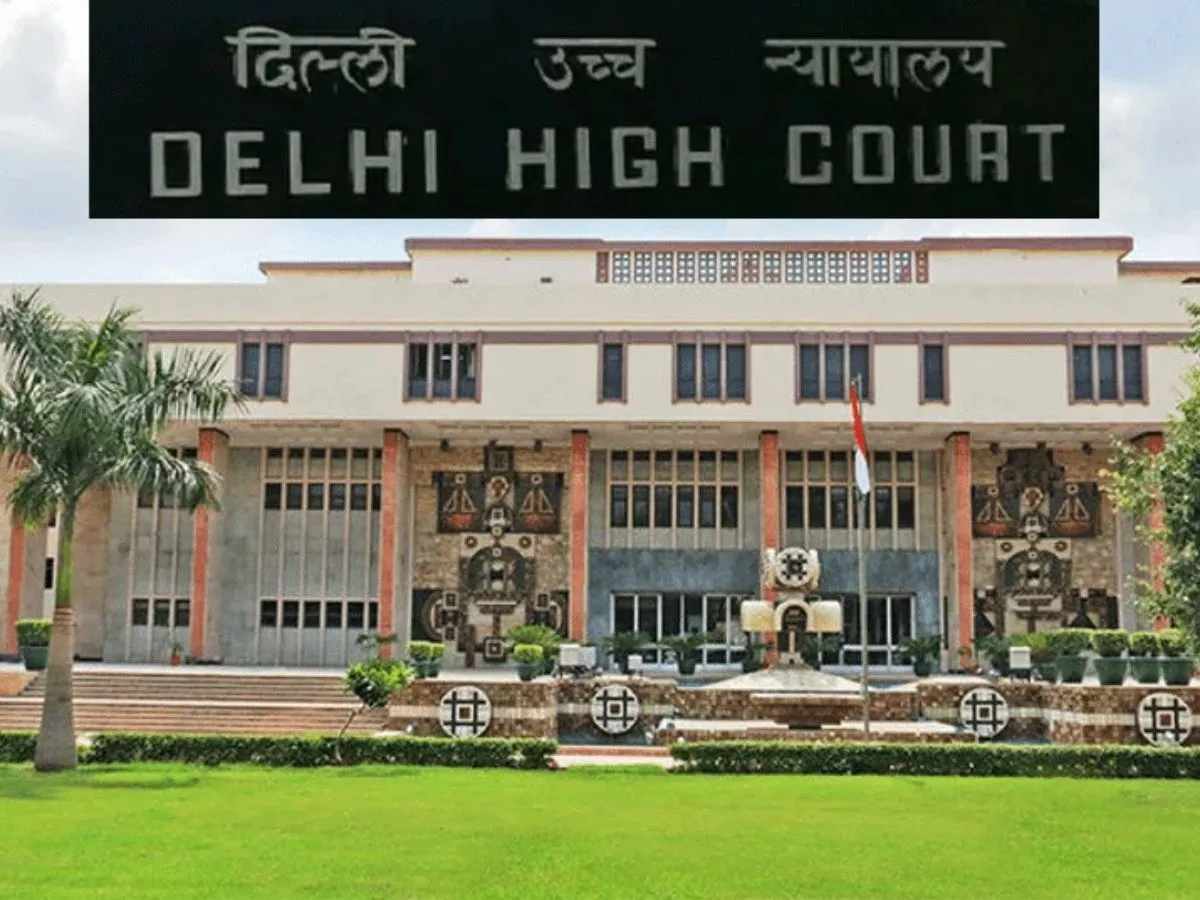
The Delhi High Court has taken note of the rise of offences involving circulation of deceptive messages and links for financial inducements and online frauds, and said they pose a serious threat to public trust and digital safety.
Justice Swarana Kanta Sharma made the observation while denying anticipatory bail to two persons accused of being the “principal architects” of a large-scale conspiracy of fraudulently obtaining SIM cards for cheating and impersonation.
The court observed that the complaints received through the Chakshu module and the National Cyber Crime Reporting Portal revealed that several SIM numbers issued to a company, controlled by the two accused, were used for circulating deceptive messages relating to loans, sanctioned credit and financial inducements, which resulted in monetary loss to the public.
The court stated that the investigation was still at a nascent stage and the custodial interrogation of the accused was necessary to uncover the entire conspiracy.
“Given the seriousness of the allegations, the nature of the material collected during investigation, and the prima facie linkage of the applicants with offences involving misuse of telecom, infrastructure for commission of cyber-crime activities, this Court finds no ground to extend the extraordinary protection of anticipatory bail to the applicants,” said the court in its order passed on January 21.
“This Court is also of the view that offences involving circulation of deceptive messages and links for financial inducements and online frauds are on the rise and pose a serious threat to public trust and digital safety,” it said.
The CBI opposed the pleas for anticipatory bail.
Also Read: Early gains fade as Delhi records rise in road accident deaths in 2025
The agency’s lawyer submitted that thousands of SIMs were obtained by deliberately furnishing false end-user details and by abusing the KYC process.
It was contended that the offence has serious societal impact and it undermined digital safety.
The accused contended that the allegations were inherently untenable, as all 20,986 SIM cards obtained by their company were SMS-only SIMs, procured exclusively for promotional messaging.
It was further said that the Chakshu portal was merely a citizen-reporting platform for suspected spam and did not involve any adjudication, verification of loss or determination of criminal intent.
The accused also refuted the allegation of any organised or systemic fraudulent activity, arguing that even as per the prosecution case, the alleged fraud pertains to only six SIM numbers out of a total of 20,986 SIMs.
Delhi inaugurates the 70th National School Games, hosting over 14,000 participants in 14 sports across…
Delhi High Court asked "Doosra" filmmakers to respond to Sourav Ganguly's plea over alleged violation…
Delhi L-G appointed Paralympian Suvarna Raj as State Commissioner for PwDs following her gold win…
DDA is planning Delhi's longest 24-km cycling track along the Yamuna floodplain, linking key eco-projects…
Police detained several anti-SIR protesters heading to the ECI headquarters in Delhi as mass gatherings…
An exhibition that revisits the significance of Indian Modernism through works from earlier and defining…
