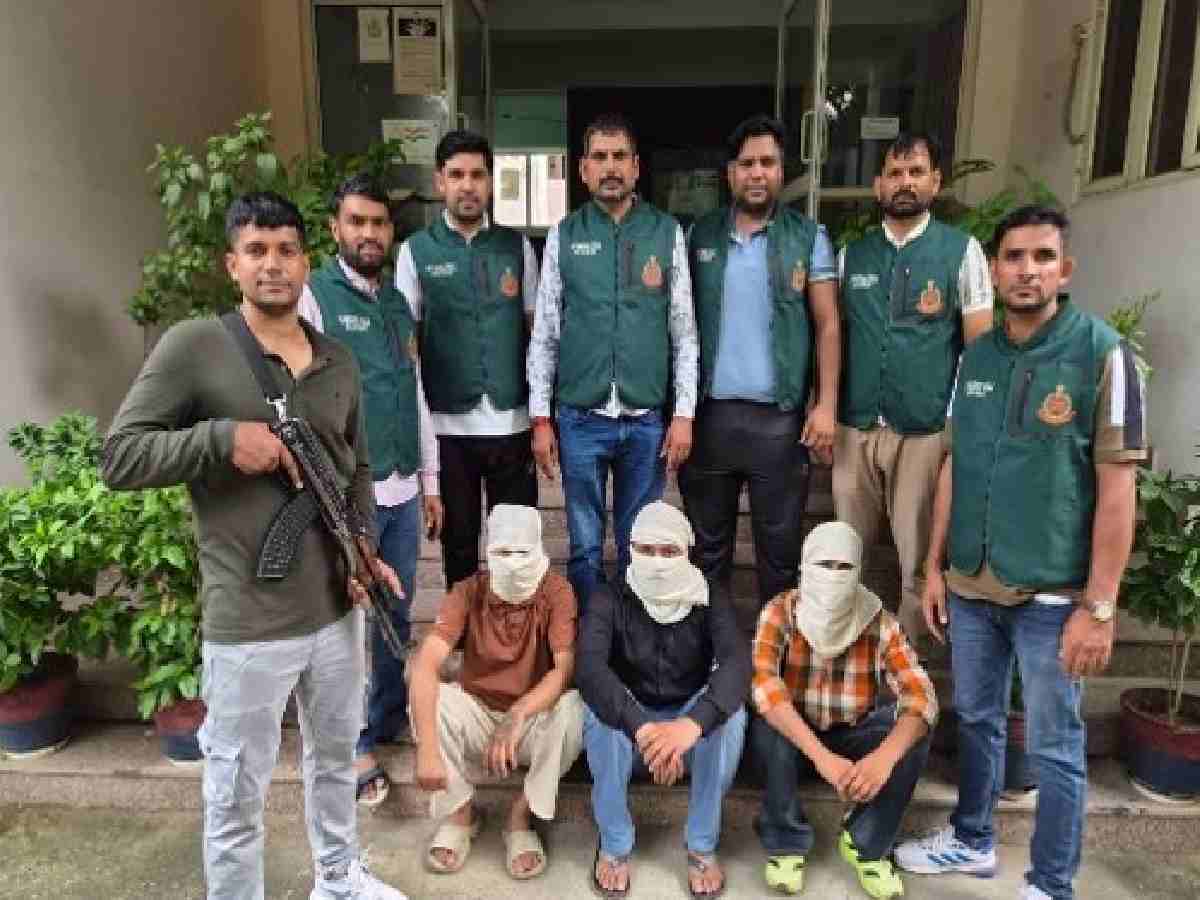
A pair of expensive shoes and a designer cap were the first gifts given to a 17-year-old allegedly recruited by the Dinesh Karala gang. A few weeks later, he received a smartphone. Within months, he was handling a foreign-made firearm in the presence of gang members, according to Delhi Police.
The teenager had reportedly begun consuming drugs under peer pressure. His desire to “look rich” drew him towards Rahul Mathur alias Dogra, described by the police as one of the gang’s most active members.
“A few months later, [the teenager] was holding a sophisticated foreign-made gun in the presence of other gang members,” said Rohini Deputy Commissioner of Police Shashank Jaiswal.
Police say gangs use expensive gifts, luxury goods and access to firearms to recruit young people in outer Delhi and neighbouring Haryana. The recruits are then gradually drawn into drug use and criminal activity.
The recruitment of young people has come under scrutiny amid a series of police operations against gangs operating on Delhi’s outskirts. On August 5, 2026, one such operation led to the arrest of an alleged member of the Neeraj Bawana gang, while another person escaped.
Social media used to attract recruits
According to the police, gangs use social media to intimidate rivals and portray crime as a route to money, status and respect.
“Social media is actively used both to intimidate rivals and influence young people to take up criminal activities. Weapons are displayed on social media platforms to project a dominant image among rival groups and lure young people into a lifestyle perceived as ‘cool’,” Jaiswal said.
In a recent extortion-related firing case in Rohini, investigators found that first-time offenders and other young people had allegedly been recruited through such inducements, a senior police officer said.
The police also monitor photographs and videos showing young people posing with weapons.
“Action has been taken against at least three such accounts in the past two months. FIRs have been registered under the Arms Act, and the posts have either been removed or the accounts deleted,” the officer said.
A senior Delhi Police officer said monitoring recruitment on social media was considerably more difficult than tracking gang activity inside prisons.
“It is extremely difficult to monitor people on social media because there are countless groups, some with hundreds of members. Tracking every individual is a major challenge, but we try our best,” the officer said.
Delhi Police had repeatedly asked Meta to remove or block groups allegedly being used for criminal activity, he added.
“Some groups are private, which makes monitoring more difficult,” he said.
Officials said several groups had been blocked in India following takedown requests from law-enforcement agencies. Users, however, often circumvent these restrictions through virtual private networks.
In the recent extortion-related firing case in Rohini, several of those allegedly recruited through such inducements were first-time offenders, police said.
Foreign-made weapons recovered
Delhi Police arrested Mathur and five of his associates on April 30. Three foreign-made firearms were recovered from them: a Glock pistol, an Italian Beretta and a Turkish-made Zoraki.
“Foreign-made pistols are not very common, but they have been recovered from gangsters in previous cases,” a police officer said.
The officer said the weapons had either been stockpiled for future crimes or procured for resale at a profit.
Police say the Gogi gang continues to wield influence in outer Delhi and neighbouring Haryana through networks involved in land-grabbing and the supply of arms and drugs. Several key members are believed to be operating from abroad.
Jitender Mann alias Gogi, the gang’s former leader, was killed in a shootout inside the Rohini court complex in 2021.
“At present, Monti Maan, who remains absconding, is operating the gang through his associates,” Jaiswal said.
He said gang members Dinesh Karala, Vijay Maan and Manjeet Maan had been implicated in several criminal activities. These included pressuring owners of high-value properties to sell them below market rates and later reselling the properties at substantial profits.
“These tactics are being used to finance their arms and drug supply network, which has interstate linkages,” he said.
More than half of prisoners below 30
Data from the Delhi Prisons Department show that more than half of the inmates in the city’s jails are under 30.
As of August 15, 2026, Delhi’s 16 jails held 20,977 prisoners. Of them, 10,501, or just over 50%, were aged between 20 and 30, making them the largest group.
Another 1,075 prisoners were aged between 18 and 20. Taken together, inmates below the age of 30 accounted for more than 55% of the prison population.
Another 6,749 prisoners were aged between 30 and 40, forming the second-largest group. At the other end of the spectrum, 365 inmates were aged between 60 and 70, while 108 were above 70.
Police officers cited financial hardship, difficult family circumstances, social marginalisation, peer pressure and the portrayal of gang culture on social media as factors that could make young people vulnerable to recruitment.
According to a senior Special Cell officer, gangs in Delhi are increasingly recruiting young people, including juveniles.
“In many cases, they are involved in heinous crimes, including murder,” the officer said.
The officer alleged that gangs exploited the legal protections available to juveniles by recruiting them to commit serious offences.
While juveniles apprehended for offences are sent to observation homes, those aged 18 and above are dealt with under the adult criminal justice system.
“Juveniles return after spending some time in observation homes, but the same is not true for other young people,” the officer said.
A senior Crime Branch officer said the promise of quick money was another powerful inducement.
“There is also the lure of making money quickly. It’s easy money. However, sometimes young people are simply unfortunate enough to fall in with the wrong crowd,” the officer said.
According to Delhi Police, groups and gangsters alleged to have recruited young people include the Lawrence Bishnoi–Goldy Brar gang, Himanshu Bhau, Kapil Sangwan alias Nandu, Manjeet Mahal, Neeraj Bawana and Hashim Baba.
Wider crackdown on organised crime
In January 2026, the Special Cell identified 25 organised crime gangs active across the Capital. Police Commissioner Satish Golchha subsequently ordered a wider crackdown on their networks, associates and alleged financiers.
Such recruitment is not confined to established organised crime groups. Investigators say smaller gangs operating in outer Delhi and neighbouring Haryana also use gifts, displays of wealth and access to firearms to attract young recruits.
NDMA guidelines call for planning and communication before force; a Delhi Police standing order specifies…
Security has been tightened at Noida-Delhi borders ahead of Saturday’s CJP protest, with BSF deployment,…
NDTA advised Connaught Place shops to remain closed on Saturday as a precaution against expected…
Sarai Kale Khan and New Ashok Nagar Namo Bharat stations will close Oct 9–10 for…
Delhi Police deployed heavy security at stations, but valid ticket holders will pass without hindrance…
AISA president Neha Bora urged protesters to continue at Jantar Mantar despite arrests, comparing the…
