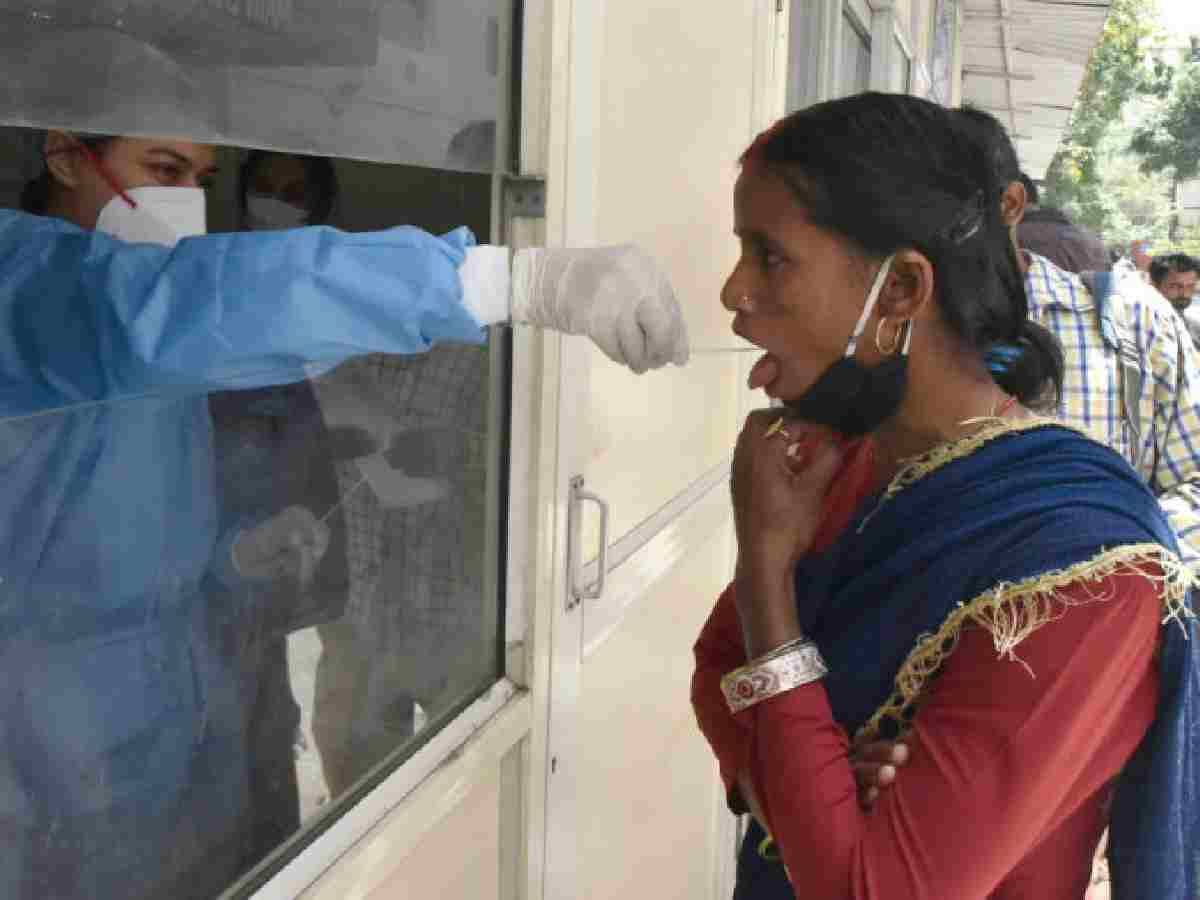
The number of active COVID-19 cases in India has crossed 3,000, with Kerala accounting for the highest at 1,336, followed by Maharashtra and Delhi, Union health ministry data released on Saturday showed.
According to the data, four deaths — one each in Delhi, Kerala, Karnataka and Uttar Pradesh — have been reported in the country in the last 24 hours.
Official sources said the COVID-19 situation in India is being closely monitored.
The severity of infections is low, with most of the patients under home care. There is no reason to worry, the sources said.
There were 257 active cases in the country on May 22. The figure rose to 1,010 by May 26 and reached 3,395 on Saturday. In the last 24 hours, 685 new cases have been reported and four people have died, according to the data.
Kerala has 1,336 active cases, Maharashtra 467, Delhi 375, Gujarat 265, Karnataka 234, West Bengal 205, Tamil Nadu 185 and Uttar Pradesh 117.
Director General, Indian Council of Medical Research (ICMR), Dr Rajiv Behl, on Monday said that genome sequencing of samples in the west and south has shown that the variants fuelling the current rise in cases are not severe and are subvariants of Omicron.
Also Read: ‘No need to panic’: Sr. Consultant, Ganga Ram Hospital on Covid in Delhi
Four subvariants of Omicron — LF.7, XFG, JN.1 and NB.1.8.1 — have been found. The first three have been found in more number of cases, he said.
“We have been closely monitoring the situation. At this moment, overall, we should monitor, be vigilant but there is no cause to worry,” Dr Behl said.
Elected to the Delhi Golf Club general committee, Mansher Singh says he wants to build…
A $780 million market built on pavements, where the pleasure of reading meets the price…
Supreme Court advocate Abhishek Pawar alleges women were denied washroom access for seven to eight…
Each day of closure costs shops in Khan Market and Connaught Place between Rs 60,000…
Delhi generates nearly 15,000 tonnes of waste daily, prompting the government to deploy 1,000 mechanical…
Delhi Police has issued an NOC for the Congress rally at Ramlila Maidan on November…
