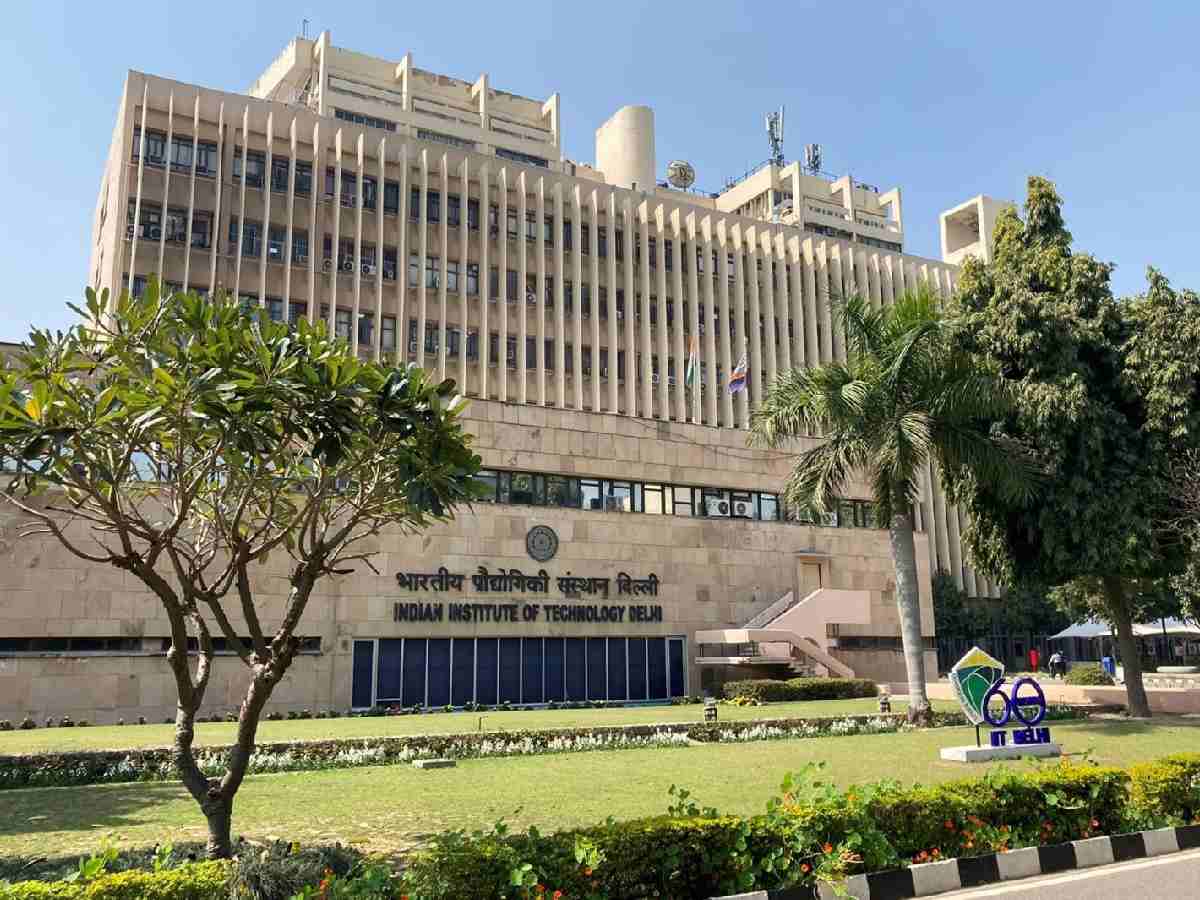
Artificial intelligence is transforming meteorological prediction through innovative approaches to tropical cyclone tracking and monsoon forecasting, two recent studies by the Indian Institute of Technology (IIT), Delhi, researchers have demonstrated.
The studies conducted under Professors Sandeep Sukumaran and Hairprasad Kodamana, have been published in the “Journal of Geophysical Research: Machine Learning and Computation”.
The first study achieved significant advances in monsoon prediction through the application of transformer neural networks. The research team trained their model on a quarter-century of high-resolution satellite precipitation data, enabling the system to accurately forecast monsoon intraseasonal oscillation patterns with an 18-day lead time.
“This represents a substantial improvement over existing dynamical models while requiring dramatically fewer computational resources. The AI system’s ability to reliably predict active and break phases of the monsoon could have profound implications for agricultural planning and water resource management across South Asia,” said PhD scholar KM Anirudh.
For the second study, the researchers conducted a comprehensive evaluation of four leading AI weather prediction systems.
The research team compared the performance of GraphCast, PanguWeather, Aurora and FourCastNet against conventional numerical weather prediction models.
“The AI systems demonstrated remarkable capability in 96-hour cyclone track forecasting, maintaining positional accuracy within 200 kilometres while completing computations in seconds rather than hours.
“The Aurora model emerged as the top performer, with researchers attributing its superior performance to the system’s transformer-based architecture and incorporation of diverse meteorological datasets,” said PhD scholar Pankaj Lal Sahu.
“Notably, these AI models successfully internalised complex atmospheric dynamics, including vorticity patterns and pressure gradients, without explicit programming of physical equations, achieving this through advanced machine learning techniques alone,” he said.
Hariprasad Kodamana, Associate Professor at the Department of Chemical Engineering, informed that the two studies collectively highlight the transformative potential of artificial intelligence in weather prediction.
Also Read: Around 21% of Delhi auditoriums running sans fire safety clearance: DFS
“As extreme weather events become more frequent due to climate change, such AI-powered forecasting tools may prove indispensable for vulnerable communities worldwide,” he said.
Sandeep Sukumaran, Associate Professor at the Centre for Atmospheric Sciences, explained that by combining the accuracy of traditional physical models with the speed and efficiency of machine learning, these systems offer new possibilities for early warning and climate adaptation.
“The research underscores the importance of continued innovation in model architectures and training methodologies to further improve prediction capabilities while maintaining scientific rigour,” he added.
Built on Jawaharlal Nehru’s vision, the Delhi landmark has witnessed the evolution of a young…
Delhi steps up NCR coordination to curb winter air pollution by enforcing strict border checks…
Police probe all angles, including a suspected breakup and CCTV footage, after a Class 12…
Two terror attacks, eight years apart, struck ordinary shoppers and changed festive celebrations in the…
NDMC to build a larger tulip garden with parking at Nehru Park, featuring seasonal blooms,…
A 17-year-old student was found burnt at an east Delhi school, with police probing a…
