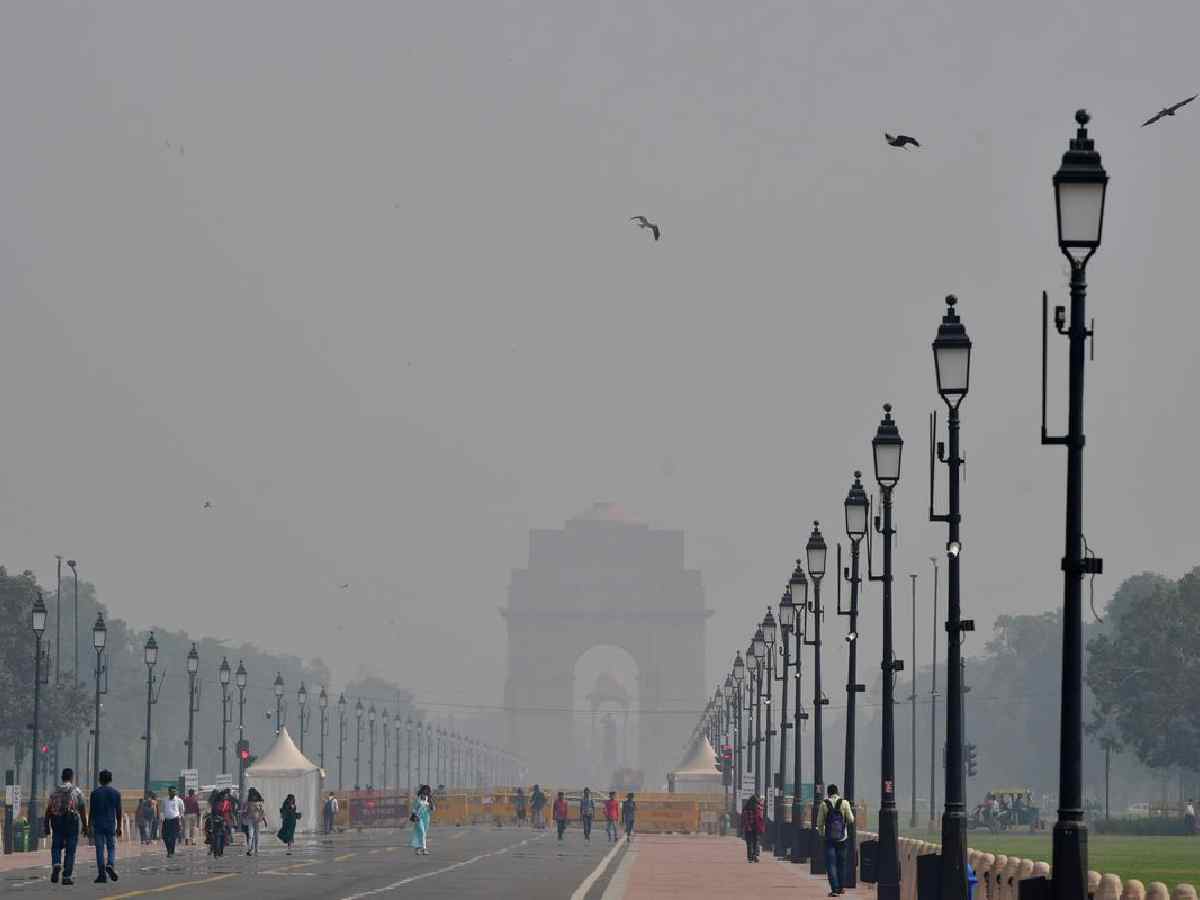
Delhi residents are projected to lose 8.2 years in life expectancy if current levels of particulate pollution in air persist, according to a report.
The Air Quality Life Index (AQLI) report released by the University of Chicago noted that Delhi remains the most polluted city in the world, with average fine particulate matter (PM2.5) levels exceeding the WHO guideline by more than 20 times.
In 2023, the city recorded PM2.5 concentrations of 111.4 micrograms per cubic metre, over 22 times the WHO limit of 5 micrograms per cubic metre.
The report underlined that Delhi residents face the steepest reduction in life expectancy due to toxic air, higher than in any other city globally.
The Indo-Gangetic Plain, which includes Delhi, continues to be the most polluted region, accounting for some of the highest health burdens linked to air pollution.
Also Read: Lapses at India’s busiest airport cause concern
Experts said curbing vehicular emissions, controlling industrial pollution, and addressing stubble burning in neighbouring states, is critical to reversing the health impacts of dirty air in the capital.
The AQLI 2025 report has been prepared by the Energy Policy Institute at the University of Chicago (EPIC).
Based on satellite-derived PM2.5 data, it assesses global and regional pollution levels and their impact on human health.
At least 50 cases have already been reported this month; NCPCR guidelines mandate help desks,…
DMRC says zero reduction in train trips, attributes decline to security measures and public apprehension…
A Delhi court denied bail to a former DU professor accused of raping a student,…
Delhi Police charged seven dhaba workers in the fatal beating of a Manipuri musician who…
Seven Delhi STPs failed DPCC standards in September, dumping high levels of faecal coliform and…
AISA chief Neha Bora petitioned the Delhi HC against a police notice requiring a peace…
