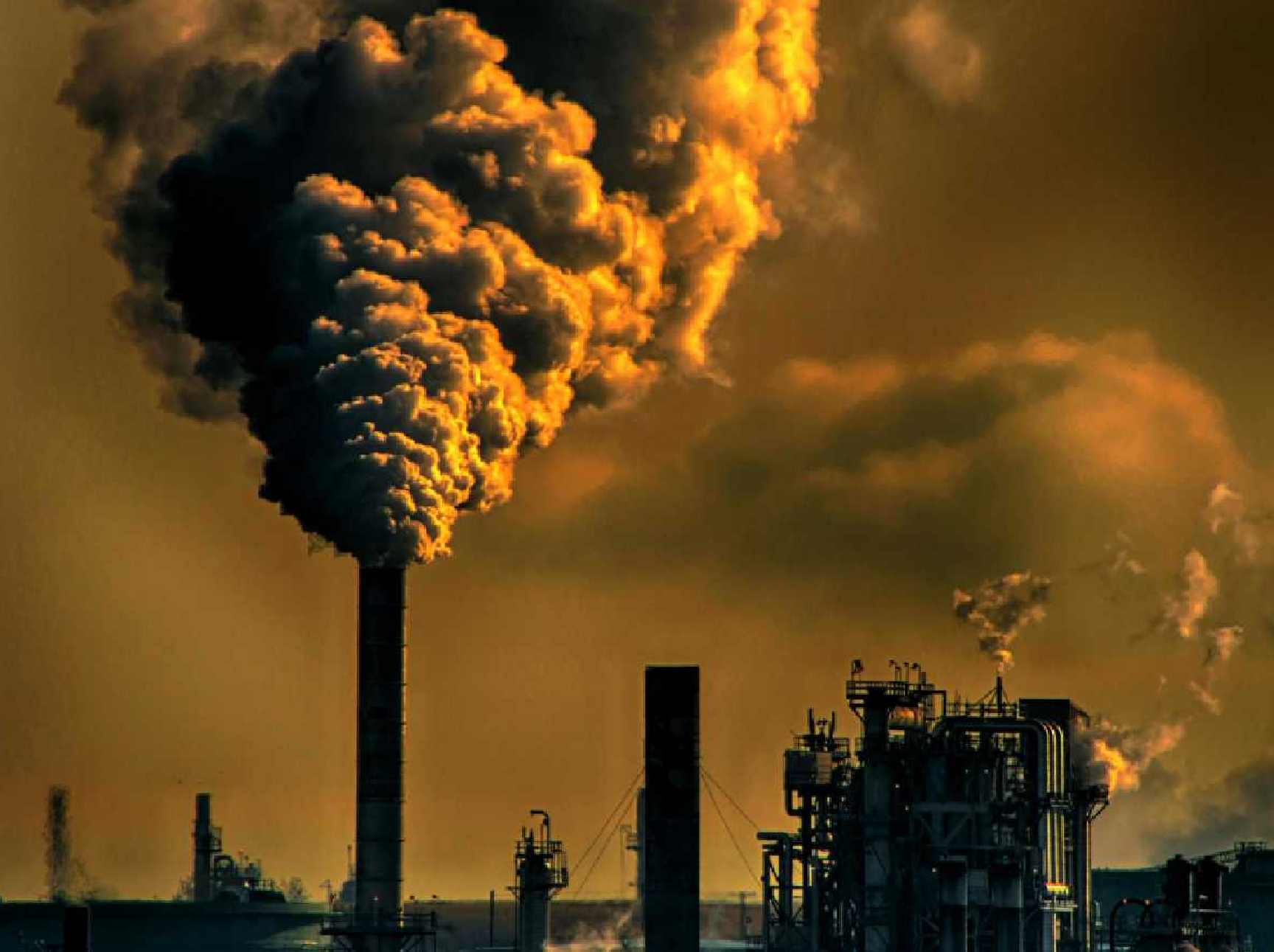
In an effort to address the alarming rise in air pollution levels across the national capital, the Delhi government has identified 13 major “air pollution hotspots” that consistently record higher particulate matter levels than other areas of the city.
“These hotspots — Narela, Bawana, Mundka, Wazirpur, Rohini, RK Puram, Okhla, Jahangirpuri, Anand Vihar, Punjabi Bagh, Mayapuri, and Dwarka — have been demarcated in consultation with the Environment Pollution (Prevention and Control) Authority (EPCA) and the Central Pollution Control Board (CPCB),” said a senior official from the Environment Department.
According to the official, the areas were identified based on annual averages of particulate matter — PM10 exceeding 300 µg/m³ and PM2.5 levels crossing 100 µg/m³ — recorded at monitoring stations within a 2 km radius, established by the Delhi Pollution Control Committee (DPCC).
“The data clearly shows that these zones suffer from persistently poor air quality due to concentrated local sources of pollution,” the official added.
Also read: SC permits sale, bursting of green crackers in Delhi-NCR on Diwali
Targeted action plans
To address this, the government has prepared specific action plans tailored to each hotspot, focusing on identifying and mitigating local pollution sources to ensure visible improvement. “Deputy Commissioners of the respective Municipal Corporation zones have been designated as Nodal Officers for execution. Officers from various departments will support them to ensure coordinated ground-level implementation,” the official said.
Delhi Environment Minister Manjinder Singh Sirsa stated that the government has intensified ground-level measures to curb pollution ahead of winter. “We have undertaken mechanical sweeping of 6,414 km of roads, water sprinkling across 1,247 km using 605 kilolitres of water, and issued over 12,000 challans for pollution-related violations,” he said.
“Our enforcement and monitoring system is stronger than ever — every ward is being digitally tracked, anti-smog guns are operational at all major construction sites, and landfill bio-mining teams are working at full capacity.”
‘The new normal’
Highlighting an improvement in Delhi’s air quality, Sirsa noted that the city has recorded 199 clean air days in 2025, with nearly three months still remaining in the year. “In 2016, Delhi saw just 110 clean air days. The fact that we’ve almost doubled that number shows that consistent and coordinated action is delivering results,” he said.
Sirsa emphasised that the progress was not a result of favourable weather but of deliberate, technology-driven interventions. “This progress is not by chance or due to seasonal winds — it is the outcome of round-the-year planning and execution. Delhi has moved from on-paper promises to tech-based performance,” he said.
“From controlling road dust to large-scale landfill bio-mining, from mechanised sweeping to misting and greening drives, work on air quality management is happening 24×7. Our goal is to make clean air not an exception, but the new normal for Delhi.”
Immediate preventive measures
The government has initiated short-term measures under the plan to ensure immediate impact. These include identifying and removing plastic and garbage dumps, clearing construction and demolition waste, repairing damaged roads and potholes, and decongesting key traffic points to reduce vehicular emissions.
Other active measures include mechanical road sweeping, regular water sprinkling on major roads, and closure of unauthorised and polluting industrial units. Night patrolling teams have also been deployed to check violations related to biomass burning and illegal dumping of debris.
“In parallel, we are focusing on developing greenery and green buffers around identified zones to help absorb pollutants and enhance local air quality,” the official said. “Our priority is immediate mitigation followed by long-term preventive action — ensuring Delhiites can breathe cleaner air.”
Pollution mitigation plan
Delhi Government has launched its Air Pollution Mitigation Plan 2025 — a comprehensive, multi-sector strategy integrating technology, innovation, enforcement, and public engagement to bring down pollution levels across the city.
A senior official described it as “a historic shift from reactive air pollution management to proactive, sustained mitigation,” calling it the most detailed and data-driven roadmap Delhi has ever implemented.
“This plan is not a seasonal firefighting exercise but a year-round strategy aimed at transforming how Delhi manages its environment,” the official said. “It reflects the government’s firm commitment to ensuring that pollution mitigation becomes a continuous and measurable process.”
Dust control and infrastructure upgrades
The official explained that the plan includes 25 key interventions under five broad categories — controlling dust pollution, managing construction and demolition waste, reducing vehicular emissions, regulating industrial pollution, and promoting greenery.
“Dust contributes significantly to PM10 and PM2.5 levels, and we are taking unprecedented steps to address it,” the official said. “We are deploying 200 mechanical road sweepers, 1,000 water sprinklers, and 140 anti-smog guns across the city, with operations monitored via GPS and real-time dashboards. This is the largest mechanised dust-control effort in Delhi’s history.”
He added that Delhi would launch a Start-up Innovation Challenge to find cost-effective dust suppression technologies and conduct a cloud seeding pilot project with IIT Kanpur to study artificial precipitation for dust reduction.
“All commercial high-rise buildings above 3,000 square metres — including malls and hotels — will now be required to install rooftop anti-smog guns throughout the year, except during the monsoon,” the official said. “We are also installing mist spray systems along major roads, especially in the 13 identified hotspots.”
“Road repair and maintenance are being undertaken in mission mode. We are conducting a comprehensive road survey to ensure no road remains broken, unpaved or dusty. Repairing potholes, greening road shoulders and paving central verges will be essential to reducing dust resuspension.”
Construction and waste management
“All construction projects above 500 square metres will now have to be compulsorily registered with the DPCC,” the official said. “Their approvals will be digitally linked to the new AI-enabled C&D Waste Management Portal 2.0 with geo-tagging, automated alerts, and AI-generated compliance reports.”
He added that the Tehkhand facility has increased the city’s C&D waste processing capacity by 1,000 tonnes per day. “In addition, 100% of recycled construction materials will be used in government projects, and we are working with the GST Council to explore tax reductions for recycled products.”
Vehicular emission controls
“From November 1, 2025, all non-BS VI, non-CNG, and non-electric commercial vehicles will be barred from entering Delhi, except those registered within the city,” the official said. “Automated RFID-enabled, cashless toll systems at border check posts will cover 95% of incoming traffic.”
The city will add 5,004 new electric buses, 2,299 e-autos for last-mile metro connectivity, and 18,000 EV charging stations. “Our target is to transition 80% of government vehicles to clean fuels under the new EV policy,” he said.
Intelligent Traffic Management Systems will synchronise traffic lights to reduce idling emissions and congestion. “Truck routes will be rationalised, non-destined trucks diverted, and enforcement against illegal parking intensified. Cleaner mobility is only effective if traffic movement is efficient.”
Landfills and waste-to-energy
“Delhi will be landfill-free by 2028,” the official said. “We have set clear timelines for 100% biomining of legacy waste — Okhla by 2027, Bhalswa by December 2027, and Ghazipur by September 2028. New waste-to-energy and bio-CNG plants will handle waste more efficiently.”
The Okhla waste-to-energy plant will expand to 2,950 tonnes per day, while another 3,000 TPD facility at Narela-Bawana is underway. “We are also focusing on source segregation — targeting 85% waste separation and 100% bulk waste processing,” the official said.
Also Read: Delhi’s fragile foundation: 55% surge in building collapses exposes civic failures
Industrial and greening measures
“Continuous Emission Monitoring Systems will be installed in all targeted industries, and the data will be made public to promote transparency,” the official said. “Strict enforcement will ensure that coal and other banned fuels are completely phased out.”
The new industrial policy encourages a shift from polluting manufacturing to green industries, with infrastructure upgrades in industrial areas and an e-waste eco-park.
“Under the Greening Delhi initiative, we are planting more than 61 lakh trees, shrubs, and bamboo and distributing 9 lakh saplings free of cost,” the official added. “We are also amending the Delhi Preservation of Trees Act, 1994 to make it more effective and adaptive to modern urban needs.”
Citizen participation and monitoring
“Mitigation cannot be successful without public involvement,” the official said. “We are mobilising citizens through campaigns like ‘Life Without a Poly Bag Challenge’, and community events such as Environment Day and Van Mahotsava. Delhi’s residents are not just spectators — they are stakeholders in this fight.”
To strengthen monitoring, six new air quality monitoring stations are being added, along with a real-time source apportionment system, including a supersite laboratory and mobile monitoring van. “For the first time, we will have continuous, real-time identification of pollution sources in each of the city’s 13 hotspots,” the official said.
Concluding, he added, “The Air Pollution Mitigation Plan 2025 is Delhi’s most ambitious and integrated effort to reclaim its air. Our goal is clear — to make Delhi’s air cleaner, its roads dust-free, and its future sustainable. The fight against pollution is no longer seasonal; it is systemic, data-driven, and unstoppable.”
Elected to the Delhi Golf Club general committee, Mansher Singh says he wants to build…
A $780 million market built on pavements, where the pleasure of reading meets the price…
Supreme Court advocate Abhishek Pawar alleges women were denied washroom access for seven to eight…
Each day of closure costs shops in Khan Market and Connaught Place between Rs 60,000…
Delhi generates nearly 15,000 tonnes of waste daily, prompting the government to deploy 1,000 mechanical…
Delhi Police has issued an NOC for the Congress rally at Ramlila Maidan on November…
