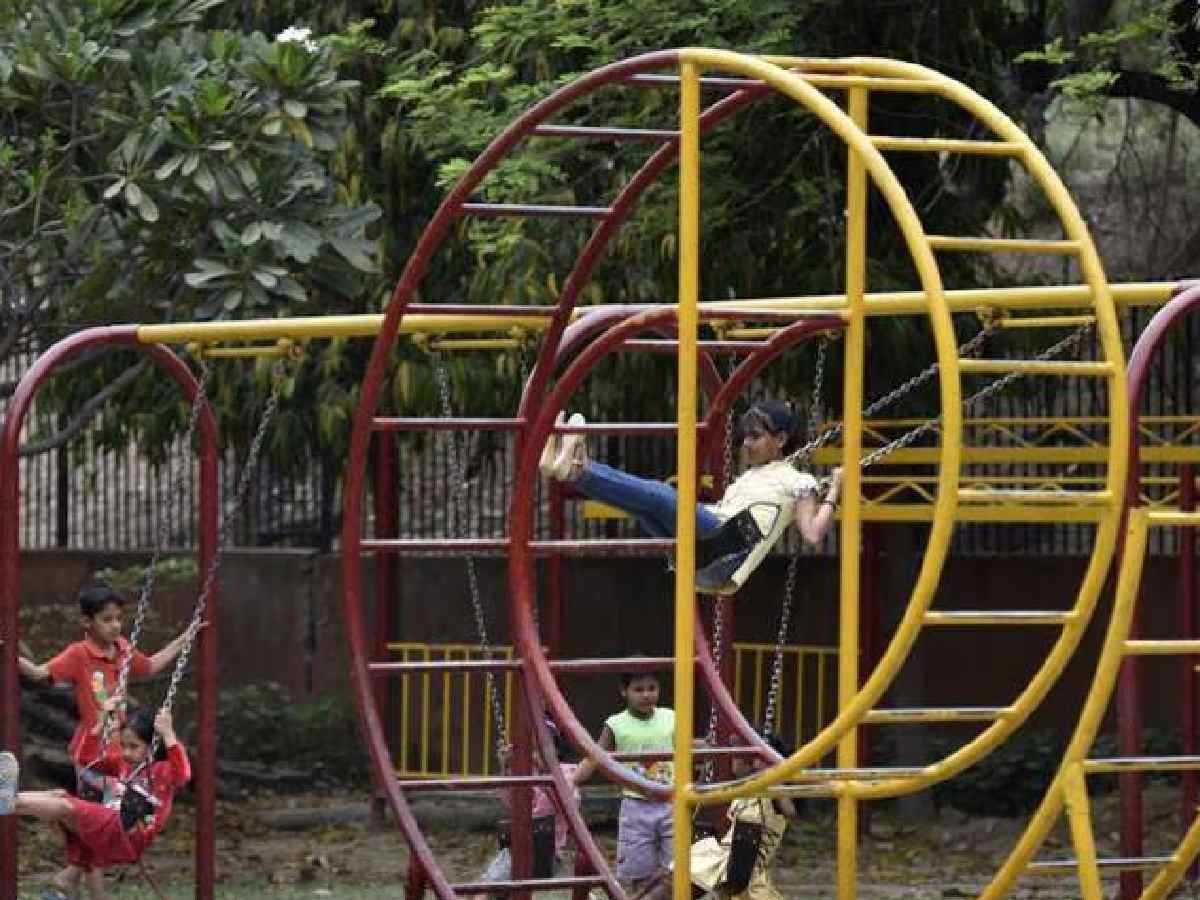
Bringing smiles to children in unprivileged areas, the Delhi government is set to install swings, slides and other play equipment while also renovating parks and shishu vatikas in slum settlements across the city.
The Delhi Urban Shelter Improvement Board (DUSIB) has floated several tenders for the installation of play equipment and repairing the dilapidated structures of shishu vatikas in various Juggi-Jhopri Clusters (JJCs).
The JJCs covered under the initiative include Idgah Road near Sadar Bazar, Goyala Dairy, Shakur Basti and Jafrabad, according to tenders.
The estimated cost of the work is Rs 8.64 lakh in Idgah Road, Rs 9.26 lakh in Goyala Dairy, Rs 8.61 lakh in Shakur Basti and Rs 8.24 lakh in Jafrabad. The work is expected to be completed within 90 days, the tenders stated.
As per an official, the play equipment will include slides, swings, see-saws, as well as more complex structures and also exercise tools.
“We are also planning to renovate and upgrade parks and shishu vatikas in other JJCs. At present, we are assessing the condition in each cluster and identifying areas that need repairs,” an official said.
This initiative is part of the government’s effort to provide better recreational facilities and a safer environment for children living in areas that lack basic amenities.
Read more
Celebrating 60 years of Nehru Park: a modern Indian masterpiece
After an extended rainy season that had kept regulars away, Nehru Park in Delhi is once again bustling with activity. With the skies clear, walkers, joggers, and yoga enthusiasts have returned to this iconic park, established in 1965. In one quiet corner, a reader sits under the shade of a tree, immersed in a novel, adding to the park’s serene charm.
Spanning 75 acres, Nehru Park was developed at a cost of Rs 20 lakh in 1965. Prime Minister Lal Bahadur Shastri laid its foundation on February 25, 1965, and it opened to the public that September. As the park celebrates its 60th anniversary in 2025, it remains a testament to India’s post-independence vision for public green spaces.
Unrest in Kathmandu leaves Nepali diaspora in Delhi fearful and uncertain
Within the cramped lanes of Vasant Vihar, many Nepali nationals in Delhi have built their lives over the years. Yet, even as they find belonging in the city, distance from families across the border weighs heavily, especially as violent protests sweep Nepal.
On September 10, the Nepal Army imposed nationwide restrictions and a curfew following deadly anti-government demonstrations in Kathmandu. The protests forced the resignation of Prime Minister KP Sharma Oli, leaving several buildings ablaze and the nation on edge.
BNSS caps custody at 24 hours and requires production before a Magistrate; force permitted only…
An SEM court reserved its order on extending the judicial custody of CJP leaders Saurav…
Delhi recorded its first 'poor' air day of the season on Wednesday as AQI hit…
Stage I of GRAP was invoked later this year in Delhi due to govt's preventive…
DDA plans to resume tethered hot air balloon rides at Baanseera park from Nov 14,…
NDMC is consulting RWAs and traders on draft 2026 property tax bye-laws, seeking feedback on…
