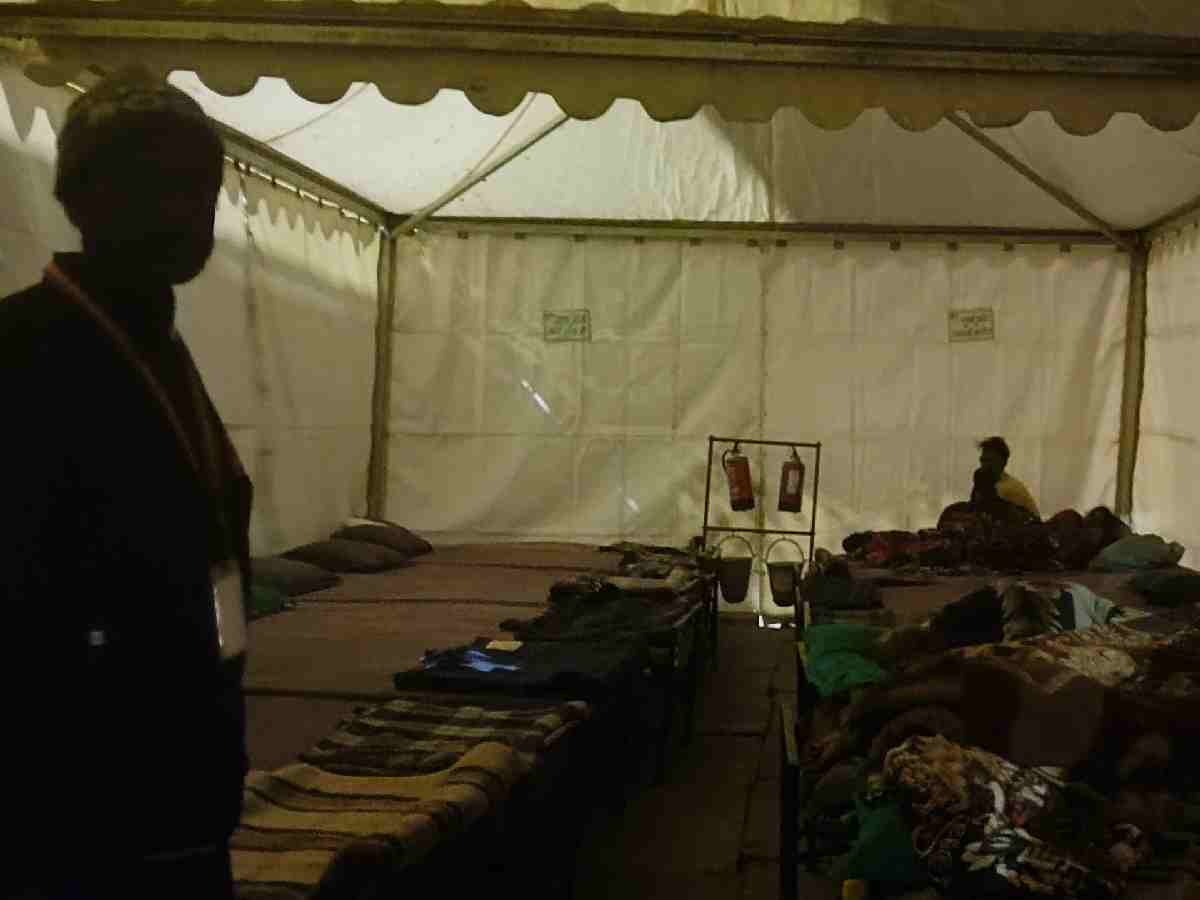
Inside the tent without electricity near Geeta Colony
A field survey of night shelters in the national capital has flagged serious gaps in heatwave preparedness under the Delhi Urban Shelter Improvement Board’s (DUSIB) Summer Action Plan, with nearly half of the cooling infrastructure found non-functional and water shortages reported across several facilities.
The assessment, conducted by the Centre for Holistic Development (CHD) — a Delhi-based NGO — on April 24-25, covered 24 shelters across areas such as Sarai Kale Khan, Jama Masjid, Bangla Sahib, and Mori Gate. The report is titled ‘Field survey report on the assessment of the DUSIB Summer Action Plan 2026-27.’
“Around 50 per cent of cooling units, including fans and desert coolers, were not working, raising concerns as temperatures continue to rise,” the report states.
A senior DUSIB official, speaking on condition of anonymity, said the report has made “unverified claims” and that the situation was “not that dire”.
“The data is not factually correct. Our summer action plan 2026-27 is scheduled to commence on May 15. We have set a deadline of May 10 to correct discrepancies,” he said.
“We agree that there are a few lapses in a few of the night shelters, but they are of a minor nature, and they are being worked upon,” the official said.
At some locations, however, conditions appeared more severe. A shelter at Lahori Gate reported most of its fans and coolers lying defunct, while another at Sarai Kale Khan had no functional coolers. Frequent power tripping at certain shelters worsened conditions, making it difficult to operate any equipment that remained operational.
According to the report, access to drinking water also emerged as a major concern, with about 40 per cent of the surveyed shelters lacking permanent water connections. Several facilities were dependent on tanker supply that arrived only once every two days.
“Shortage of basic medical supplies such as oral rehydration salts (ORS) was also reported at multiple locations,” the report states.
The report claimed two suspected heat-related deaths during the survey period and noted widespread instances of dehydration and skin infections among shelter residents amid limited medical outreach.
The report also highlighted gaps in awareness among staff, with many caretakers unaware of helpline services and mobile applications meant for emergency response and rescue of homeless people.
In a case study cited in the report, a 35-year-old man found in distress near a shelter near Bangla Sahib Gurudwara in central Delhi allegedly did not receive timely medical assistance despite repeated calls for help. He was eventually taken to the hospital only after police intervention, pointing to lapses in coordination between shelter staff and emergency services.
The organisation has urged immediate steps to repair cooling systems, ensure a reliable water supply, provide essential medical kits, and strengthen emergency response mechanisms, warning that delays could put vulnerable homeless populations at greater risk during the ongoing heat wave.
Elected to the Delhi Golf Club general committee, Mansher Singh says he wants to build…
A $780 million market built on pavements, where the pleasure of reading meets the price…
Supreme Court advocate Abhishek Pawar alleges women were denied washroom access for seven to eight…
Each day of closure costs shops in Khan Market and Connaught Place between Rs 60,000…
Delhi generates nearly 15,000 tonnes of waste daily, prompting the government to deploy 1,000 mechanical…
Delhi Police has issued an NOC for the Congress rally at Ramlila Maidan on November…
