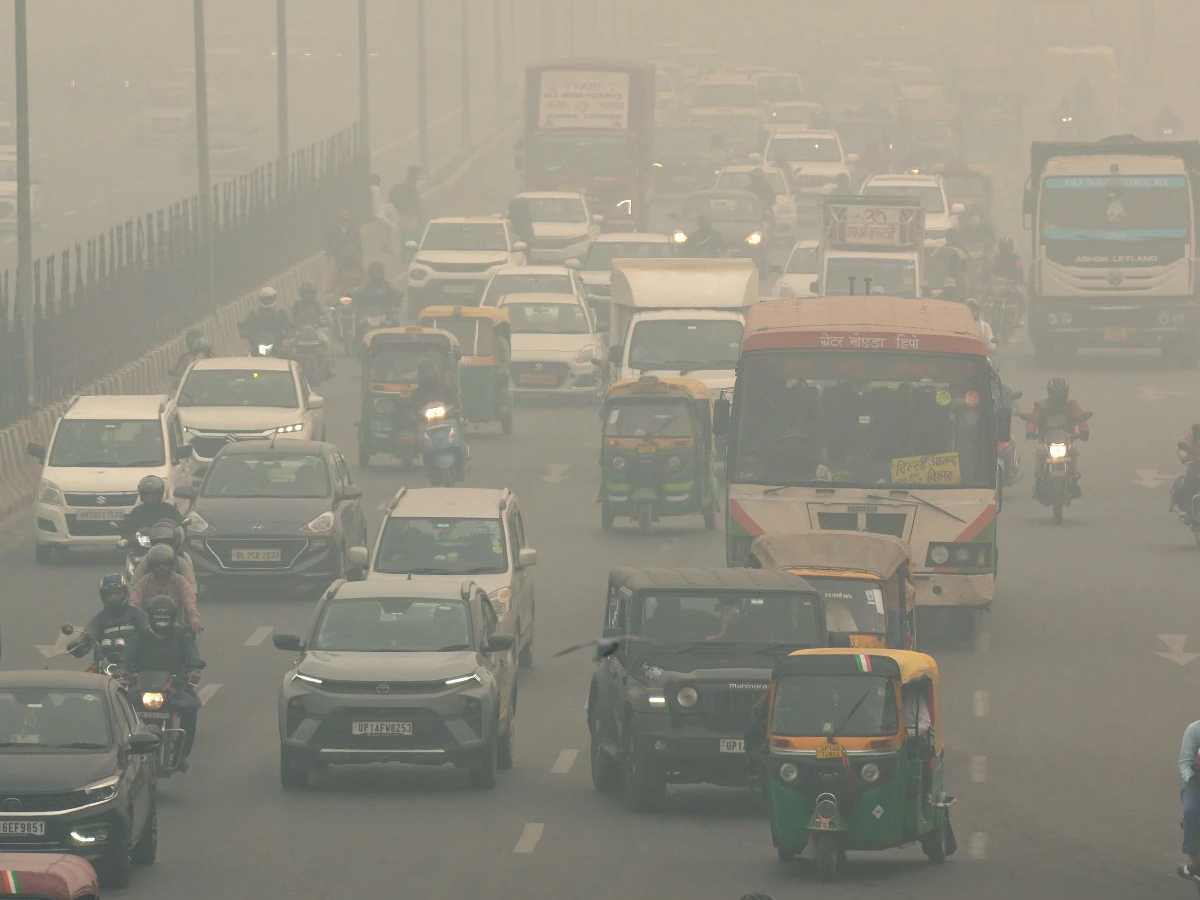
Delhi choked under a thick blanket of smog on Friday, with the Air Quality Index (AQI) settling at 332, in the ‘very poor’ category.
The air quality was ‘very poor’ at 30 stations while it was ‘severe’ at one station, Jahangirpuri, which recorded an AQI of 405.
According to the Central Pollution Control Board, an AQI between 0 and 50 is considered ‘good’, 51 to 100 ‘satisfactory’, 101 to 200 ‘moderate’, 201 to 300 ‘poor’, 301 to 400 ‘very poor’, and 401 to 500 ‘severe’.
Delhi’s air quality is likely to remain in ‘very poor’ till Saturday. The outlook for the subsequent six days also states that the air is likely to remain in the very poor band, according to the Air Quality Early Warning System (AQEWS).
The national capital’s air quality settled at 8 degrees Celsius, 0.6 notches below normal, the India Meteorological Department (IMD) said.
The relative humidity was recorded at 100 per cent.
According to the IMD, the maximum temperature during the day is expected to settle at 25 degrees Celsius.
Read more
Goa nightclub fire intensifies scrutiny of Delhi’s weak fire-safety regime
Goa nightclub fire: A devastating fire at the Birch nightclub in Goa’s Baga–Calangute belt on December 6 claimed 25 lives, according to local authorities. The blaze broke out on December 6 late night while the venue was packed with revellers. Goa Chief Minister Pramod Sawant said that investigators had ruled out the initial suspicion of a gas-cylinder explosion. The fire is now believed to have been triggered by indoor pyrotechnics (“cold fireworks”) used during a Bollywood DJ performance.
Manganese levels surge in Delhi groundwater, posing neurological risks
A national assessment of groundwater quality has highlighted a troubling rise in manganese contamination in Delhi’s drinking water sources. The Annual Ground Water Quality Report 2025 by the Central Ground Water Board (CGWB) shows that 18.60% of pre-monsoon groundwater samples in the Capital exceeded the permissible limit of 0.3 mg/l. Specialists say the findings reflect the increasing stress on Delhi’s depleted aquifers.
Delhi Police busted a visa fraud racket and arrested two men for duping 46 people…
From stuffed naans and chole bhature to dahi bhalla, dosas and kachoris, these five old…
From coffee-infused Indian sweets and chilled desserts to new blends and tasting sessions, these Delhi-NCR…
Delhi CM Rekha Gupta launched an AI control centre to track pollution sources 24/7, including…
From hummus and falafel to salads, pasta and vegetable-led plates, these Delhi-NCR spots offer fresh,…
CP's Inner Circle goes car-free this Sunday for Raahgiri Day, featuring cycling, fitness, and a…
