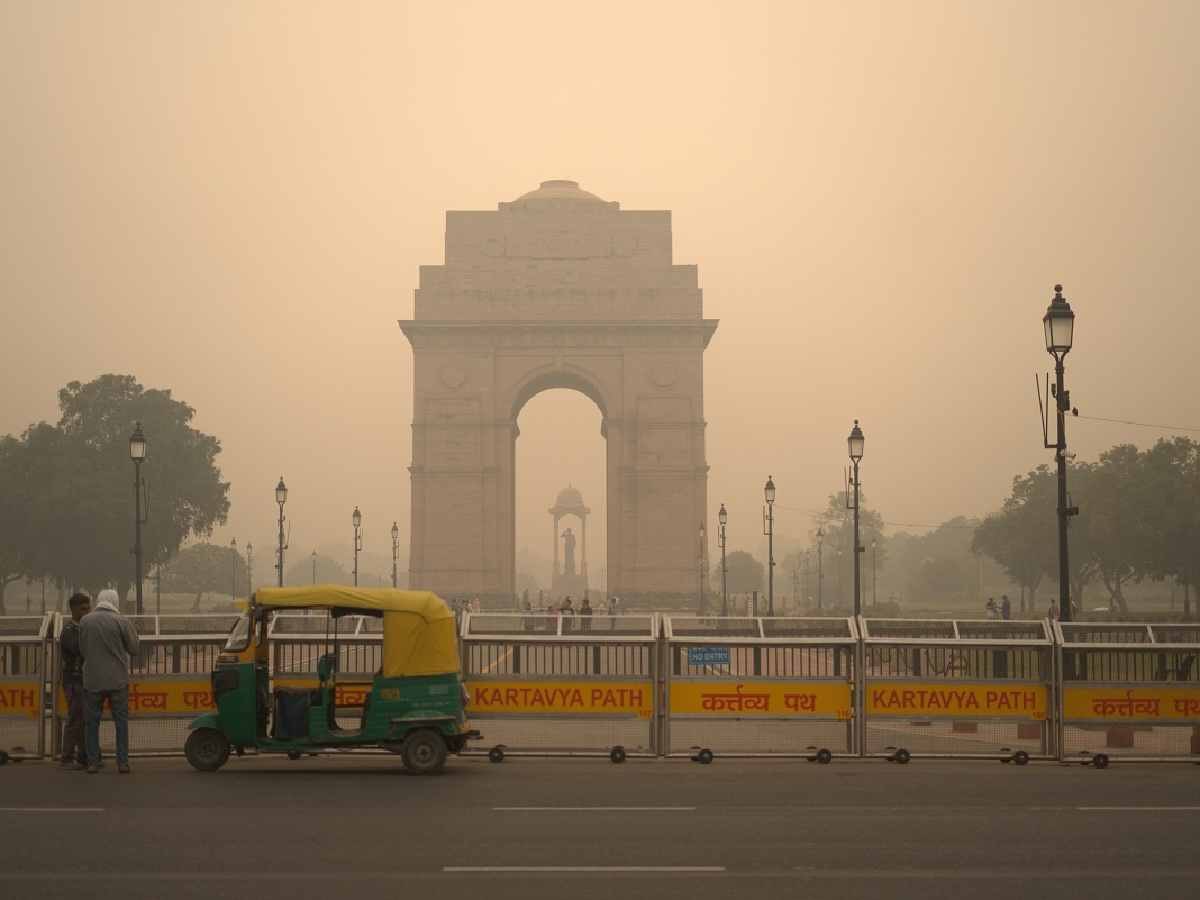
Delhi pollution: Delhi’s air pollution forecasting system could predict “very poor and above” air quality days with more than 80 per cent accuracy in the last two winters, according to a new study published on Wednesday.
The study by Council on Energy, Environment and Water (CEEW) said the city’s Air Quality Early Warning System (AQEWS) successfully forecast 83 out of 92 “very poor and above” episodes (air quality index above 300) in winter 2023-24, and 54 out of 58 such days in 2024-25.
The system also improved in predicting the severe pollution days (AQI above 400). While it managed to correctly flag just one out of 15 such days in 2023–24, the number jumped to five out of 14 in the following winter.
“The high accuracy of Delhi’s early warning systems is a positive sign. Updated emission inventories can improve the accuracy further. It would enable us to have a better understanding of what pollutes Delhi’s air and in what quantities,” said Mohammad Rafiuddin, programme lead at CEEW.
He added that India must scale up such systems with “science, funding and transparency” to strengthen public trust and ensure Delhi’s Mitigation Plan 2025 is based on the best available evidence.
Also Read: Muzaffar Ali: The poet of cinema who painted Umrao Jaan with patience and pain
Eight Indian cities, including Ahmedabad, Pune and Jaipur, already use an Air Quality Early Warning System, with more expected to join under the National Clean Air Programme.
Launched in 2018 after a series of smog episodes and dust storms, Delhi’s AQEWS is run by the Indian Institute of Tropical Meteorology (IITM) and the India Meteorological Department (IMD). It provides pollution forecasts three to ten days in advance.
In 2021, IITM and IMD introduced a Decision Support System (DSS) to pinpoint the sources of pollution contributing to the forecasted levels.
The CEEW study said these tools already meet several global benchmarks of effective air quality systems but Delhi’s DSS currently works only in winter, limiting its usefulness.
To make the system more effective, it recommended running it year-round, incorporating modelling scenarios such as the effect of restricting certain vehicle types or expanding public transport and creating a national emission inventory updated every two to three years with public access to the data.
At least 50 cases have already been reported this month; NCPCR guidelines mandate help desks,…
DMRC says zero reduction in train trips, attributes decline to security measures and public apprehension…
A Delhi court denied bail to a former DU professor accused of raping a student,…
Delhi Police charged seven dhaba workers in the fatal beating of a Manipuri musician who…
Seven Delhi STPs failed DPCC standards in September, dumping high levels of faecal coliform and…
AISA chief Neha Bora petitioned the Delhi HC against a police notice requiring a peace…
