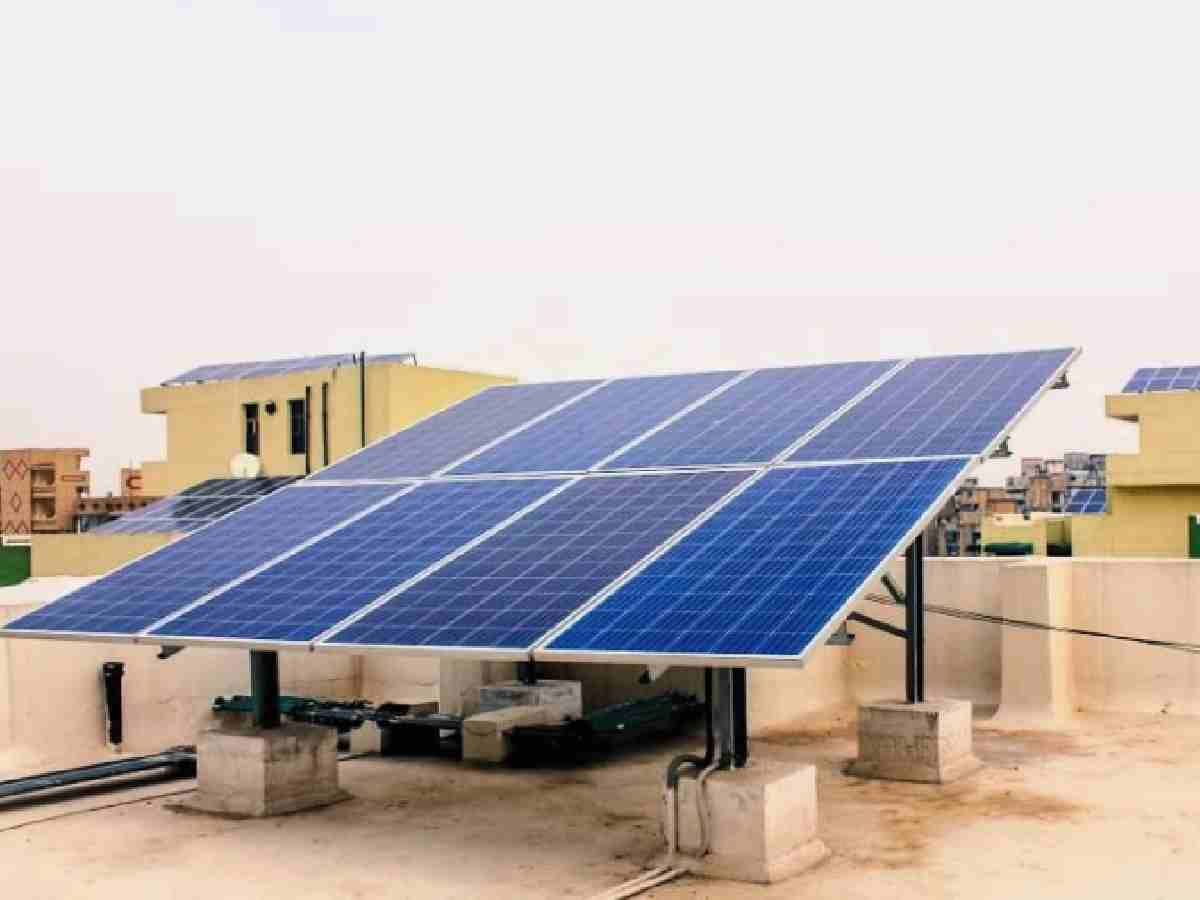
In a major push towards Delhi’s green energy goals, BSES discoms—BSES Rajdhani Power Limited (BRPL) and BSES Yamuna Power Limited (BYPL)—have energised over 10,000 rooftop solar connections across South, West, East and Central Delhi.
According to a BSES spokesperson, this widespread adoption has resulted in a cumulative sanctioned load of approximately 220 MWp, enabling consumers to collectively save nearly Rs 160 crore annually on their electricity bills.
Describing the development as a “game-changer” for Delhi’s energy landscape, the spokesperson said, “Rooftops are the new power plants—and BSES is making it happen. Our sustained push towards decentralised energy generation has allowed more than 10,000 consumers to harness solar power, significantly reducing their dependence on conventional electricity sources. This shift not only helps consumers lower their power bills but also contributes meaningfully towards combating Delhi’s chronic pollution problems.”
Sector-wise adoption
The adoption of rooftop solar has been widespread across sectors, according to the BSES spokesperson. The residential segment leads in terms of the number of connections, with nearly 6,900 installations contributing to 64 MWp of energised load. The commercial sector, however, leads in total connected capacity with 81 MWp, while educational institutions have contributed about 50 MWp.
“Of the total 10,005 connections, approximately 6,854 are in the residential segment, 1,771 are commercial establishments, 981 are educational institutions, 163 are industrial units, and the remaining 236 fall under miscellaneous categories,” the spokesperson elaborated.
From a capacity standpoint, the commercial sector leads with the highest energised load of 81 MWp, followed by residential consumers (64 MWp), educational institutions (48 MWp), industrial units (12 MWp) and others (12 MWp).
Savings and economic benefits
“By adopting rooftop solar, BSES consumers are collectively saving close to Rs 160 crore every year,” the spokesperson revealed. Breaking down the savings across sectors, the commercial segment contributes nearly Rs 80 crore annually, residential consumers save approximately Rs 35 crore, educational institutions about Rs 30 crore, and industrial and other consumers together account for the remaining Rs 15 crore.
A typical 10 kW domestic rooftop solar system, according to BSES, can help a consumer save around Rs 86,400 annually, with every kilowatt generating about 100 to 120 units of electricity per month. “Considering the cost recovery period of three to four years, rooftop solar is an extremely viable investment for consumers,” the spokesperson added.
Role of government policies
The rapid adoption of rooftop solar in BSES areas is largely attributed to favourable policy interventions. Initiatives such as the PM Surya Ghar Muft Bijli Yojana and the Delhi Solar Policy have significantly lowered the financial barrier for consumers wanting to go solar.
Also Read: Yamuna Pollution: Illegal factories pollute river amid civic apathy
“Under the PM Surya Ghar Muft Bijli Yojana, consumers can avail capital subsidies of up to Rs 1.08 lakh, attractive generation-based incentives, and easy financing options, including loans at 6% interest with a 10-year repayment tenure,” the spokesperson said.
In addition to the traditional Capex model, consumers can opt for the Hybrid RESCO (Renewable Energy Service Company) model, which allows installation with zero upfront investment. “Under this model, the system is installed and financed by the vendor, and consumers pay only for the electricity generated, at reduced rates, without owning the infrastructure,” the spokesperson explained.
Another key area of growth has been in Cooperative Group Housing Societies (CGHS). According to BSES, nearly 125 residential societies and apartment complexes have collectively installed over 5.5 MWp of rooftop solar capacity. “This is a clear indicator that community living spaces are recognising the economic and environmental benefits of solar energy,” the spokesperson highlighted.
BSES’ Solar City Initiative
BSES has been proactively driving its Solar City Initiative, which focuses on educating consumers about solar energy benefits while ensuring strict quality compliance for installed systems. “Our solar outreach programme is not only helping consumers make informed decisions but is also streamlining the adoption process by facilitating finance options and ensuring smooth operational execution,” the spokesperson said.
BSES has energised rooftop net metering connections with sanctioned loads ranging from as low as 1 kW to over 4,000 kW, resulting in direct reductions in electricity bills for consumers.
Explaining the financing options, the spokesperson said, “Consumers can choose between two broad options.”
In the Capex model, consumers own the system, benefit from Central and Delhi State subsidies (up to Rs 1.08 lakh), receive generation-based incentives (ranging from Rs 2 to Rs 3 per unit for residential users), and can finance the installation at 6% interest over 10 years.
In the Hybrid RESCO model, no upfront investment is required. The vendor installs and finances the system, and consumers pay only for the power generated at discounted rates.
“In both models, consumers have the potential to lower their billed consumption significantly, possibly bringing them within slabs eligible for Delhi Government’s power subsidies,” the spokesperson added.
Environmental benefits and future roadmap
Beyond financial benefits, the widespread adoption of rooftop solar also plays a significant role in improving Delhi’s air quality. “By substituting fossil-fuel-based power with clean solar energy, we are collectively contributing towards reducing greenhouse gas emissions and alleviating Delhi’s pollution levels,” the spokesperson emphasised.
Looking ahead, BSES is aiming for faster adoption. “Our commitment to decentralised renewable energy sources remains strong. We are constantly working on simplifying processes, enhancing consumer awareness, and collaborating with various stakeholders to push Delhi towards becoming a true Solar City,” the spokesperson said.
“Rooftop solar is not just a cost-saving tool; it’s an environmental imperative. With support from government schemes and increased consumer awareness, we’re confident that the rooftop solar revolution will power Delhi’s sustainable energy future. With rooftops emerging as the new power plants of Delhi, now is the ideal time for consumers to harness solar energy and take charge of their electricity needs,” the spokesperson concluded.
What town planners say
Pushkar Pawar, a town planner with the Municipal Corporation of Delhi, said rooftop solar energy is fast becoming a central pillar of Delhi’s strategy for a cleaner, more sustainable city.
Pawar explained that the capital faces intertwined challenges—air pollution, rising power demand and climate pressures. Decentralised solar generation, he said, allows households and institutions to produce electricity from sunlight, cutting coal dependence, lowering greenhouse gas emissions and improving urban air quality.
He noted that this shift aligns with the Delhi State Action Plan on Climate Change. Net metering, by crediting surplus power exported to the grid, makes adoption more affordable, he added.
Large portions of rooftop space across homes, schools, offices and apartment blocks remain underutilised, Pawar pointed out. These could be converted into productive clean-energy assets.
Challenges and policy recommendations
Pawar cautioned that older, denser neighbourhoods confront structural and spatial constraints. Some buildings lack the load-bearing capacity for panel mounting, while others are shaded by taller adjoining structures or narrow lanes. In shared residential blocks, there is often uncertainty over rooftop ownership or usage rights. These factors, he said, hamper uptake in precisely the areas that need supportive intervention.
He argued that policy attention must extend beyond mandating solar on new constructions. Clear enabling frameworks are needed to retrofit older buildings. He proposed measures such as free or subsidised structural safety assessments, financial assistance for roof strengthening or repairs, expedited approvals and targeted awareness programmes.
A staged approach, he explained, should include verifying solar access (sunlight), confirming structural integrity, undertaking necessary reinforcement and commissioning installation through certified firms. This would make adoption both safer and smoother.
For new developments, Pawar emphasised integrating solar from the design stage so that buildings are “solar-ready”. He said this means having reserved open roof zones, appropriate wiring pathways and adequate structural supports. Photovoltaic electricity generation, he stressed, should be prioritised over solar water heating, as it directly reduces grid dependence and promotes clean power.
Group housing societies, Pawar suggested, can deploy rooftop solar to run lifts, water pumps, corridor and common-area lighting, and even supply individual flats—lowering collective electricity expenditure. To bolster this, he advocated streamlined regulations, financial incentives, awareness drives and wider use of Power Purchase Agreements (PPAs) that allow residents to adopt solar with minimal upfront cost.
Pawar also highlighted the pivotal role of distribution companies—BSES Rajdhani, BSES Yamuna and Tata Power Delhi Distribution Limited—in facilitating grid connectivity, metering, billing integration and net metering benefits.
Town planners and environmental specialists, he added, are essential collaborators. Planners can amend building by-laws to favour solar placement and use spatial mapping to identify high-potential roofs. Environmental planners can oversee responsible end-of-life panel disposal, minimise ecological disturbance and promote equitable access, including for lower-income communities.
Cost and practical requirements
Detailing practical requirements, Pawar said approximately 100 square feet (around 10 square metres) of unobstructed roof space is needed per kilowatt of installed solar. This is sufficient to power core household loads such as lights, fans and a small refrigerator.
He cited typical post-subsidy installation costs in Delhi of Rs 45,000 to Rs 60,000 per kW, translating to roughly Rs 450 to Rs 600 per square foot. A 3–5 kW residential system—appropriate for many households—costs between Rs 1.5 lakh and Rs 3 lakh, with a payback period of four to six years. Thereafter, it can deliver largely free electricity for an additional 15 to 20 years, while also earning from surplus energy exported to the grid.
Summing up, Pawar described rooftop solar as a “smart, clean and cost-saving” pathway that can make Delhi greener, healthier and more resilient. With coordinated support from government bodies, discoms, town planners and environmental experts, he said, both legacy structures and new builds can participate in the transition and collectively contribute to a more sustainable urban future.
BNSS caps custody at 24 hours and requires production before a Magistrate; force permitted only…
An SEM court reserved its order on extending the judicial custody of CJP leaders Saurav…
Delhi recorded its first 'poor' air day of the season on Wednesday as AQI hit…
Stage I of GRAP was invoked later this year in Delhi due to govt's preventive…
DDA plans to resume tethered hot air balloon rides at Baanseera park from Nov 14,…
NDMC is consulting RWAs and traders on draft 2026 property tax bye-laws, seeking feedback on…
