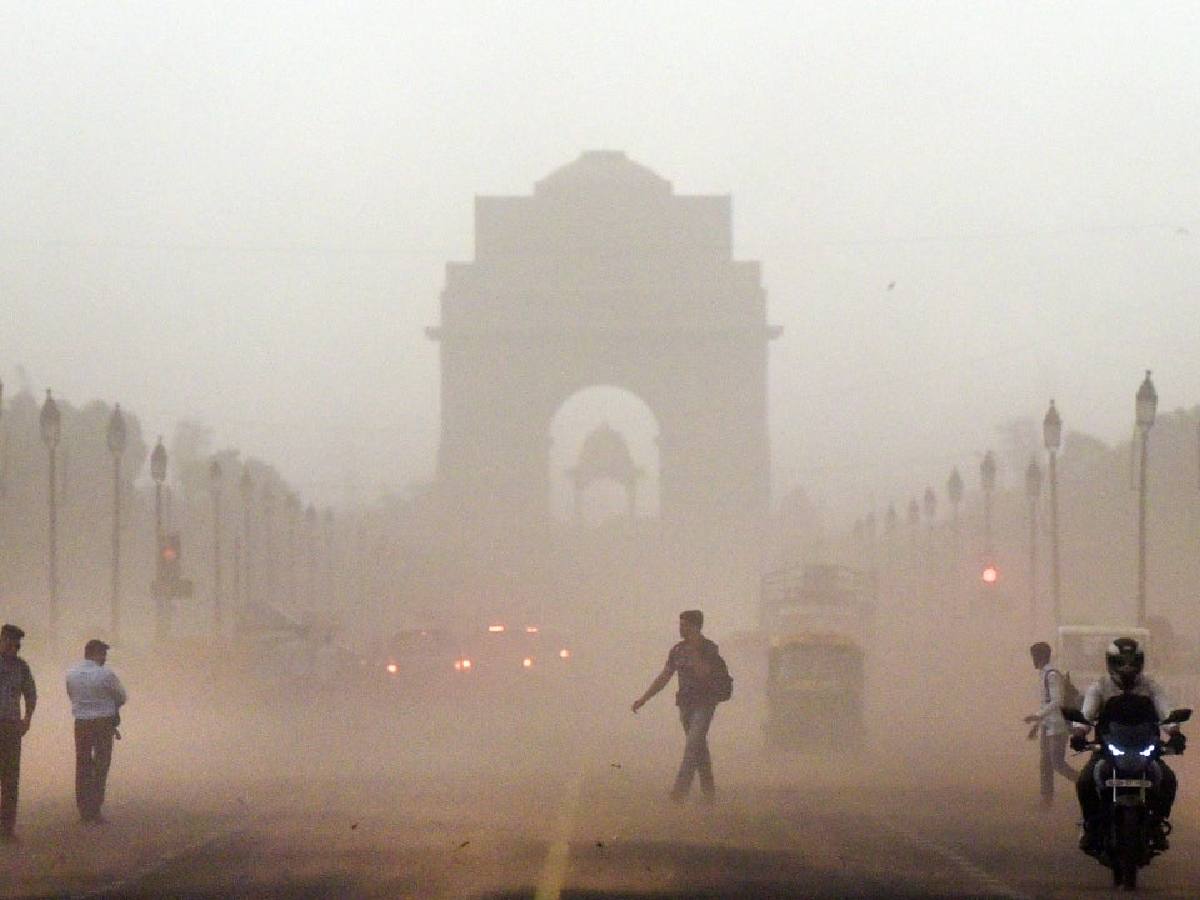
As Delhi’s air quality continues to swing between the ‘severe’ and ‘very poor’ categories, efforts to improve the AQI remain a persistent challenge.
Earlier in October, the Commission for Air Quality Management (CAQM) identified 13 pollution hotspots in Delhi: Anand Vihar, Mundka, Wazirpur, Jahangirpuri, RK Puram, Rohini, Punjabi Bagh, Okhla, Bawana, Vivek Vihar, Narela, Ashok Vihar and Dwarka. Anand Vihar and Mundka had the highest number of pollution sources. This year, 62 sources were identified across the 13 hotspots, compared to 57 in 2024.
Delhi Environment Minister Manjinder Singh Sirsa said on November 15 that PM10 emissions from construction activity, dusty roads and traffic congestion remain the main causes of pollution. He added that the Delhi Government is intensifying efforts to identify and address hotspots.
Sirsa said the sanitation systems and road conditions require “a lot of work”, and noted that gaps in local upkeep were significantly contributing to deteriorating air quality. “The major reason for pollution in Delhi is PM10, which largely comes from construction sites, dust on roads and several other factors. We have identified 62 hotspots where traffic or dust are the main causes, and we are working on them,” he said.
PM10 management and winter smog
Sirsa explained that “PM10 CAQM” refers to PM10 management by the Commission for Air Quality Management, which implements measures under the Graded Response Action Plan (GRAP). These include restrictions on construction and industrial activity, regulating vehicular emissions and deploying anti-smog devices when pollution levels rise.
He said the onset of winter is worsening the situation, as accumulated dust gradually turns into smog. “The battle for a clean Delhi is against 10 major polluting factors. Stubble burning also contributes, but with the sowing season beginning, its impact will start declining,” he added.
He also noted that border areas continue to be affected by emissions from industrial units shifted to neighbouring regions. On November 11, the capital’s average AQI entered the ‘severe’ category for the first time this season — a level last recorded in December 2024. After three days in the ‘severe’ zone, the AQI improved slightly to the ‘very poor’ category on Friday.
Construction-linked emissions around transport projects
CAQM checks found that dust and vehicular emissions were the primary sources of pollution, especially around the construction of the Regional Rapid Transit System (RRTS) between Delhi and Meerut near Anand Vihar, and the UER-II highway at Mundka. Heavy machinery, material movement and prolonged construction work are generating continuous dust in these corridors.
Industrial clusters and factory emissions
Industrial operations in Delhi also contribute significantly to pollution. Wazirpur has numerous factories, including those involved in metalwork, steel and toy manufacturing. Most factories have chimneys, but they are not tall enough to meet government standards. Taller chimneys help disperse pollutants over a wider area, reducing the concentration of harmful substances at ground level and minimising the impact on nearby residents.
According to the Central Pollution Control Board (CPCB), factory chimneys should be at least 30 metres (90 feet) high. However, most of these factories have chimneys that are only about 20 feet high.
Many workers, primarily migrants from nearby states, reside in close proximity to these factories. The high levels of pollution severely impact their quality of life, making daily activities challenging.
Arvind Kumar, a 22-year-old resident, said emissions are worst in the morning and evening when factories close. “Some factories that used to pollute have been shut down,” he said. However, he added that others still make “living here a pain”, with long periods when “breathing and seeing become difficult for hours”.
Residents have complained about eye irritation, but their complaints have not been addressed. The pollution not only affects visibility but also causes temporary blindness at times.
Health concerns and daily exposure
Dheerender Kumar, 42, a resident and factory worker, said that pollution levels had decreased but then spiked again, causing health problems. “At the start of November, pollution was very high. It went down in the middle of the month but then got worse again. This has caused many problems, especially with vision and breathing,” he said.
He added that the problem starts as soon as they leave their houses or the factory. His workplace does not involve smelting or polishing, so there are no emissions inside. But he said that when he steps outside, “a thick layer of dust forms on my eyes”.
“It becomes very hard to see anything. My eyes get red, and even if someone is standing in front of you, it is too blurry to see. The irritation is painful, and it keeps getting worse,” he said.
Similarly, Bhiru Kumar, 32, who lives in the Wazirpur Industrial Area, said pollution levels had increased because the government ignored the area. “Nobody comes here to ask how we are doing. Neither the Delhi government nor the Municipal Corporation of Delhi (MCD) cares about how people in JJ clusters live. This also stops us from complaining because they will not listen,” he said.
Bhiru works at a firm in Gurugram and is concerned about the lack of hygiene in the area, along with emissions from factories. “Most of the dust comes from broken drains and roads. This should have been fixed by now, but nothing has happened. Dust particles stay in the air. Factories make things worse. We just have to deal with the irritation by washing our eyes until it gets better. There is nothing else to do except move out,” he said.
Pollution in Jahangirpuri and Punjabi Bagh
Jahangirpuri, which has many industries, is also a pollution hotspot. The Jahangirpuri Industrial Area has factories involved in spice grinding, metalworks and plastic manufacturing. Because of the variety of industries, the air is usually polluted, especially with constant vehicular movement.
Despite the pollution, residents need these industries for their livelihoods. “It is true that the factories emit harmful pollutants, but many of us depend on them for our livelihood. Sometimes the factories need fewer workers, and during these times, we suffer. For the poor, pollution is not our main concern; we need to think about surviving each day,” said a resident, who wished to remain anonymous.
Pollution also affects areas with ongoing construction. Punjabi Bagh is experiencing multiple construction projects inside residential areas, despite Stage-4 of the Graded Response Action Plan (GRAP) being in place, which prohibits construction work.
Government inaction and local frustration
Anand Vihar has high pollution levels because of the factories, a railway station, a bus depot and its proximity to Kaushambi’s bus terminus. This has made Anand Vihar the area with the highest AQI.
“Most of the pollution comes from Uttar Pradesh’s Ghaziabad. The emissions mix with vehicle emissions from the terminus and railway station, which makes the AQI worse,” said a senior MCD official.
Also Read: Delhi’s air-quality picture remains hazy as on-ground readings differ from official dashboards
Residents believe the government has not done enough to reduce pollution. “It does not matter where the pollution is coming from. The government’s job is to eradicate it, not give excuses,” said Ramani Mehra, a resident.
The highest AQI in November was recorded at Anand Vihar at 423 at 6 pm on Monday, in the ‘hazardous’ category. Jahangirpuri recorded 358, Wazirpur 309 and Punjabi Bagh 273.
DMRC says zero reduction in train trips, attributes decline to security measures and public apprehension…
A Delhi court denied bail to a former DU professor accused of raping a student,…
Delhi Police charged seven dhaba workers in the fatal beating of a Manipuri musician who…
Seven Delhi STPs failed DPCC standards in September, dumping high levels of faecal coliform and…
AISA chief Neha Bora petitioned the Delhi HC against a police notice requiring a peace…
Average AQI of 171 in the first week of this month; falling temperatures and stubble…
