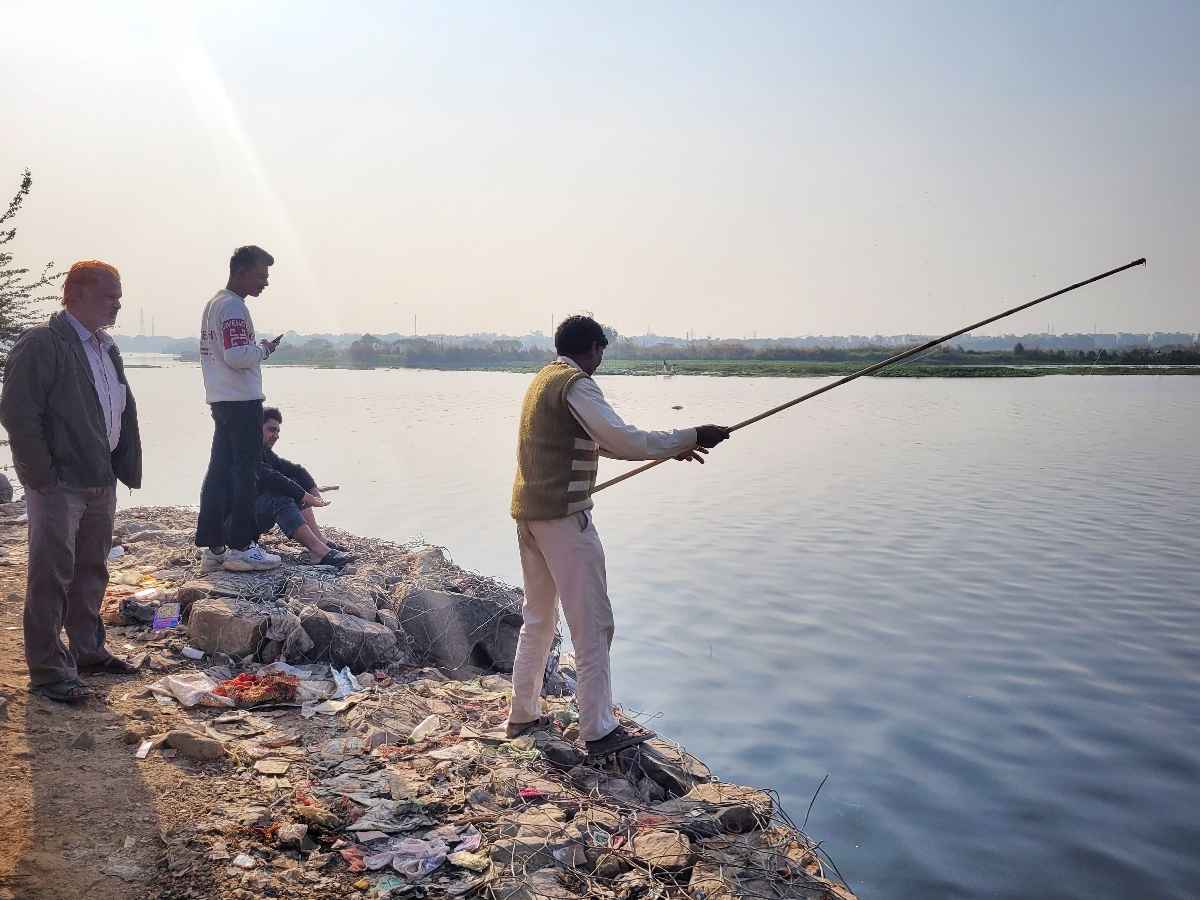
Freshwater fish from Delhi’s stretch of the Yamuna carry significantly higher levels of microplastics than those found upstream in Haryana, according to a University of Delhi study that detected the tiny plastic particles in every fish it examined.
The study analysed 220 freshwater fishes belonging to 12 species collected from four locations along the river, Yamuna Nagar and Karnal in Haryana, and Sur Ghat and Sonia Vihar in Delhi.
Researchers recovered 1,678 microplastic particles from the fish, an average of about 7.6 particles per fish, and found that no fish examined during the study was free of microplastic contamination.
The researchers identified Delhi’s stretch of the Yamuna as a high microplastic contamination zone.
“The findings identify the Delhi stretch of the Yamuna as a high microplastic contamination zone and highlight the combined influence of urban pollution and fish ecology on microplastic bioaccumulation (the gradual build-up of microplastics inside living organisms),” they said.
Fish collected from Sonia Vihar and Sur Ghat contained significantly higher amounts of microplastics than those sampled from the upstream Haryana sites, with the difference found to be statistically significant.
The researchers attributed the higher contamination in Delhi to untreated sewage, municipal wastewater, textile effluents, stormwater runoff and unmanaged plastic waste entering the river.
Among the species examined, tilapia (Oreochromis niloticus) from Sonia Vihar recorded the highest contamination, with 436 microplastic particles recovered from 20 fish, averaging 21.8 particles per fish.
Tilapia from Sur Ghat contained 264 particles, while rohu (Labeo rohita) from Sonia Vihar carried 205 particles, averaging 10.25 particles per fish. The lowest contamination was recorded in needle fish (Xenentodon cancila) from Karnal, with 37 particles recovered from 10 fish.
The researchers found the highest number of microplastics in the gastrointestinal tract (the digestive system), where 751 particles were detected. Another 605 particles were found in the gills and 322 in muscle tissue, suggesting that the particles can move beyond the digestive system into the edible parts of the fish.
The study found that omnivorous (fish that eat both plants and animals) and herbivorous (plant-eating) species generally accumulated more microplastics than carnivorous (meat-eating) and benthic or bottom-dwelling species.
However, the researchers said where the fish lived had a greater influence on the build-up of microplastics than what they ate, with the heavily polluted Delhi stretch consistently recording the highest contamination.
Fibres, or tiny thread-like strands of plastic, accounted for 77.8 per cent of all the microplastics recovered from the fish.
Fragments, or broken pieces of larger plastic items, were the next most common type, while films, foam and microbeads made up only a small share. The researchers said the dominance of fibres points to sources such as synthetic clothing, domestic washing, textile industries and wastewater discharges.
Transparent particles accounted for 44 per cent of the microplastics recovered, followed by blue particles at 19.5 per cent and black particles at 16.3 per cent.
Fish collected from Delhi also showed a greater variety of plastic colours and shapes than those from upstream Haryana, reflecting the higher pollution pressure in the capital’s stretch of the river.
Laboratory analysis identified 10 different polymer types, or types of plastic. Polyethylene, commonly used in plastic bags and packaging, accounted for about 24 per cent of the particles recovered, while polypropylene, used in food containers, bottle caps and packaging, made up around 21 per cent. Together, the two plastics accounted for nearly half of all the particles detected.
Using the Polymer Hazard Index, an internationally accepted scale that ranks the environmental risk posed by different types of plastic, the researchers classified the contamination as ‘Category IV’, indicating a high ecological hazard, or a high potential risk to aquatic ecosystems.
The researchers in the study titled, “Environmental Drivers and Bioaccumulation Pathways of Microplastics in Freshwater Fish from the River Yamuna, India” said the findings underline the need for regular monitoring of microplastics in freshwater ecosystems, stronger wastewater treatment and measures to reduce plastic waste entering the Yamuna to limit further contamination of the river and its aquatic life.
Coforge opened its first library in Noida in February 2024; it now claims a combined…
Of the 237 spa centres across 10 zones with valid MCD licences, the South East…
CTI chairman Brijesh Goyal said the Rahul Gandhi rally could affect wholesale and retail markets…
Established to mark the university’s 25 years, Jubilee Hall has witnessed generations of student life.…
Delhi inaugurates the 70th National School Games, hosting over 14,000 participants in 14 sports across…
Delhi High Court asked "Doosra" filmmakers to respond to Sourav Ganguly's plea over alleged violation…
