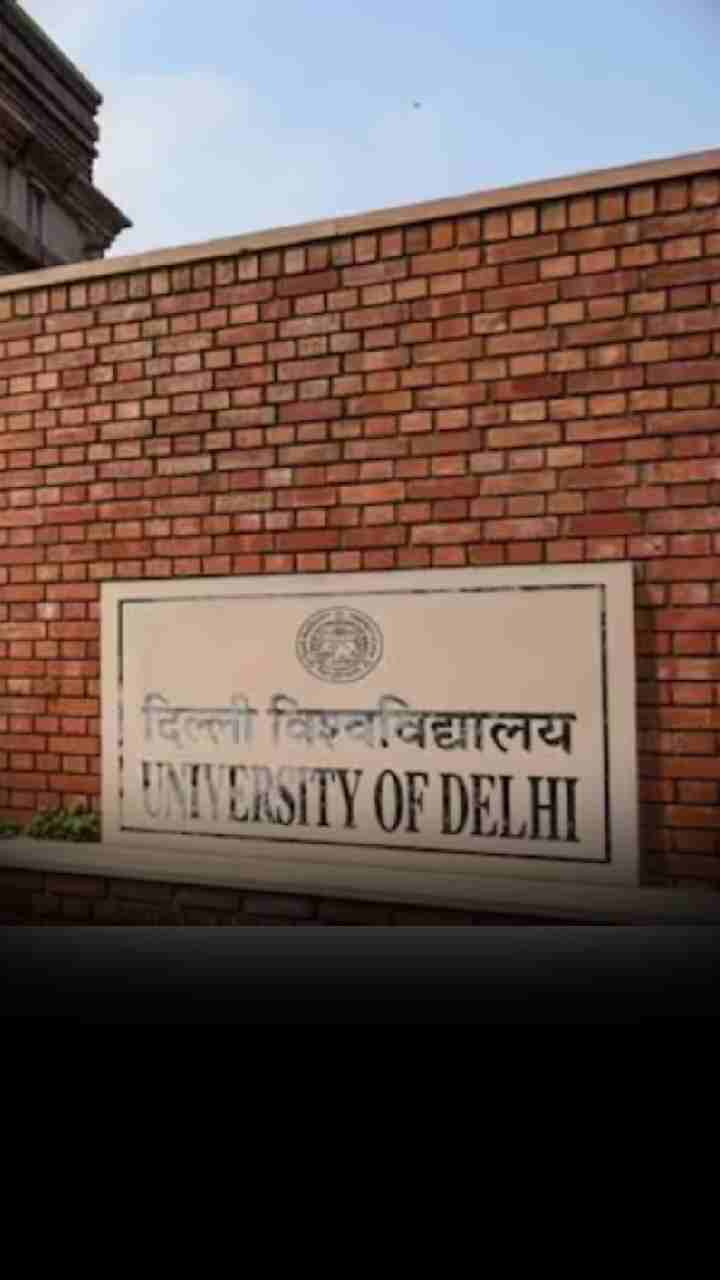
Delhi University‘s Anthropology Department is preparing to propose a new discipline-specific elective on ‘Linguistic Anthropology’ for the second year of the master’s programme under the postgraduate curriculum framework, 2024, a professor said.
Titled ‘M.Sc Linguistic Anthropology’, the paper is expected to carry four credits and will be laid before the Standing Committee for Academic Affairs at their next meeting.
Once approved by the committee, the proposal will be forwarded to the Academic Council and then the Executive Council before being included in the syllabus.
Dannarapu Venkata Prasad, professor at the Department of Anthropology, told PTI, “We hope to introduce the paper as an elective for now and then later as a core paper.”
“Currently, the paper has been designed to contain four units, covering ‘Introduction to Linguistic Anthropology’, ‘Social Context of Language Use’, ‘Structure of Linguistic Forms’, and ‘Sanskrit as Ancient Indian Language’,” Prasad said.
Speaking on the importance of the paper, head of the Department of Anthropology and director of the Centre for Tribal Studies, Soumendra Mohan Patnaik, said the department had long felt the need to introduce the “Anthropology of Linguistics”.
“Franz Boas, the American anthropologist who provided the road map for the subject, showed that we must study four terrains of anthropology to create an integrated understanding of society, namely cultural anthropology, physical or biological anthropology, linguistic anthropology and pre-historic anthropology,” Patnaik said.
“As the first branches of the anthropology department in various universities in India were established under the British influence, linguistic anthropology remained under-represented for decades”, he said.
Patnaik added that linguistic anthropology was more of an American concept.
He said that Claude Lévi-Strauss, another eminent personality in the field of anthropology, had argued that in order to understand social phenomena like marriage, kinship, politics or anything surrounding the society, we have to understand the deeper structures that are involved.
“These structures need a substratum, and that is not material; it rests on a linguistic platform. That is where the centrality of language arises in anthropology,” he said.
The restructuring under PGCF and the National Education Policy (NEP 2020) has provided the department with an opportunity to introduce the fourth branch of anthropology in its curriculum, he added.
“The subject will explore a lot of topics over time, like how one feels closer to oneself when using their mother tongue, for example, or certain classical languages as case studies like Sanskrit, Pali, Tamil, and much more,” Patnaik told PTI.
The emphasis on classical languages is also linked with the focus on the Indian Knowledge System (IKS, the department professors added.
Delhi deploys 30,000 security personnel ahead of Opposition march to Supreme Court over CEC Gyanesh…
Over 130 volunteers, doctors and lawyers mobilised legal, medical and mental health aid for CJP…
Delhi Police released a video claiming Dipke was informed of his grandmother’s death in custody…
MCD acted against 1,046 properties over illegal construction and unsafe buildings in Delhi between September…
AAP accused Delhi Police of using force against protesters and vowed to continue the CEC…
Saffron-clad groups allegedly attacked Delhi protesters, with Hindu Raksha Dal chief claiming responsibility for the…
