
A 500-year-old fair in Jharoda, the rhythmic build-up of ‘dhons’ echoing through Naraina in the days leading up to Holi – fragments of a living past that are now being documented by the MCD before they dissolve into Delhi’s expanding urban sprawl.
A recent survey by the Municipal Corporation of Delhi, which has shortlisted 100 of the city’s nearly 360 urban villages for documentation, is beginning to surface deeply rooted traditions that continue to survive despite the rapid transformation of villages in the national capital.
In its ongoing first phase, the civic body will be covering 25 villages spread across the capital - six in Najafgarh, seven in Narela, six in the South zone, two in Central, three in Civil Lines, and one in Karol Bagh.
The list includes Begumpur, Mehrauli, Dhansa, Palam, Rani Khera, Jharoda, Budhpur, Isapur, and Wazirabad, among others.
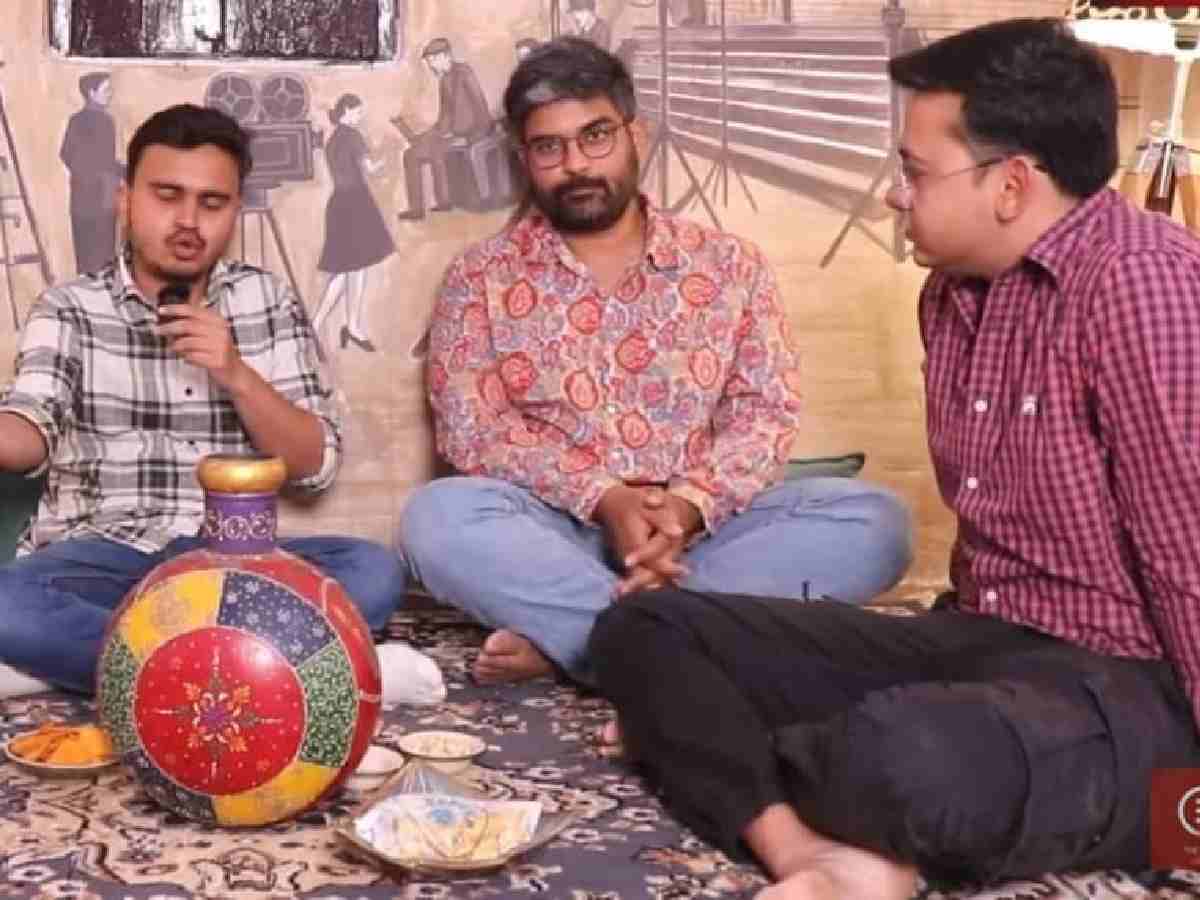
Comprising four members from the MCD’s heritage cell, the team spends nearly a week in each village, collecting oral narratives, recording ‘bhajans’, documenting rituals, and gathering old photographs.
These documented stories will later be catalogued at the Town Hall in Chandni Chowk as part of a larger “municipal museum” project.
The initiative, launched about five months ago, was briefly paused due to other ongoing projects of the civic body’s heritage cell.
Recently resumed, the exercise is focused not just on the built heritage but on intangible cultural practices - oral histories, rituals, fairs, and community traditions that have defined the identity of these villages over centuries.
So far, the survey team has covered Mehrauli, Isapur, and Jharoda, with work currently underway in Dhansa.
“The villages are rapidly modernising, and these stories are slowly fading away. Our focus is on the elderly people, who are the last generation carrying these oral traditions,” said Sanjeev Singh, executive engineer of the MCD’s heritage cell.
“Our team often visits a village six to seven times. Elderly residents sometimes narrate stories for two to three hours at a stretch,” he added.
Early findings from the survey show a dense cultural landscape, where ritual, folklore, and community memory remain deeply intertwined with everyday life.
In the Naraina village, for instance, the run-up to Holi is marked by a distinctive musical tradition centred around the ‘dhons’ - large kettle drums similar to ‘nagaras’.
“Around 15 to 20 days before the festival, young men from different communities begin gathering every evening to practise playing their respective drums. On the night of Holika Dahan, unlike most villages that have multiple bonfires, Naraina lights a single bonfire for the entire settlement. Residents from all neighbourhoods then converge at the site, bringing their ‘dhons’ and performing together in a powerful display of shared cultural rhythm,” said Umesh Kumar, a heritage research assistant with the MCD.
He further spoke about Jharoda, a village located on the Delhi-Haryana border between Najafgarh and Bahadurgarh.
“The village hosts the Baba Haridas fair, a centuries-old fair believed to date back 400 to 500 years. Held annually at the Baba Haridas temple, the fair draws devotees from across the country, including those who trace their origins to the region but have since migrated elsewhere,” Kumar said.
Explaining the rituals of the fair, he further said devotees first gather at the temple premises, offer prayers, and stay overnight before taking a ceremonial dip in the pond on ‘chhathi’ (the sixth day), after which they return home.
“Pilgrims undertake long journeys on foot, especially from villages in Haryana, carrying flags as offerings. They usually arrive on the fifth day of the fair, stay overnight, and after performing rituals and taking a ceremonial dip in the temple pond on ‘Chhathi’, depart the next day,” Kumar said.
The fair honours Saint Shiromani Baba Haridas, believed to have been born as Hari Singh in 1651.
“According to local accounts, he displayed saintly inclinations from a young age and was eventually given the name Haridas by his companions. He is said to have attained a deep state of meditation at the age of 40. The temple complex today also houses the site where he meditated with his disciples,” Kumar further explained.
He added that the origins of Jharoda itself are rooted in oral history.
Villagers trace the name to a woman named Jhado from Lohasiddhpur (now Loha Kalan in Haryana), who was married into the settlement and inherited a large tract of land.
“Considered the ‘grandmother’ of the village, her descendants – organised into what locals call four ‘panes’ or generational lineages — continue to define the village’s social structure,” he said.
In Isapur, the survey team documented a different set of traditions linked to faith and ritual.
During an annual fair, villagers visit a pond to make wishes and carry back a small amount of soil as a symbolic token of their prayer, Kumar said.
“The fair also hosts a long-standing ‘dangal’ (wrestling competition), with prize money going up to Rs 1.5 lakh. Wrestlers from states such as Haryana, Rajasthan, Uttar Pradesh, and Punjab participate, continuing a tradition that locals say has endured for nearly 250 years,” officials said.
Oral accounts gathered during the survey also showed how local histories intersect with larger mythological narratives. Residents speak of a forest, referred to as ‘dhaka,’ where the Pandavas are believed to have once roamed.
In some cases, these traditions are tied to broader historical interpretations.
According to accounts shared by a former panchayat head in Isapur, fairs in villages like Jharoda, Isapur and Bharthal were mentioned in British-era gazettes from the 19th century. He attributed their origins to efforts by Chhatrapati Shivaji to foster social and religious cohesion during periods of political upheaval, though officials clarified that such claims remain part of oral tradition and require further verification.
Officials said the selection of villages for the first phase was guided largely by the density of such cultural markers – fairs, shrines, ritual practices, and oral narratives that distinguish one settlement from another.
“Weddings and birth customs are similar across villages, but what sets them apart are these unique traditions - a mela, a samadhi, a specific ritual,” Singh explained.
He further said that said that the long-term goal is to create a comprehensive repository of Delhi’s intangible heritage.
“We are documenting not just structures but the lived culture of these villages - their songs, rituals, and stories. This material will eventually be part of a municipal museum so that future generations can access and understand this heritage,” Singh said.
As concrete replaces open land and younger generations move away from traditional practices, the risk is not just of physical erasure but of cultural amnesia, he explained.
For now, in villages like Naraina and Jharoda, the rhythms of drums and the pull of centuries-old fairs continue to hold communities together. But as Singh put it, the effort to document them is also a race against time, to document voices that may not be heard for much longer, and traditions that may not survive another generation.