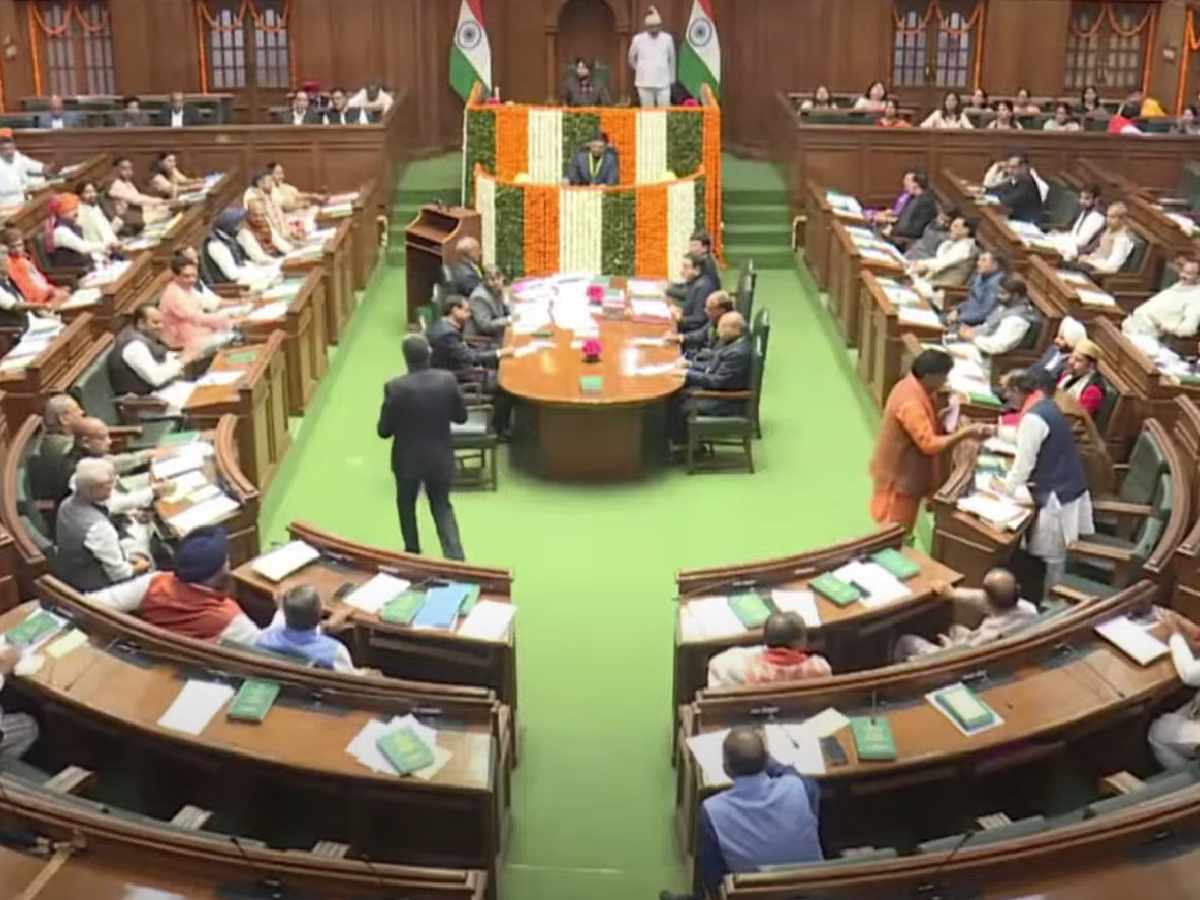
The first session of the newly constituted Delhi Assembly commenced on Monday, marking the BJP’s return to power after 26 years and its shift to the right side of the Speaker’s chair.
BJP MLA Arvinder Singh Lovely was sworn-in as the pro-tem Speaker and administered the oath by Lieutenant Governor Vinai Kumar Saxena at the Raj Niwas before the session began. As the senior-most legislator, Lovely will oversee the swearing-in of all newly elected MLAs.
Also read: Delhi Weather: City records minimum temperature of 10.7 degrees
Chief Minister Rekha Gupta was the first to take the oath, followed by her six Cabinet ministers. The remaining MLAs were sworn in thereafter.
The proceedings began with legislators singing Vande Mataram. Delhi BJP president Virendra Sachdeva was present in the Speaker’s gallery to witness the session.
The election for the new Speaker is set to take place later in the day, with BJP MLA Vijender Gupta likely to assume the position.
The BJP secured a decisive victory in the February 5 Assembly elections, winning 48 of the 70 seats and ending the decade-long rule of the Aam Aadmi Party (AAP). With its return to power, the BJP now occupies the right side of the Speaker’s chair, while AAP, which won 22 seats, sits in opposition on the left.
Also read: Delhi Police arrests total of 51 people this year for various offences
In a unanimous decision, AAP MLAs have elected former Delhi chief minister Atishi as the Leader of Opposition in the Assembly.
Delhi Police busted a visa fraud racket and arrested two men for duping 46 people…
From stuffed naans and chole bhature to dahi bhalla, dosas and kachoris, these five old…
From coffee-infused Indian sweets and chilled desserts to new blends and tasting sessions, these Delhi-NCR…
Delhi CM Rekha Gupta launched an AI control centre to track pollution sources 24/7, including…
From hummus and falafel to salads, pasta and vegetable-led plates, these Delhi-NCR spots offer fresh,…
CP's Inner Circle goes car-free this Sunday for Raahgiri Day, featuring cycling, fitness, and a…
