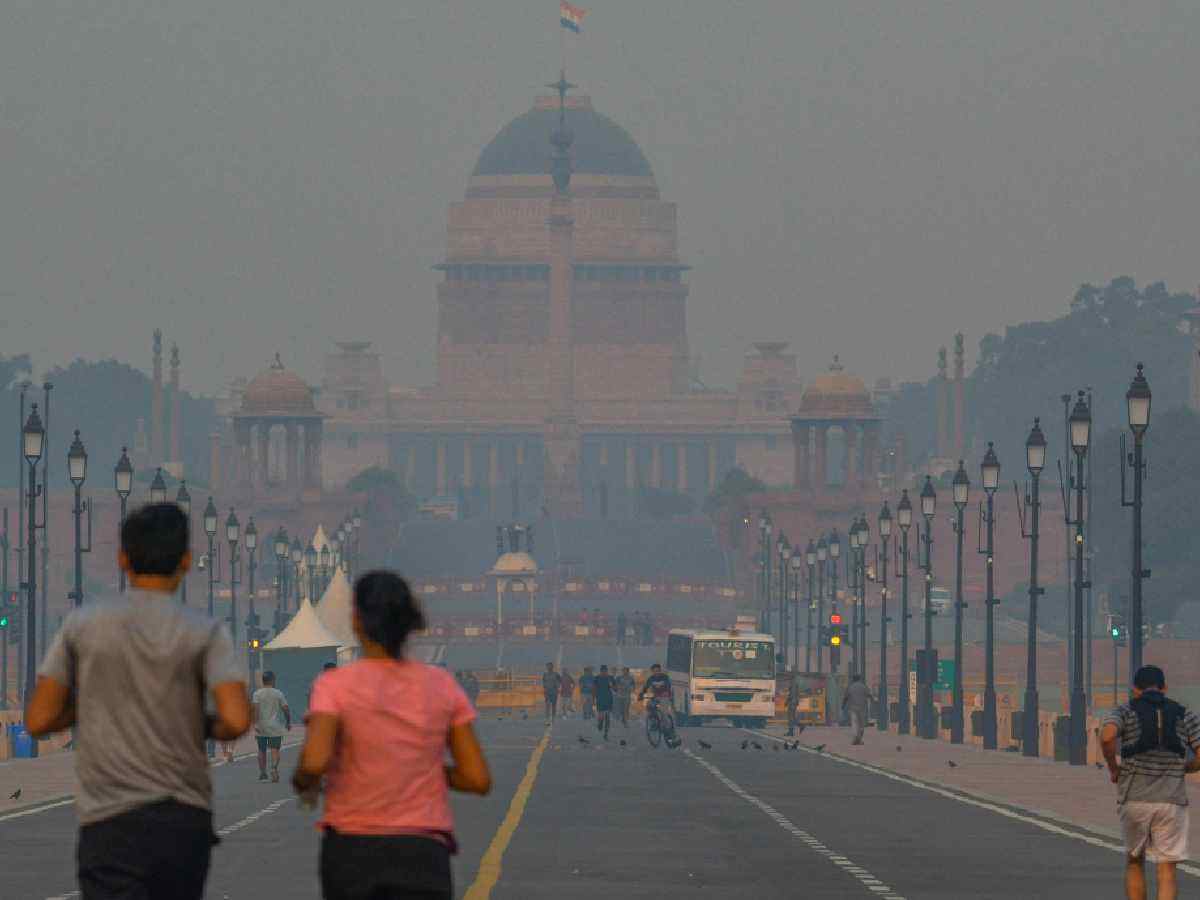
Only three per cent of the hours in a year in Delhi offer both clean air and thermally comfortable conditions necessary for safe natural ventilation, according to a new study.
The study, conducted by CEPT University and climate-tech firm, found that Delhi records around 2,210 thermally comfortable hours with outdoor temperature in the range of 18 degrees Celsius to 31 degrees Celsius.
But 1,951 of those hours also coincide with poor air quality (air quality index above 150). That leaves just 259 hours in the year, about three per cent, when residents can enjoy both clean air and pleasant temperatures.
The study, presented at the Healthy Building 2025 Conference of the International Society of Indoor Air Quality on June 8, said the overlap of heat and air pollution severely limits opportunities for safe natural ventilation.
Compared to Delhi, Bengaluru fared much better with over 8,100 hours of acceptable air quality and minimal overlap between thermal comfort and pollution. Ahmedabad, despite being warmer, also offered more usable outdoor conditions.
However, Chennai, like Delhi, saw 88 per cent of its comfortable hours affected by poor air quality.
The researchers said the study shows that convergence of heat and pollution is becoming widespread across Indian metros.
Conventional building operations, either based on fully sealed air-conditioned spaces or unfiltered natural ventilation, no longer meet the needs of urban India, they said.
Also Read: Experts raise red flags as Delhi plans cloud seeding to tackle pollution
To address the challenge, the study recommends mainstreaming Personalised Environmental Control Systems (PECS) in Indian buildings.
These systems offer filtered ventilation, occupant-level control and localised thermal comfort and are especially useful in mixed-mode buildings that shift between natural and mechanical ventilation based on time of day, season or pollution levels.
“PECS (ventilation) contributes to both short-term and long-term health and energy performance outcomes,” said Rajan Rawal of CEPT University, a leading building science expert.
“With ongoing improvements in AQI across Indian cities, there is growing potential for occupants to utilise natural ventilation when outdoor conditions permit. Nevertheless, PECS continues to offer substantial energy savings under prevailing conditions,” he said.
The modelling by researchers found that PECS can save up to 72 per cent energy used for ventilation in Chennai, 70 per cent in Ahmedabad and 68 per cent in Delhi, compared to conventional air-conditioned setups.
“PECS work especially well in conjunction with low-energy solutions like ceiling fans and task-based ventilation,” Rawal added.
The Supreme Court deferred pleas on Delhi protests and metro and train service curbs to…
A plea in the Supreme Court challenges restrictions on protests at Delhi’s Jantar Mantar and…
Delhi recorded an AQI of 138 in the moderate category on Tuesday, with the minimum…
A 29-year-old driver was allegedly beaten to death by nightclub bouncers in Delhi following a…
Delhi HC to hear pleas seeking regulation of protests in the capital on Tuesday, with…
From a Sikh family in Tilak Nagar performing Shastar Puja to a Malayali household inscribing…
