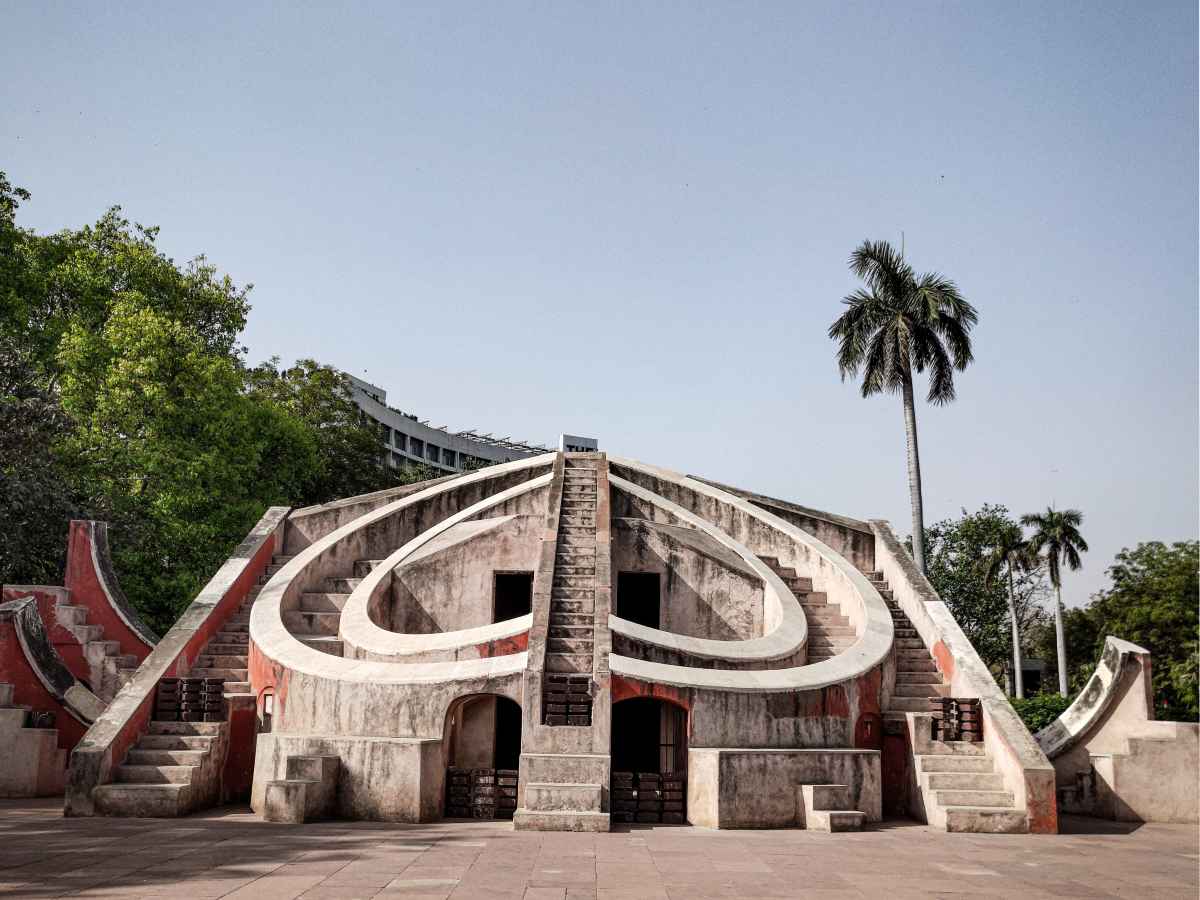
The lawns along Rajpath (now Kartavya Path) in Delhi once resembled a “village of tents” as people from across the country gathered to make their issues known, fully visible to the corridors of power. That changed in 1993 when the designated protest site was moved to Jantar Mantar.
For much of the last three decades, Jantar Mantar, still a site in the heart of the national capital, became the epicentre of protests in the country, including the recent anti-NEET protests earlier this year.
The “designated protest site” is changing again amid protests called by opposition parties and the Cockroach Janta Party against the Special Intensive Revision (SIR) and the chief election commissioner to places further away.
A study by IIT Indore, titled “Spatial Denial and Displacement: Exploring the Literary Lineage of Protest Sites (Public Spaces)”, examined how Delhi’s protest spaces have evolved and underlined the visibility of protests, saying dissent and access to public spaces were key to democratic protests.
Also Read: 80 idols, two weeks, 12-hour days: CR Park’s Durga Puja preparations in full swing
The study placed these changes in Delhi’s history, from the Mughal and British rule to the Independence era and beyond.
Delhi Police has denotified Jantar Mantar as a designated site for protests, and named Ramlila Maidan, Burari Ground and CBD Ground as the new designated sites for protests and demonstrations.
According to the IIT Indore study, the existence of a designated protest site is not enough. Its location, accessibility and visibility matter.
Calling for inclusive public spaces, the researchers argued that where people are allowed to gather shapes their ability to raise demands and engage with centres of power.
The study examined how access to public spaces has been shaped by authority and how the places where people can gather have influenced their ability to express dissent and questioned what happens when people can no longer protest at a place close to the institutions they want to address.
The study argued that shifting demonstrations elsewhere can affect their visibility and make access to central public spaces more difficult.
Rajpath, earlier known as Kingsway, became a prominent space for public gatherings after Independence. Its lawns hosted people from across the country, including hill residents demanding a separate state, farmers seeking better prices and industrial workers protesting retrenchment, bringing diverse demands into a central public space.
Also Read: Delhi’s Post Offices: from Gol Dak Khana to the Parliament House
In 1993, Jantar Mantar was designated as Delhi’s official protest site following restrictions on collective demonstrations at the Boat Club. The study said moving protests away from Rajpath reduced their visibility and increased the distance from centres of power.
According to the study, protests at Ramlila Maidan in 2017, the anti-CAA stir at Shaheen Bagh in 2019-20 and the farmers’ demonstrations at Singhu, Tikri and Ghazipur in 2021-22 are examples of how protests have moved to different locations due to restricted access to established sites.
Researchers behind the study, which shows a rise in newly created protest spaces alongside increasing designation and displacement, interpret this pattern as a sign of declining access to central public spaces, with demonstrations increasingly taking place beyond the city’s political centre.
To explain this pattern, the study uses three ideas — denial, designation and creation. Denial means restricting access to public spaces, designation refers to officially assigning areas for protests, while creation describes protesters occupying or developing other spaces when existing locations become inaccessible.
Also Read: Fortress Delhi: Jantar Mantar wears deserted look as Dipke, four former CMs among 7,000
Together, these ideas help explain the study’s main claim — designating a protest site does not necessarily mean people have equal access to public space. When central locations become unavailable, protesters may gather elsewhere, but it changes their proximity to political institutions.
To understand these changes, the researchers combined literary analysis with architectural study, handmade maps and digital mapping. They examined fiction, non-fiction, poetry and visual material on different protest movements to understand how people use public spaces and how the meaning of these places changes over time.
The study also raised concerns about the decline of accessible public spaces and the growth of privatised spaces. It argued that public areas are important not only for movement or recreation but also for collective action, social interaction and participation in public life.
Protester alleges Delhi Police assaulted detainees, deleted phone videos, and detained minors during anti-CEC protest…
CM Rekha Gupta defends SIR and EC integrity, saying democracy can't be held hostage to…
AISA students march to Supreme Court over 'vote chori' claims against CEC, as police barricade…
DMRC extends closure of six central Delhi metro station gates until 5 pm citing security…
Delhi Metro reopens entry and exit gates at six central stations after 10-hour closure due…
NDTA welcomes Jantar Mantar protest ban, saying alternative venues will reduce traffic chaos and business…
