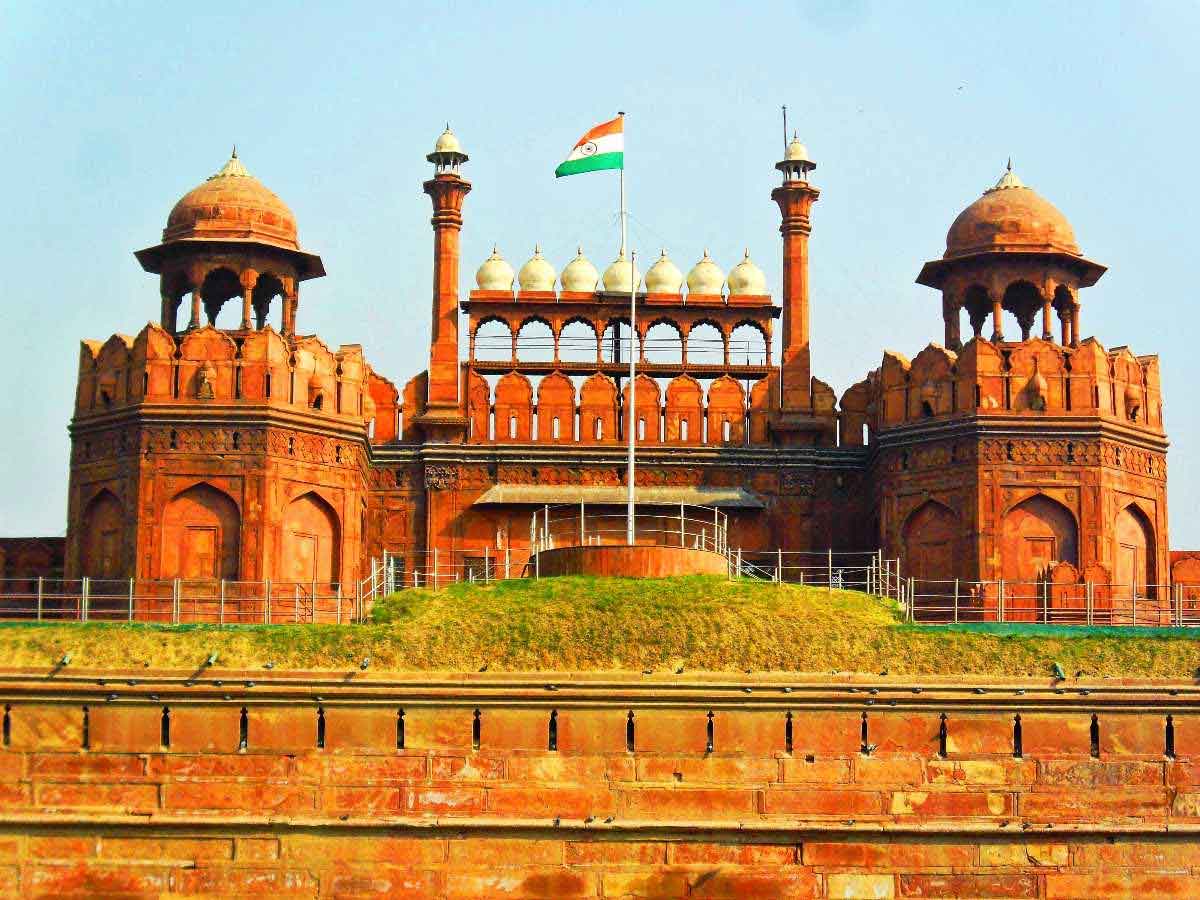
Delhi Pollution: The iconic Red Fort is facing gradual and accelerating damage due to Delhi’s deteriorating air quality, a recent study has found.
Black crusts of pollutants are steadily forming on the red sandstone walls of the 17th-century monument, threatening its structural and aesthetic integrity, according to a new Indo-Italian study.
The study, titled “Characterisation of red sandstone and black crust to analyse air pollution impacts on a cultural heritage building: Red Fort, Delhi, India”, is the first comprehensive scientific investigation into how urban air pollution is impacting the historic monument built by Emperor Shahjahan between 1639 and 1648.
Developed as part of a collaboration between India’s Department of Science and Technology and Italy’s Ministry of Foreign Affairs (MAECI), the research was conducted by scientists from IIT Roorkee, IIT Kanpur, Ca’ Foscari University of Venice, and the Archaeological Survey of India (ASI) this year.
The team analysed samples of sandstone and black crust collected from different areas of the Red Fort complex, including Zafar Mahal.
The findings revealed that black crusts varied from thin deposits of approximately 0.05 millimetres in sheltered areas to thick layers of up to 0.5 millimetres on walls facing high-traffic zones.
These thick layers are strongly bonded to the stone surface, posing a risk of surface flaking and loss of intricate carvings.
According to the researchers, the black crusts primarily consist of gypsum, bassanite, weddellite, and trace amounts of heavy metals such as lead, zinc, chromium, and copper. These pollutants are not inherent to the sandstone but are deposited from external sources, including vehicular emissions, cement factories, and construction activities in the city.
The study highlighted how chemical reactions between pollutants like sulphur dioxide and nitrogen oxides lead to the formation of gypsum layers, which eventually erode during rainfall.
Also read: Celebrating 60 years of Nehru Park: a modern Indian masterpiece
Moreover, nitrates and oxalates were found to infiltrate the sandstone, causing internal stress, cracks, and biological growth. The team also observed blistering, salt crystallisation, and dampness-related crumbling near entrances, while interior Makrana marble decorations showed comparatively less damage due to their stronger grain structure.
Accessing air quality data from the Central Pollution Control Board for the years 2021 to 2023, the researchers confirmed that fine particulate matter concentrations remained more than two and a half times above national limits, with coarser particles exceeding the threshold by over three times.
Nitrogen dioxide levels also crossed safe limits, contributing to the stone’s gradual decay, even though ammonia and sulphur dioxide levels were within limits.
“This is a wake-up call. Regular cleaning, protective coatings, and stricter pollution control measures are essential if the Red Fort and other heritage sites are to be preserved for future generations,” the study concluded.
The construction of the Red Fort began in 1639 and was completed in 1648. In 2007, it was inscribed on the UNESCO World Heritage list. The researchers said the Red Fort owes its name to the red Vindhyan sandstone used for its massive walls and palaces.
The fort complex covers about one square kilometre and is surrounded by 2.4 kilometres of fortification walls, which rise between 20 and 23 metres high and are up to 14 metres thick at the base.
Initially protected by a nine-metre-wide moat and the Yamuna River, the monument today stands beside the heavily trafficked Inner Ring Road, exposing it to high levels of pollution.
CM Rekha Gupta defends SIR and EC integrity, saying democracy can't be held hostage to…
AISA students march to Supreme Court over 'vote chori' claims against CEC, as police barricade…
DMRC extends closure of six central Delhi metro station gates until 5 pm citing security…
Delhi Metro reopens entry and exit gates at six central stations after 10-hour closure due…
NDTA welcomes Jantar Mantar protest ban, saying alternative venues will reduce traffic chaos and business…
Trade and transport bodies reject Ramlila Maidan as a protest site, citing major traffic disruptions…
