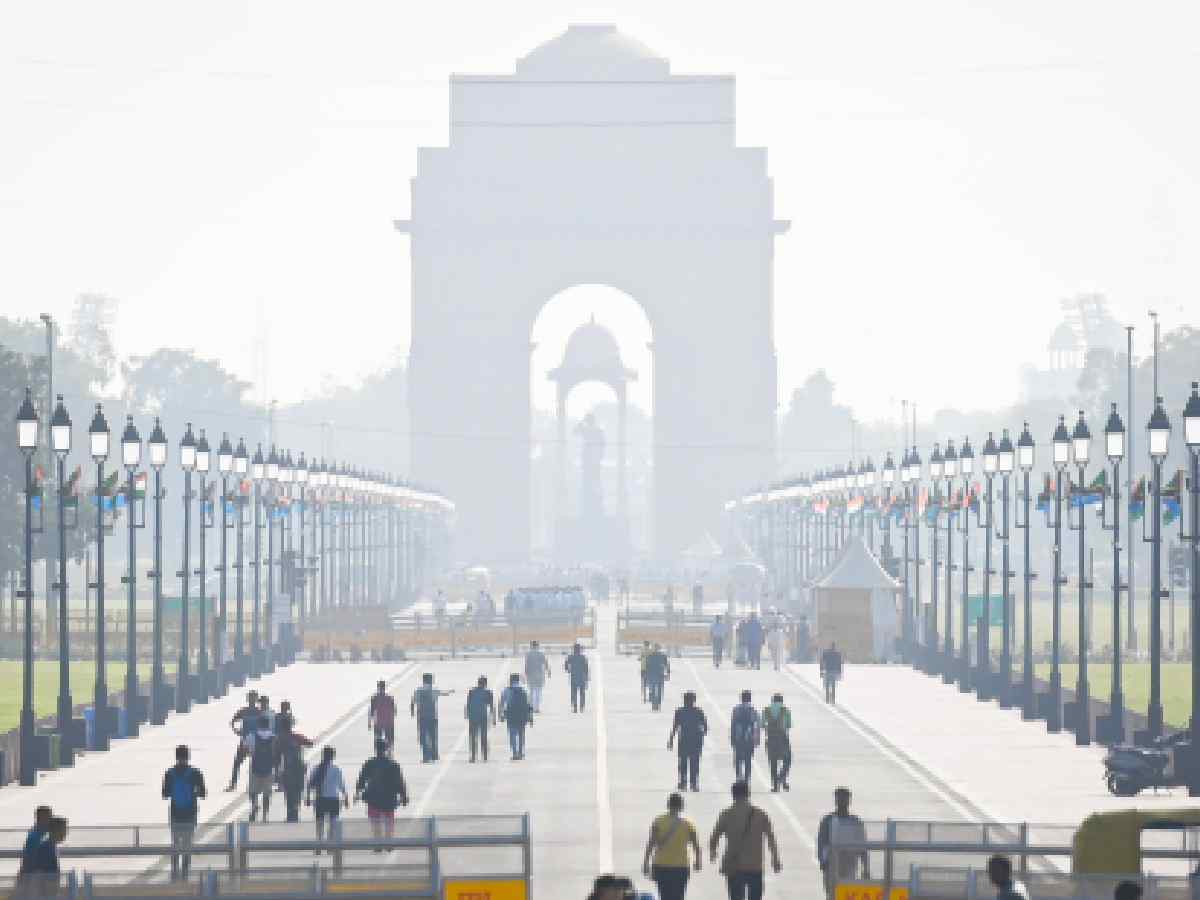
Notwithstanding the extreme cold in the Capital, Nandu and several other security guards remained at their posts at the recently concluded Divya Kala Mela on the India Gate lawns. With smiles on their faces, these migrant workers, primarily from Bihar, Jharkhand, and Odisha, ensured that order was maintained even as the crowds continued to swell.
Amid the smog-choked streets of 2025, a cadre of unsung workers—construction labourers, sanitation crews, delivery riders, security guards, public transport operators, and volunteers—toiled tirelessly on a 24×7 basis. These everyday heroes braved toxic air, financial volatility, and physical exhaustion to ensure that essential services remained uninterrupted. Their stories, drawn from the year’s headlines and ground reports, reveal the human backbone of a resilient Delhi.
City on edge
In 2025, Delhi pulsed with the chaos of a megacity pushed to its limits. With a population exceeding 30 million, the Capital grappled with record-breaking pollution, political upheaval ahead of the Assembly elections, and economic strain following nationwide labour strikes. Air quality plummeted to ‘severe’ levels on multiple occasions, triggering emergency measures under the Graded Response Action Plan (GRAP) Stages III and IV. As construction halted and offices shifted to a half-remote model, daily life for the common citizen suffered immensely.
Unsung heroes like Nandu are often the pulse of this metropolis. Despite the environmental hazards, they ensured that the city’s complex machinery did not collapse. Their presence in the face of adversity highlights a quiet endurance that often goes unrecorded in the broader narrative of urban progress.
The first casualties
Among the most visible yet overlooked were the construction workers. Many, as highlighted in recent reports, have spent decades building the city’s skyscrapers and metro lines while inhaling dust and fumes. One labourer, a 50-year-old from Bihar, shared how work suspensions left him jobless for weeks: “We build the city, but when the air turns bad, we’re the first to suffer.” Despite such setbacks, they adapted—some shifted to informal gigs, while others relied on community kitchens. Their resilience was particularly evident during the July nationwide general strike, where millions, including Delhi’s masons and bricklayers, protested against labour codes that they argued weakened unions and job security. In the Capital, demonstrators gathered at Jantar Mantar, demanding fair wages and the robust implementation of MGNREGA (now renamed G Ram G).
Sweeping the haze
Sanitation workers formed another vital thread in Delhi’s social fabric. Tasked with sweeping streets, collecting waste, and unclogging drains, they faced the year’s pollution head-on. Kavita and her husband Deepak are among those who work year-round at a group housing society in IP Extension, East Delhi, with little hope of a wage increase. With smog blanketing the city, their early-morning shifts became hazardous marathons. These workers, mostly from marginalised communities, performed their duties without adequate masks or regular health check-ups. During the post-Deepavali cleanup in November, when firecracker bans were flouted, sanitation teams cleared tonnes of debris overnight. Deepak recounted: “We start at 4 in the morning, when the air is thickest. No one sees us, but without us, the city would choke.”
Wheels of commerce
The role of delivery riders and cab drivers was equally crucial in keeping commerce alive through the turmoil. Platforms like Zomato and Uber saw surges in demand as residents stayed indoors to avoid the toxic air. These riders navigated traffic snarls and poor visibility to deliver food, medicine, and groceries. A Swiggy rider from Uttar Pradesh described the ordeal of racing through a foggy Karol Bagh: “Pollution burns my eyes, but stopping means no pay.”
Public transport operators, including DTC bus drivers and Delhi Metro staff, ensured that mobility remained intact. With restrictions placed on older vehicles, they managed significantly overcrowded routes. During the December pollution emergency, buses ran extra shifts to compensate for the reduction in private vehicular traffic. A veteran driver noted, “We drive through the haze, keeping schools and offices connected.” Simultaneously, healthcare workers at premier institutes like AIIMS dealt with a sharp spike in respiratory cases, often working double shifts to manage the influx of patients.
Also Read: Delhi records dip in fire-related calls in 2025, but risk remains
A heavy price
The year began with familiar environmental woes but escalated as winter approached. By March, the city had banned the refuelling of vehicles older than 10 years, a move that foreshadowed tougher restrictions. As the AQI spiked above 400, the government mandated a 50% work-from-home policy for all offices, exempting only essential services such as healthcare and the fire department. While institutions complied, the transition created gaps in ground operations. Construction sites, the lifeline for infrastructure, came to a standstill under GRAP, affecting lakhs of workers. In response, the Delhi government announced a compensation of Rs 10,000 for registered construction labourers. While this aid reached thousands, it only served to highlight the inherent fragility of their livelihoods.
As 2025 gives way to 2026, Delhi’s unsung workers continue to embody endurance. While wages rose marginally under new policies, proper recognition remains elusive in a city of sharp contrasts. These workers serve as a constant reminder that urban progress rests firmly on the shoulders of the overlooked.
CPI general secretary D Raja leads a protest in Delhi, demanding the withdrawal of SIR…
From November 1, non-BS-VI vehicles registered outside Delhi will be restricted; workers who cross at…
Jamia Millia Islamia extends online classes and mid-term exams until Nov 8 following campus protests,…
The proposed Nov 1 Congress rally at Ramlila Maidan could severely disrupt peak festive business…
A youth was allegedly stabbed to death in northwest Delhi’s Pratap Vihar after a dispute…
Jamia students continue their 16-day protest, demanding a definite election date and a timeline for…


