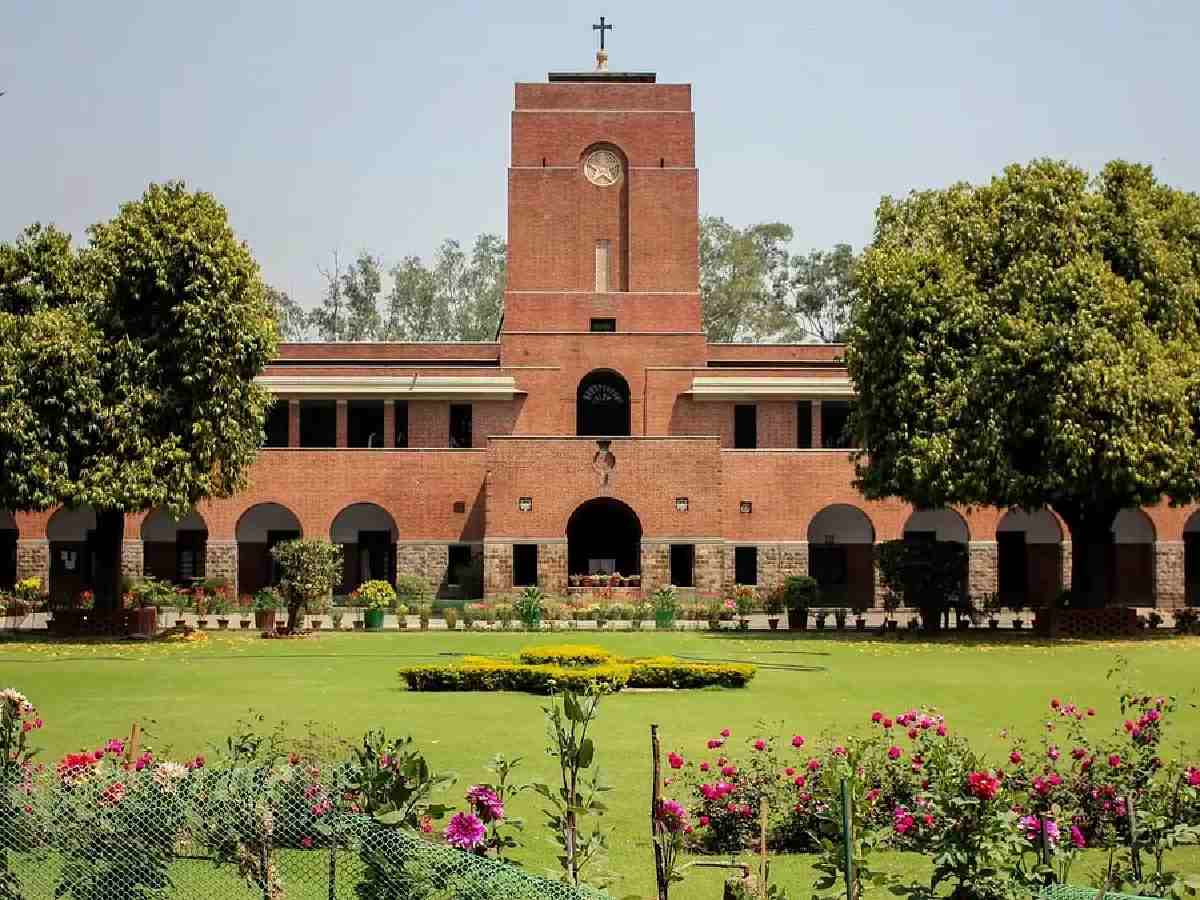
St. Stephen’s College
Who could have imagined that when Rev Samuel Scott Allnutt became the first Principal of St. Stephen’s College at Katra Khushal Rai in Chandni Chowk on February 1, 1881, it would take nearly 145 years for a woman to occupy the post. St. Stephen’s College is now set to have its first woman Principal — and its 14th overall — in Prof Susan Elias, who will take charge on June 1.
St. Stephen’s owes much of its enduring prestige to a remarkable line of principals who shaped its character, ethos, and legacy. Their stories reflect not only the evolution of the college but also the broader journey of modern India.
The beginning
The college began in modest circumstances with just five students and a handful of teachers in rented premises. A Cambridge-educated chaplain, Allnutt (1881–1889), stepped in after the closure of a Delhi government college. Guided by the motto Ad Dei Gloriam (“To the Glory of God”), he laid the foundation of an institution that valued academic excellence, interfaith dialogue, and character formation.
In 1891, the college moved to its own campus in Kashmere Gate. Allnutt’s vision extended beyond administration; he saw education as a bridge between cultures. Founder’s Day, observed on December 7 to mark his death anniversary, continues to honour his spiritual and institutional legacy.
Hosting Gandhi
No principal better symbolises St. Stephen’s transformative spirit than Susil Kumar Rudra (1906–1923), the first Indian to head a major educational institution in colonial India. In a bold move in 1906, the English principal G Hubert Ware stepped aside for Rudra, influenced by CF Andrews.
Rudra, who had joined the faculty in 1886, taught English, economics, and logic. His tenure coincided with the height of India’s freedom struggle. A close associate of Mahatma Gandhi and Andrews, Rudra hosted Gandhi and Kasturba Gandhi at the college in 1915. Gandhi frequently stayed with him during visits to Delhi. Rudra’s circle also included Rabindranath Tagore and Sarojini Naidu, enriching the intellectual life of the campus. He was also among the founders of the Delhi and District Cricket Association.
Under Rudra, the college adopted a constitution that gradually reduced direct missionary control while preserving its Christian identity.
“Rudra sahab introduced inter-dining, study leave for Indian teachers at Oxford and Cambridge, and equitable salaries. Students affectionately called him Barasahib. His will established the annual Rudra Dinner on February 12, a tradition now in its 101st year. Rudra proved that Indian leadership could uphold and elevate the highest standards of a premier institution,” said Brother Solomon George, a member of the Delhi Brother Society, which runs the college.
Expansion years
Subsequent principals steered the college through Independence and Partition. Rai Bahadur Satya Nand Mukarji (1926–1945) oversaw the college’s affiliation with the University of Delhi in 1922 and the shift to its present North Campus site in 1941, where the red-brick buildings with Mughal architectural elements were designed by Walter Sykes George.
“Douglas Raja Ram (1945–1960) and Satish Chandra Sircar (1960–1972) focused on post-Independence expansion. Raja Ram was the visionary who established a school for children from economically weaker families living on the Delhi University campus. That school is now run by Delhi University,” said Satish Jacob, journalist and alumnus of the college.
Rev William Shaw Rajpal (1972–1984) preserved the college’s minority character while widening access.
A modern institution
Shimla-born Dr Anil Wilson brought energy and progressive thinking to the role. With a strong work ethic and a commitment to holistic education, he strengthened academics, infrastructure, and alumni engagement, guiding the college through a period of rapid modernisation.
Rev Dr Valson Thampu (2008–2016), an alumnus and theologian, led the college during a dynamic and sometimes debated period. He emphasised cultural vibrancy, social service, and institutional autonomy, helping keep St. Stephen’s relevant in a changing India.
Enduring legacy
Collectively, these principals transformed a small missionary college into one of India’s premier educational institutions. The college has produced Presidents of two countries — Fakhruddin Ali Ahmed of India and Zia-ul-Haq of Pakistan — along with civil servants, judges, writers, academics, and intellectuals.
Also Read: When Natwar Singh made Zia-ul-Haq write for DU college magazine
It pioneered Indian leadership in elite education, equitable institutional policies, phases of co-education, and a distinctive synthesis of faith and secular excellence.
Traditions like the Social Service League still reflect Rudra’s belief in education as service. As the college approaches its sesquicentennial year, its legacy remains deeply relevant.
“St. Stephen’s legendary principals exemplified resilience, foresight, and humanity,” said Dr Paul Swaroop, Bishop of Delhi and Chairman of the college. “In an era of rapid change, their principles of intellectual honesty, inclusivity, and moral courage continue to guide us.”
With Prof Susan Elias at the helm, St. Stephen’s enters a new chapter — one that honours its past while embracing the future.
Elected to the Delhi Golf Club general committee, Mansher Singh says he wants to build…
A $780 million market built on pavements, where the pleasure of reading meets the price…
Supreme Court advocate Abhishek Pawar alleges women were denied washroom access for seven to eight…
Each day of closure costs shops in Khan Market and Connaught Place between Rs 60,000…
Delhi generates nearly 15,000 tonnes of waste daily, prompting the government to deploy 1,000 mechanical…
Delhi Police has issued an NOC for the Congress rally at Ramlila Maidan on November…


