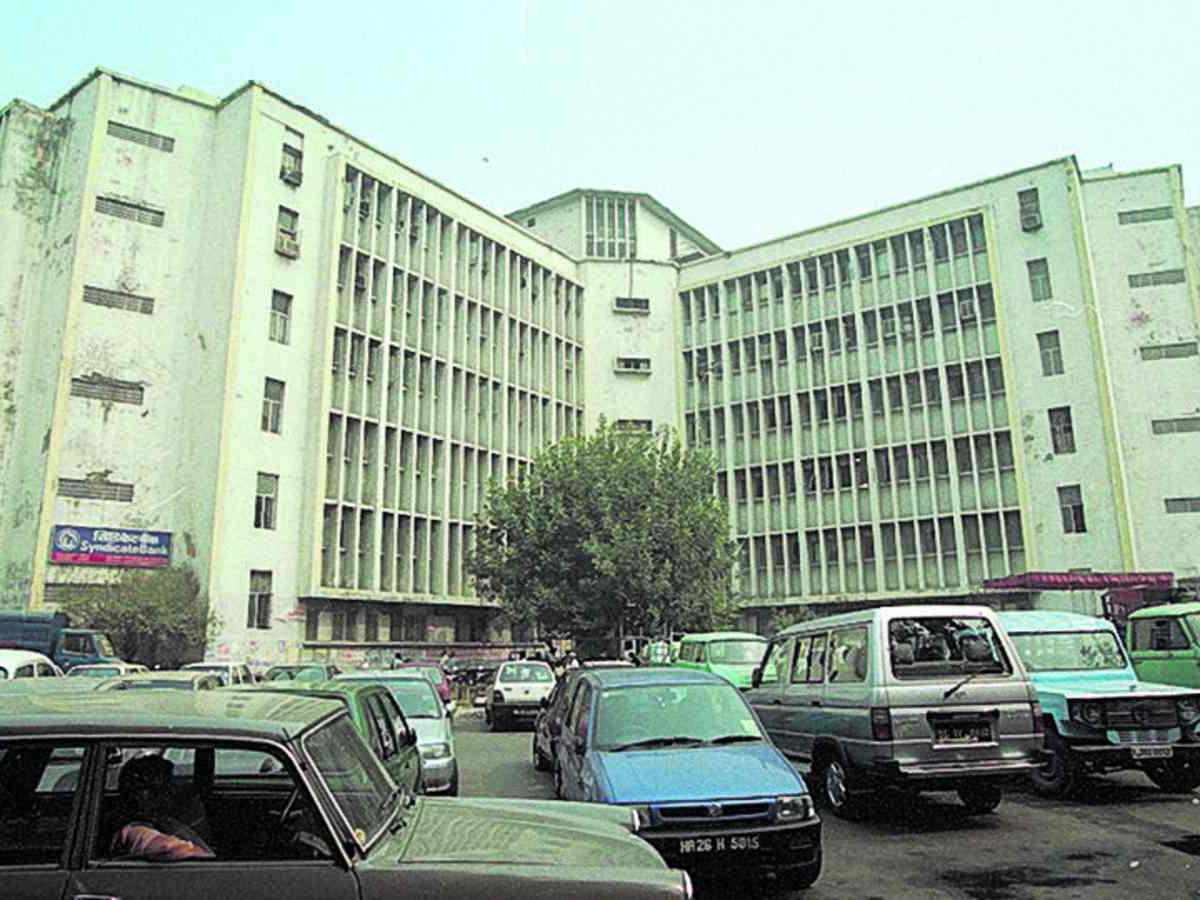
For those who visit Connaught Place today, the sight of the decrepit remains of the six-storey Super Bazar brings back memories of a time when Delhi thronged here to buy household items. It agoged with activity much like any well-known mall today. The store symbolised the city’s aspirations for modern, affordable retail.
Super Bazar was India’s first cooperative supermarket and a groundbreaking department store that opened its doors in 1968. For decades, it was the undisputed king of shopping in the capital, drawing crowds from every corner of Delhi and beyond. Long before air-conditioned malls dotted the skyline, it offered a one-stop shopping experience. Families often spent entire afternoons browsing goods and queuing for bargains.
A pioneering idea born in difficult times
The origins of Super Bazar trace back to the mid-1960s, when India was grappling with inflation and shortages following the 1965 Indo-Pakistan war. The Congress-led central government, under the Ministry of Food and Agriculture, launched it as a cooperative venture to provide essential goods at controlled, reasonable prices. Inaugurated in 1966 in a prominent New Delhi Municipal Council (NDMC) building on the Outer Circle of Connaught Place, Super Bazar was envisioned as a “people’s store”.
According to social worker Pritam Dhariwal, an ex-employee of NDMC, the store’s layout was revolutionary for its time. “From fresh vegetables and groceries on the ground floor to electronics like transistors, clothing, household items, and even furniture on upper levels, it stocked everything under one roof,” he says. He adds that the multi-floor layout, with dedicated sections for different categories, was a radical idea when it opened. For children, the escalators were a huge attraction, a rarity then. Its popularity was nothing short of phenomenal.
Memories of a bustling landmark
For East Delhi-based businessman Radhey Shayam, Super Bazar was almost a second home. He recalls that his father owned an eatery in Shanker Market and that he had witnessed the store being built.
“When it was opened, I visited almost daily with my father to buy items,” he says. He remembers crowds pouring in from across the city and adds, “I remember the chemist shop there remained open on a 24×7 basis. That was rare then. Hence, people kept on visiting there.”
In the 1970s and 1980s, Super Bazar became Delhi’s ultimate shopping destination. Queues snaked around the block, sometimes stretching up to the nearby fire station. All India Radio broadcast daily price comparisons between Super Bazar and local markets, reinforcing its role as a price stabiliser.
Also Read: Delhi’s air-quality picture remains hazy as on-ground readings differ from official dashboards
“For middle-class families, a trip to Super Bazar was an event – akin to visiting a modern mall today,” recalls insurance businessman Bhaskar Rammurthy. “There was a Coffee House on the premises run by the Coffee Board of India, where friends met for snacks amid the buzz.” He notes that the cooperative also ran a branch in INA Market, a smaller outlet that served residents of South Delhi localities such as Sarojini Nagar, Narouji Nagar and Lodhi Road. Owning a gadget or garment from Super Bazar carried a certain prestige – much like buying from a premium brand today.
What made it different
While traditional bazaars such as Chandni Chowk and Karol Bagh involved haggling in crowded lanes, Super Bazar offered fixed prices, minimal bargaining and a clean, structured environment – hallmarks of modern retail. It had food counters, parking and seasonal sales that drew massive footfall. In many ways, it offered Delhi its first “mall experience”: later air-conditioned sections, a mix of food and fashion, and a social hub atmosphere.
Decline and closure
Like many public-sector enterprises, Super Bazar’s glory was short-lived. By the late 1980s and 1990s, cracks began to appear. Mismanagement, alleged corruption, employee unions and mounting losses plagued the cooperative.
Economic liberalisation in 1991 brought competition from private players, and the rise of malls sealed its fate. Ansal Plaza, India’s first modern mall, opened in 1999, offering escalators, food courts and branded stores in a glitzy setting. Super Bazar, burdened by bureaucracy, could not keep up. It incurred heavy losses from 1998 onward and finally shut down in 2002, following government orders to close all outlets. The Connaught Place flagship soon became a ghost of itself.
A landmark in disrepair
Today, the Super Bazar building stands in a sorry state. The bus stop nearby still bears its name, a poignant reminder for older Delhiites, though younger residents often draw blanks when asked about it. Plans for redevelopment have surfaced intermittently, and the NDMC has discussed demolishing the structure to build a new multi-storey mall or reviving it in some form. Recent media reports suggest that the council is actively exploring revival options.
A legacy that shaped Delhi’s shopping culture
Super Bazar’s story is one of triumph and tragedy – a pioneer that democratised shopping in a young nation but ultimately fell victim to changing times. It taught Delhi how to shop big, paving the way for the mall culture that dominates today.
For those who remember the queues, the bargains and the joy of a day out at Connaught Place’s Super Bazar, it remains etched in memory as the original mega-store, far ahead of its time.
A political stage in its heyday
The parking area of Super Bazar also witnessed many political rallies ahead of Lok Sabha and Assembly elections. Leaders including Indira Gandhi, Atal Behari Vajpayee and Rajesh Khanna addressed huge gatherings here, adding another layer to the building’s storied past.
Each day of closure costs shops in Khan Market and Connaught Place between Rs 60,000…
Delhi generates nearly 15,000 tonnes of waste daily, prompting the government to deploy 1,000 mechanical…
Delhi Police has issued an NOC for the Congress rally at Ramlila Maidan on November…
CJP chief Abhijeet Dipke received conditional bail following his arrest for participating in a Connaught…
The DPCC has floated ₹104 crore tenders to test pilot pollution-control technologies across 40 key…
MCD pushes Bhalswa cleanup to Feb 2027 due to agency transition, leaving over 10 lakh…

