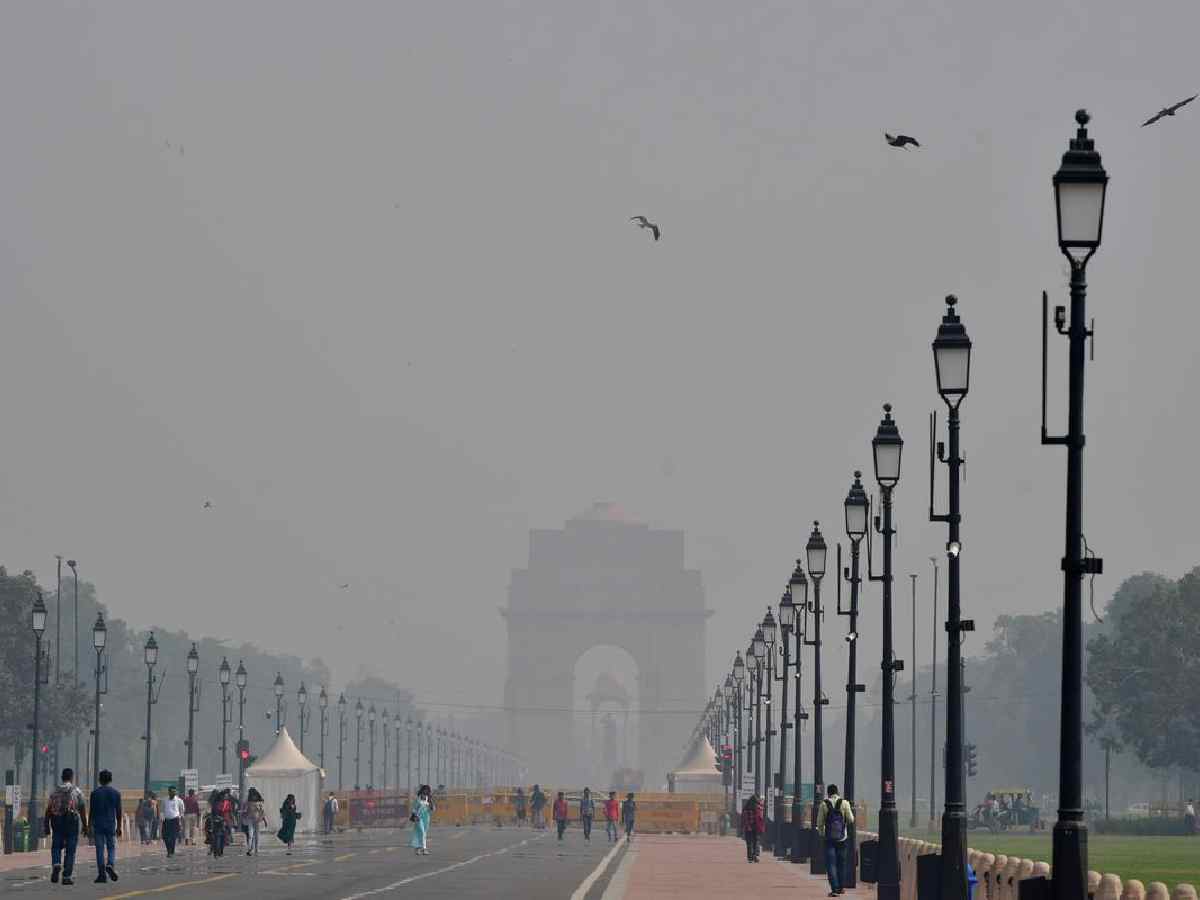
By the time the sun rises over Delhi these days, it looks dim and drained of colour, a pale coin blurred behind a curtain of smoke. The air smells faintly burnt even before breakfast. Parents wake their children with the familiar question of winter: should they wear masks to school, or should school be skipped altogether? Many begin their morning by checking the air quality index the same way others check the weather. It has become the city’s most reliable predictor of how the day will feel.
Survey reveals mounting distress
According to a new survey by SmyttenPulseAI, nearly eight out of ten people living in Delhi and its surrounding cities are now thinking seriously about leaving. Some have already packed their bags. For many, the idea once seemed impossible. Delhi was a place people came to chase opportunity, to build careers, to raise families. Now, for a growing number of its residents, it feels like a place they must escape to stay healthy.
The survey, conducted with 4,000 respondents across Delhi, Gurugram, Noida, Ghaziabad and Faridabad, reads like a catalogue of quiet suffering. The health complaints alone paint a grim picture. A large majority report persistent problems such as constant coughs, irritated eyes, chest tightness or a fatigue that stretches for months. More than two thirds have needed medical care for illnesses linked to the pollution. In hospitals, doctors describe the winter months as their busiest season, a time when patients of all ages come in wheezing, exhausted or frightened by how hard it has become to breathe.
Emotional toll deepens
For many residents, the emotional toll is as heavy as the physical one. People talk about living in a state of constant vigilance. They make decisions about their day not by convenience or preference but by the fluctuating AQI readings. Some parents describe feeling guilty when letting their children play outside. Others describe a sense of helplessness when they hear persistent coughing at night, even with air purifiers running at full power. One university student summed it up simply: “It feels like every breath comes with a warning.”
Exodus in motion
Perhaps the most painful change in sentiment is the one that involves leaving. The survey reveals a region quietly preparing for departure. A third of residents say they are seriously planning to relocate. Another third is weighing the decision and trying to figure out whether they can afford such a move. A significant number have already left. For some, the moment of decision arrived after a frightening health scare. For others, it came gradually, after years of watching winter smog settle like a shroud across the city.
Families who once imagined spending their lives in Delhi now travel to hill towns and smaller cities to look at schools and housing options. In conversations across neighbourhoods, parents worry aloud about what breathing this air will do to their children ten or fifteen years from now. Many feel the city is no longer safe for long-term living. One father in Gurugram said he had begun applying for jobs in Dehradun because he was unwilling to watch his son struggle through another winter of pollution. “We love Delhi,” he said, “but love doesn’t make the air any cleaner.”
Cost of clean air soars
The financial burden is another layer that weighs heavily on households. Coping with pollution has become its own expense category. Families are spending more on masks, supplements, herbal teas, steamers and purifiers. In some homes, multiple purifiers run day and night. For lower-income households, this strain is particularly harsh. Several residents described difficult trade-offs, like postponing school activities or restricting grocery bills just to afford an additional purifier. The cost of breathing clean air, something that should be free, has quietly become one of the most significant monthly expenses for many.
Daily life rearranged
This shift has changed the rhythm of daily life. People now limit their time outdoors and spend weekends travelling to cleaner nearby cities simply for relief. Indoor life has expanded in ways no one would have imagined a decade ago. Children who once played cricket in local parks now stay indoors with video games or board games.
Runners have traded their morning jogs for online fitness classes. Restaurants and outdoor markets often sit emptier during smog spikes. For many, the city feels smaller and more confined, its vibrant public life replaced by a cautious, homebound routine.
Faith in system erodes
Underneath all the statistics and personal stories is a deeper sense of disillusionment. Residents complain about feeling abandoned by policymakers and uncertain about whether anything will improve. Pollution has been a part of Delhi winters for years, but what feels new is the loss of patience and, in many cases, the loss of hope. As residents contemplate permanent moves, experts warn that the city risks losing its young families, its working professionals and its middle class. These are the people who fuel Delhi’s economy, culture and energy. If they begin to leave in large numbers, the consequences may be felt for decades.
Lives shaped by pollution
The report by SmyttenPulseAI suggests that people are not only changing where they want to live but also how they live now. Their routines, spending habits, health choices and long-term plans are all being shaped by the air they breathe. “It is no longer just an environmental issue,” said the company’s co-founder Swagat Sarangi. “It influences everything, from how people spend their money to how they think about raising children or building a life in this region.”
As winter deepens, the hum of air purifiers continues across Delhi’s apartments. Families keep their windows sealed and their eyes on the pollution charts, hoping for a rare day when the air turns forgiving. But alongside the wait for clean air, many households are quietly planning something far more permanent: new cities, new schools, new beginnings.
In living rooms across the capital, a question lingers in the air. It is no longer “Will the pollution get better?” It is “Can we keep living like this?” And more and more families are deciding that the answer is no.
Experts warn of systemic failure
Speaking to Patriot, environmentalist Bhavreen Kandhari said the findings reflect a deep crisis of governance.
“The fact that nearly 80% of residents are considering leaving Delhi-NCR is an unmistakable indictment of the current response,” she said. “People have clearly lost confidence that the state can deliver clean, breathable air.”
She said short-term measures no longer reassure citizens. “Emergency steps during winter are not enough. This level of distress shows a systemic failure to reduce emissions from transport, industry, waste and regional crop burning in a sustained and enforceable manner.”
Kandhari also highlighted the financial strain pollution places on families. “When households are spending heavily on purifiers, masks and medical care just to get through daily life, it exposes the hidden economic burden of pollution,” she said.
According to her, pollution’s long-term costs are being underestimated. “Governments need to shift from reactive, seasonal steps to long-term structural action — stricter emission standards, real-time enforcement, regional coordination and investment in public health.”
“Pollution is eroding productivity, worsening chronic disease and imposing far higher economic losses than the cost of decisive action,” she added.
Sunil Dahiya, Founder and Lead Analyst at Envirocatalysts, said the survey reflects the concerns of a particular section of society. “I wouldn’t believe that 80% of people are relocating. The survey seems to capture mainly high-income groups — the ones who actually have the means to move,” he said.
He called Delhi’s air crisis “a shameful failure,” adding that governments at all levels have been unable to curb emissions within the city or the larger airshed. “Pollution levels have remained nearly the same for the last ten years because emissions at the source have not been reduced,” he said.
Air pollution, he added, is now both a health and economic hazard. “Families are spending heavily on medical care and expensive technology, labourers lose income when work stops, and even infrastructure projects suffer during restrictions.”
Dahiya said the root problem is the absence of a policy that mandates actual emission-load reduction. “There is no mechanism to cut emissions from key polluting sectors, and no accountability for the regulators responsible,” he said. “The only real solution is reducing emissions at the source through clear, time-bound targets and fixed accountability.”
Protests against CEC Gyanesh Kumar over the SIR of electoral rolls started on October 10.…
Delhi Police books journalist under SC/ST Act for casteist remarks against ACP during a Jantar…
Hindu College staff protests against principal, demanding DU takeover over financial and admission irregularities and…
Delhi Cabinet approves Industrial Policy 2026 with Rs 1,000 crore for top sectors to turn…
Delhi launches DJB command centre with GPS tanker tracking and AI tools to manage water…
ABVP protests at JNU against Congress MP Akoijam over sexual harassment claims, demanding the party…



