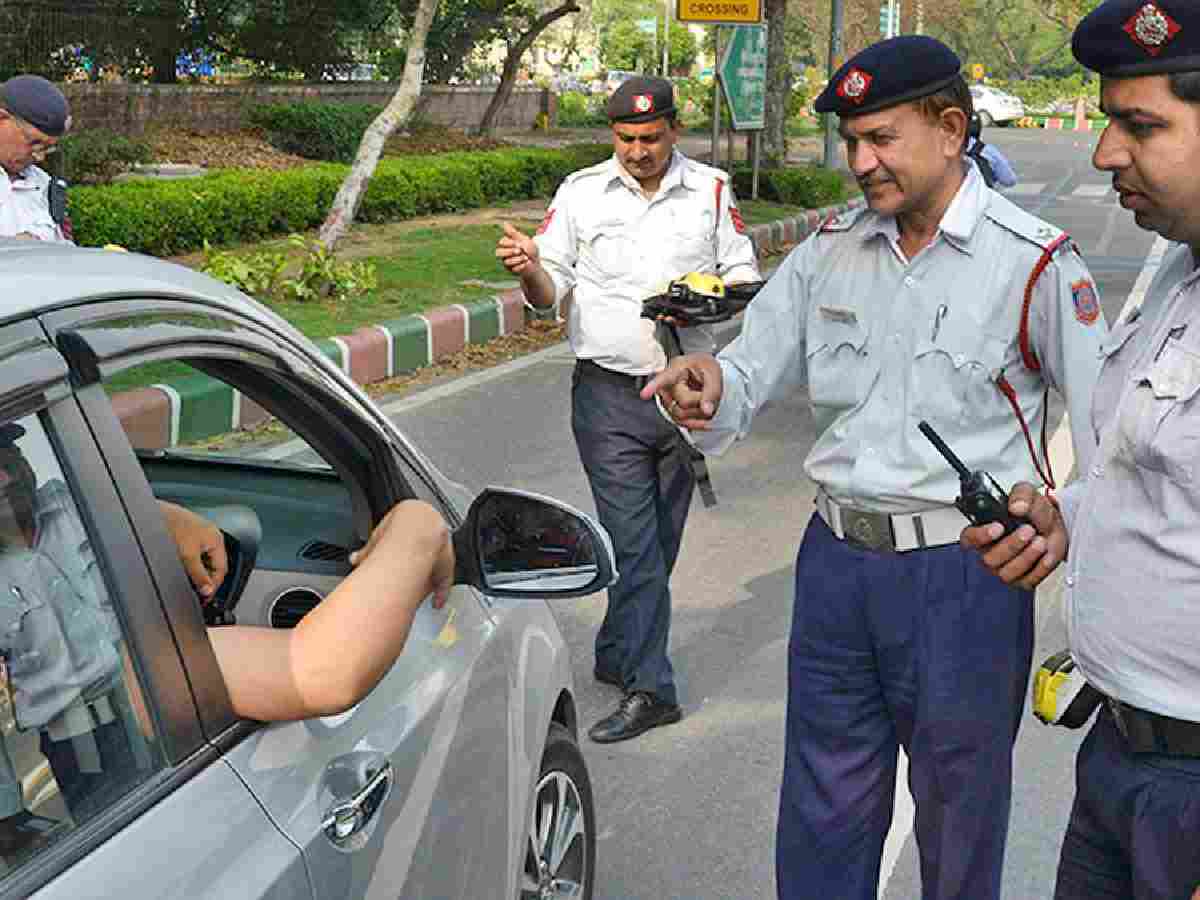
Determined not to repeat the mistakes that had rendered Delhi nearly unliveable due to severe air pollution in 2024, the Delhi Traffic Police has adopted a far more aggressive strategy this year to remove older vehicles from the roads.
Surge in vehicle impoundments
According to exclusive Delhi Traffic Police data, 19,478 end-of-life vehicles (ELVs) were impounded till October 26. The contrast with last year is stark: in 2024, just over 5,000 such vehicles were seized during the same period.
The ongoing operation, which began on October 15 in collaboration with the Transport Department, targets diesel vehicles older than 10 years and petrol vehicles older than 15 years. It will continue until December as part of efforts to keep the national capital’s air quality in check.
By comparison, in 2024, 5,035 vehicles had been impounded till November 7. Between October 1 and November 7 last year—the period covered by the Winter Action Plan—4,286 vehicles were seized. This year, seizures have risen by 286% over the same period.
Steep rise in PUC challans
Fines for vehicles operating without a valid Pollution Under Control (PUC) certificate have also surged. By October 26, the Delhi Traffic Police had issued 6,95,752 challans, compared to 3,19,045 challans during the same period last year.
Officials attribute the spike in fines and vehicle seizures to sustained, year-long enforcement. “It is because of the Winter Action Plan that we have succeeded in clamping down on as many vehicles as possible,” said an official. “We expect to seize even more vehicles by the end of December.”
Why the crackdown intensified
Joint Commissioner of Police (Traffic) Kape Kaming emphasised the role of coordinated enforcement. “We began our crackdown in October as part of the Winter Action Plan,” he said. “Before that, we conducted periodic checks across the city and now hold regular meetings with the Transport Department to plan further action.”
He added that most older vehicles were traced through registration records, while PUC defaulters were usually caught in traffic checks. “This has had a massive effect on pollution levels in the national capital,” Kaming said.
Another factor driving the crackdown is the Delhi government’s earlier directive banning fuel supply to ELVs. Starting July 1, fuel stations were required to deny service to such vehicles, which were then impounded if reported. However, the directive was withdrawn on July 3 following strong public backlash.
Currently, enforcement continues under the Winter Action Plan and the Graded Response Action Plan (GRAP), which mandate impoundment of plying ELVs.
Penalties and enforcement
Vehicles without a valid PUC certificate are fined Rs 2,000 and instructed to renew it. If black smoke is emitted from the exhaust, an additional fine of Rs 10,000 is imposed. Out of the total violators, 1,025 vehicles faced this higher penalty, reflecting a tougher stance against the most polluting vehicles.
Older vehicles categorised as end-of-life are impounded at designated sites across the National Capital Region (NCR). These include e-rickshaws, two-wheelers, and cars. Vehicle owners are fined Rs 10,000 for cars and Rs 5,000 for two-wheelers upon seizure.
The Guidelines for Handling End of Life Vehicles in Public Places of Delhi, 2024, issued by the Delhi government in February 2024, laid out a scrapping policy aimed at phasing out unfit vehicles. The policy combines incentives and disincentives in line with the Motor Vehicle (Registration and Functions of Vehicle Scrapping Facility) Rules, 2021.
Where the vehicles go
According to the Transport Department, five registered vehicle scrapping facilities (RVSFs) handle ELVs from Delhi. While their offices are based in the capital, the actual yards are located in neighbouring states such as Haryana and Uttar Pradesh.
The largest facility, owned by Mahindra MSTC Recycling Pvt Ltd, covers 19,397.75 sq metres in Greater Noida Extension. Other yards operate in Sonepat, Sikandrabad, and Noida.
The department has also established timelines for scrapping various types of vehicles. Unregistered e-rickshaws are crushed at impounding sites before being sent to scrapyards. For registered ones, the Delhi Maintenance and Management of Parking Places Rules, 2019, mandate a 90-day waiting period after the fitness certificate expires before impounding. This coincides with a citywide ban on e-rickshaws on 236 roads.
For other vehicles, RVSFs must wait four weeks after issuing a release order. If unclaimed, the vehicle is scrapped. Certificates of Deposit and Vehicle Scrapping, along with proof of payment, must be submitted every two weeks. If payments remain uncollected, the scrap value is transferred to the Transport Department’s treasury.
A growing pile of end-of-life vehicles
Police data shows that by December 11, 2024, 9,258 ELVs had been seized—compared to 528 in 2023 and 1,147 in 2022. Despite the increase in enforcement, government estimates indicate that Delhi still has about 6.2 million ELVs, including 4.1 million two-wheelers.
The Delhi government, in consultation with the Environment Pollution (Prevention and Control) Authority (EPCA) and the Central Pollution Control Board (CPCB), has identified 13 major pollution hotspots: Narela, Bawana, Mundka, Wazirpur, Rohini, RK Puram, Okhla, Jahangirpuri, Anand Vihar, Punjabi Bagh, Mayapuri, and Dwarka.
Despite the ongoing crackdown, Delhi’s air quality remains dire. Its citizens continue to fight for their right to breathe.
Five arrested, including bouncers, after a man was brutally thrashed to death at a Delhi…
MCD rolled out 12 multi-purpose anti-smog vehicles to suppress dust, wash roads, and tackle rising…
NSUI staged a dharna outside CP police station, alleging Delhi Police assaulted and detained women…
Delhi HC will hear a PIL on Oct 16 seeking to allow peaceful protests at…
DU has approved a ₹5,889 crore plan to build and reconstruct hostels, creating residential accommodation…
Delhi LG said the capital’s development priorities are interconnected, stressing that PPPs must be chosen…
