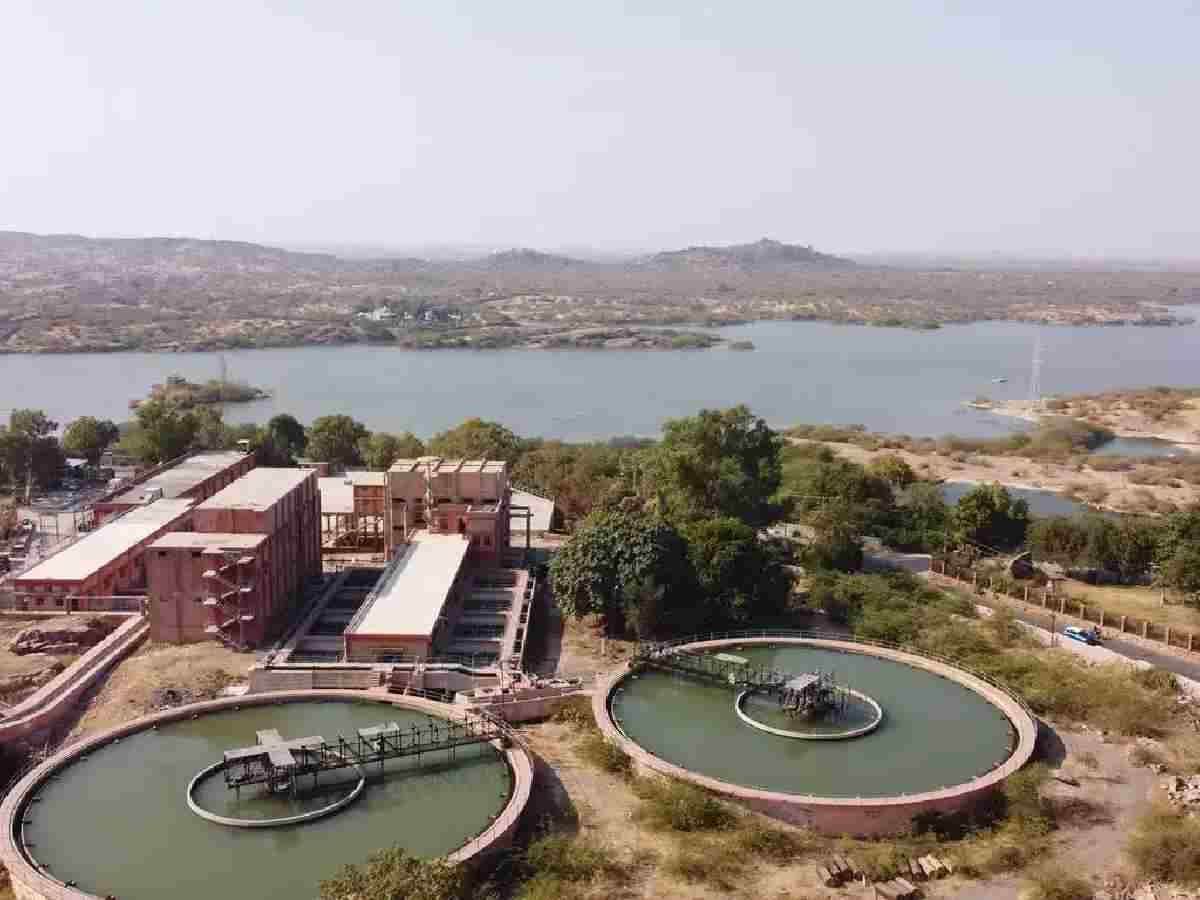
The toxic state of Delhi’s Yamuna River—already notorious for its frothing banks and lifeless stretches—has been directly linked to lapses in the city’s sewage treatment infrastructure. A detailed inspection report recently submitted to the Delhi High Court reveals that most of the Capital’s 37 Sewage Treatment Plants (STPs) are either bypassing untreated sewage, failing to capture a majority of incoming wastewater, or discharging treated water into channels where it is immediately contaminated by raw effluent and solid waste.
The inspection, carried out between May and July 2025 by a court-appointed committee, paints a picture of systemic failure. As the committee noted, “the biggest problem with the STPs is not their functioning per se, but the manner in which their treated effluent… often mixes with raw sewage or gets otherwise contaminated outside the STP.”
A rigorous inspection process
The committee’s methodology included checking inlet and outlet flow meters, sensors, calibration reports, internal laboratory records, sludge disposal practices, and physically tracing treated water channels. The findings—supported by photographs, real-time Delhi Pollution Control Committee (DPCC) monitoring data, and on-site observations—were damning.
Bypasses and under-capacity plants
At Delhi Gate Phase I STP, which has a design capacity of 2.2 MGD, the panel observed that out of approximately 40–50 MGD of sewage flowing in the Powerhouse Drain, only 2–3 MGD is trapped and diverted for treatment. The rest enters the Yamuna untreated. The plant lacks inlet and outlet flow meters, while its process meter has been non-functional for seven to eight months.
Delhi Gate Phase II (15 MGD) captures only part of the same drain’s sewage. Its treated water merges with untreated sewage within yards of discharge. The SNH Drain STP (2.2 MGD) is similarly constrained, trapping just 2–3 MGD from a drain carrying 10–20 MGD. Like Delhi Gate I, it relies on manual flow measurement.
Also Read: Delhi Jal Board clears Rs 917 crore upgrade for major sewage plants to cut Yamuna pollution
At Chilla STP, which treats around 9.1–9.2 MGD from the Ghazipur drain’s estimated 200 MGD, the treated effluent is discharged back into the untreated drain within 400–500 metres, nullifying the process. Its outlet flow meter has been under repair since May 2025, with no backup.
Treated water mixing with raw sewage
The CWG (Akshardham) STP, despite employing advanced membrane bioreactor (MBR) technology, has no consolidated outlet flow meter—only unit-wise meters.
The Coronation cluster—Coronation New, Coronation 2, and Coronation 3—no longer has the bypass seen in a May 2025 court video, but all still discharge treated water into drains carrying untreated sewage.
At Rohini and Narela STPs, the post-treatment mixing problem persists. Narela also receives high concentrations of industrial effluent. Rithala Phases I and II discharge into polluted drains, with the online monitoring system (OLMS) at Rithala found “not readable” and awaiting replacement.
Kondli complex: a contamination hotspot
The Kondli complex—Phases I to IV—emerged as a striking example of post-treatment contamination. Treated channels pass through New Ashok Nagar, an unauthorised colony with around 1,500 illegal sewage connections. Residents have built over effluent channels and dump both sewage and solid waste directly into them.
In May 2025, blockages were so severe that the Delhi Jal Board deployed heavy machinery for desilting. The committee’s photographs show heaps of debris obstructing the channels, along with an unauthorised nala discharging untreated sewage into the treated stream.
Industrial and animal waste contamination
Sonia Vihar STP, located near the Yamuna, is vulnerable to contamination from open channels. At Yamuna Vihar Phase III, around 70% of treated effluent is pumped to the Yamuna, but 30% flows into the untreated Shahdara drain. The committee also reported “illegal discharge of dyeing industries, dairy industries, slaughterhouses”, which pushed COD levels to 1,144 mg/l—far above domestic sewage norms.
Yamuna Vihar Phases I and III still operate on outdated BOD/TSS norms, while Phase I lacks an inlet flow meter. At Keshopur Phase II, discrepancies between OLMS readings and DPCC’s online data need urgent correction, with upgrades underway. Sludge management here, as in Phases I and III, is inadequate.
Nilothi Phase I, designed for 60 MGD, treats only 25–28 MGD of its 30–35 MGD inflow, with the rest bypassed and mixed with Phase II’s treated output. Phase II had “a small outfall from the internal channel into the treated effluent channel”, which the panel said must be “immediately stopped”.
Najafgarh STP receives industrial effluent in its inflow. At Okhla’s three plants (124 MGD, 16 MGD, and 6 MGD), treated water is discharged into a pond that drains via an open channel to the Agra Canal, allowing contamination by plastic waste and illegal household connections.
Molar Band STP also operates on outdated standards and has no inlet flow meter.
Animal waste contamination in Vasant Kunj and beyond
The Vasant Kunj 3.0 and 2.2 MGD plants are affected by cow dung from around 3,000 cattle in nearby Kishangarh village, leading to high total suspended solids (TSS) and faecal coliform counts. Both run on outdated norms, and the smaller plant lacks an inlet flow meter. Ghitorni STP also has no inlet meter and operates to old standards. Mehrauli STP, on 20/30 mg/l norms, likewise has no inlet meter.
Severe operational gaps
Pappan Kalan Phase I bypasses 15–25 MGD untreated into the Najafgarh drain due to insufficient capacity, with augmentation in progress. Both Phases I and II were recently calibrated but lack adequate sludge management.
At Kapashera STP, perhaps the most startling case, the committee could not ascertain either the inflow source or the outflow destination. The report warned: “If there is no proper utilisation of the treated effluent, then the entire treatment process… is a waste.”
Across plants, recurring failures include untreated sewage bypassing due to low capacity, treated effluent re-entering polluted drains or open channels, outdated treatment norms, inflows contaminated with industrial or animal waste, missing or broken inlet flow meters and sensors, and poor sludge disposal—including dumping in low-lying areas.
The way forward
The committee has urged capacity expansion of existing plants and diversion of excess sewage to nearby facilities so no untreated water bypasses treatment. It recommends constructing closed, tamper-proof effluent channels—especially for plants near the Yamuna—to ensure treated water reaches the river uncontaminated.
It also calls for functional inlet flow meters and quality sensors at every plant, upgrades to meet the DPCC’s 10/10 mg/l standard, strict segregation of industrial and domestic sewage, and enforcement against illegal industrial discharge.
Further recommendations include greater reuse of treated water for horticulture, construction, dust suppression, and sanitation; and robust sludge management systems to replace open dumping.
Without such measures, the report warns, the crores spent on wastewater treatment will “literally go down the drain” and the Yamuna will remain a receptacle for Delhi’s untreated waste.
Each day of closure costs shops in Khan Market and Connaught Place between Rs 60,000…
Delhi generates nearly 15,000 tonnes of waste daily, prompting the government to deploy 1,000 mechanical…
Delhi Police has issued an NOC for the Congress rally at Ramlila Maidan on November…
CJP chief Abhijeet Dipke received conditional bail following his arrest for participating in a Connaught…
The DPCC has floated ₹104 crore tenders to test pilot pollution-control technologies across 40 key…
MCD pushes Bhalswa cleanup to Feb 2027 due to agency transition, leaving over 10 lakh…
