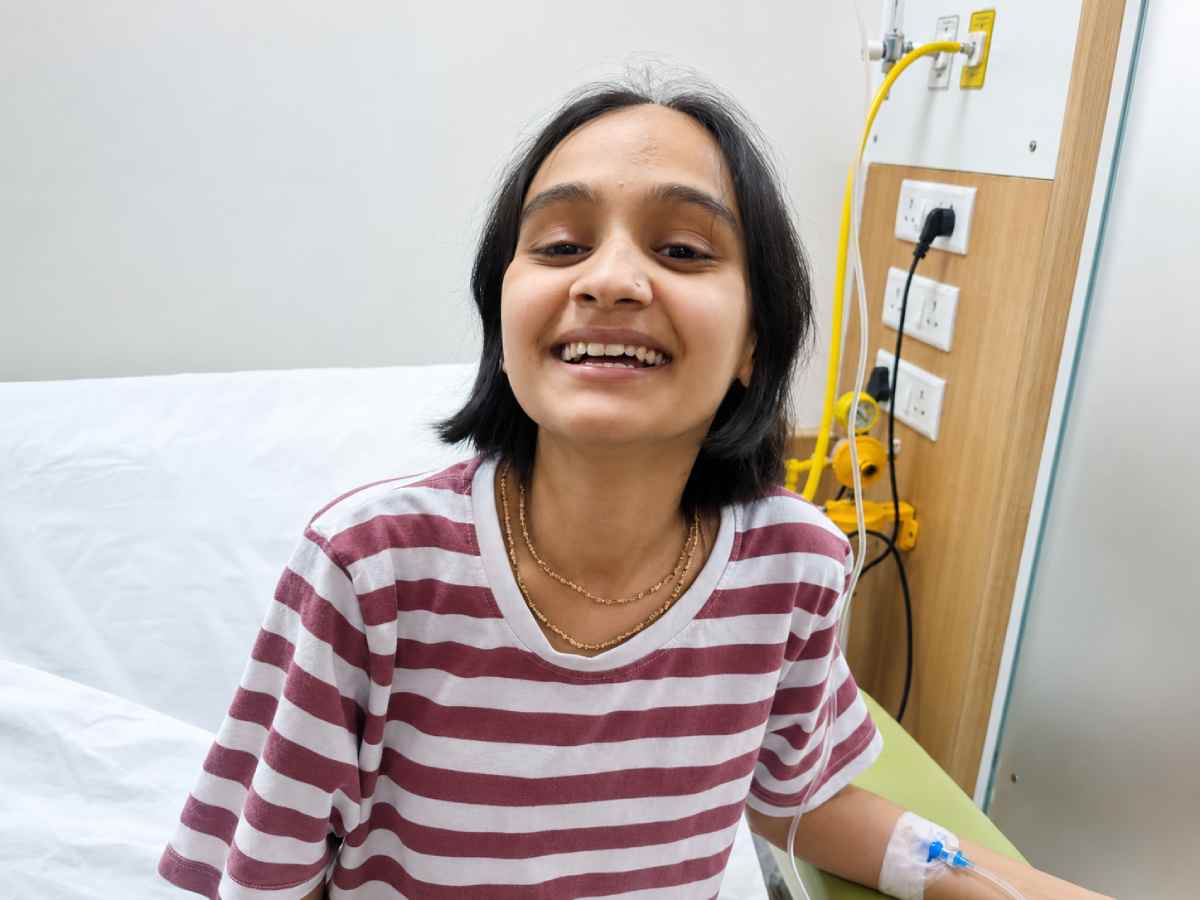
In a remarkable case of critical cancer care and multidisciplinary intervention, doctors at Fortis Hospital, Shalimar Bagh successfully treated a 17-year-old girl diagnosed with Stage 3 Ewing’s sarcoma, a rare and aggressive form of bone cancer that affects nearly one in a million people globally.
The teenager was admitted to the hospital in an extremely critical condition after battling progressive breathlessness and a growing swelling in her upper back for more than a year. During this period, she had reportedly undergone alternative therapies elsewhere without improvement, allowing the disease to advance significantly.
By the time she reached Fortis, the cancer had severely compromised her health. Doctors found that a large tumour originating from her ribs had completely occupied her right lung and shifted vital chest structures to the opposite side, leaving her dependent on a single functioning lung.
Critical condition
The patient was admitted in septic shock with severe hypoxia, or critically low oxygen levels, and dangerously low blood pressure. She required immediate ICU care, ventilator support, intravenous antibiotics, and inotropic medication to stabilise her condition.
Led by Dr Suhail Qureshi, Additional Director and Unit Head, Medical Oncology, the medical team faced the challenge of initiating chemotherapy in a patient who was initially too unstable to tolerate it.
“Ewing’s sarcoma, though rare, is an aggressive but potentially curable cancer when diagnosed and treated in time through evidence-based treatment,” said Dr Qureshi.
“The patient presented with complete compromise of one lung, severe respiratory distress, septicaemia, and haemodynamic instability. Initiating chemotherapy in such a condition is always a high-risk decision,” he added.
According to doctors, prolonged ventilator support also increased the risk of hospital-acquired infections, multi-organ dysfunction, and delayed recovery.
Chemotherapy in ICU
After nearly 8–10 days of intensive critical care and stabilisation, doctors decided to begin chemotherapy inside the ICU while the patient remained on ventilator support under strict monitoring.
Over the following two weeks, the teenager responded positively to treatment and gradually improved enough to be weaned off respiratory support. Subsequent PET scan investigations confirmed that the cancer remained localised to the chest, significantly improving her prognosis and chances of recovery.
Also Read: ‘Liver disease risk may begin before birth’
Dr Qureshi stressed that early diagnosis and multidisciplinary care remain crucial in improving survival outcomes in rare cancers such as Ewing’s sarcoma.
Hospital officials said the case highlights the growing capabilities of advanced oncology and critical care services in handling complex and rare medical emergencies.
Coordinated care
Naveen Sharma, Facility Director at the hospital, said the successful outcome reflected the importance of close coordination between oncologists, intensivists, and critical care specialists.
“These rare and complex cases highlight Fortis’ expertise in managing critically ill patients through collaborative medical care,” he said.
Now recovering steadily, the teenager’s case stands as a testament to how timely intervention, evidence-based treatment, and critical care support can help patients overcome even the most life-threatening conditions.
Delhi Police says permission for the INDIA bloc’s November 1 rally at Ramlila Maidan remains…
Delhi’s AQI stood at 197 on Tuesday, remaining in the moderate category, while 27 of…
CPI general secretary D Raja leads a protest in Delhi, demanding the withdrawal of SIR…
From November 1, non-BS-VI vehicles registered outside Delhi will be restricted; workers who cross at…
Jamia Millia Islamia extends online classes and mid-term exams until Nov 8 following campus protests,…
The proposed Nov 1 Congress rally at Ramlila Maidan could severely disrupt peak festive business…
