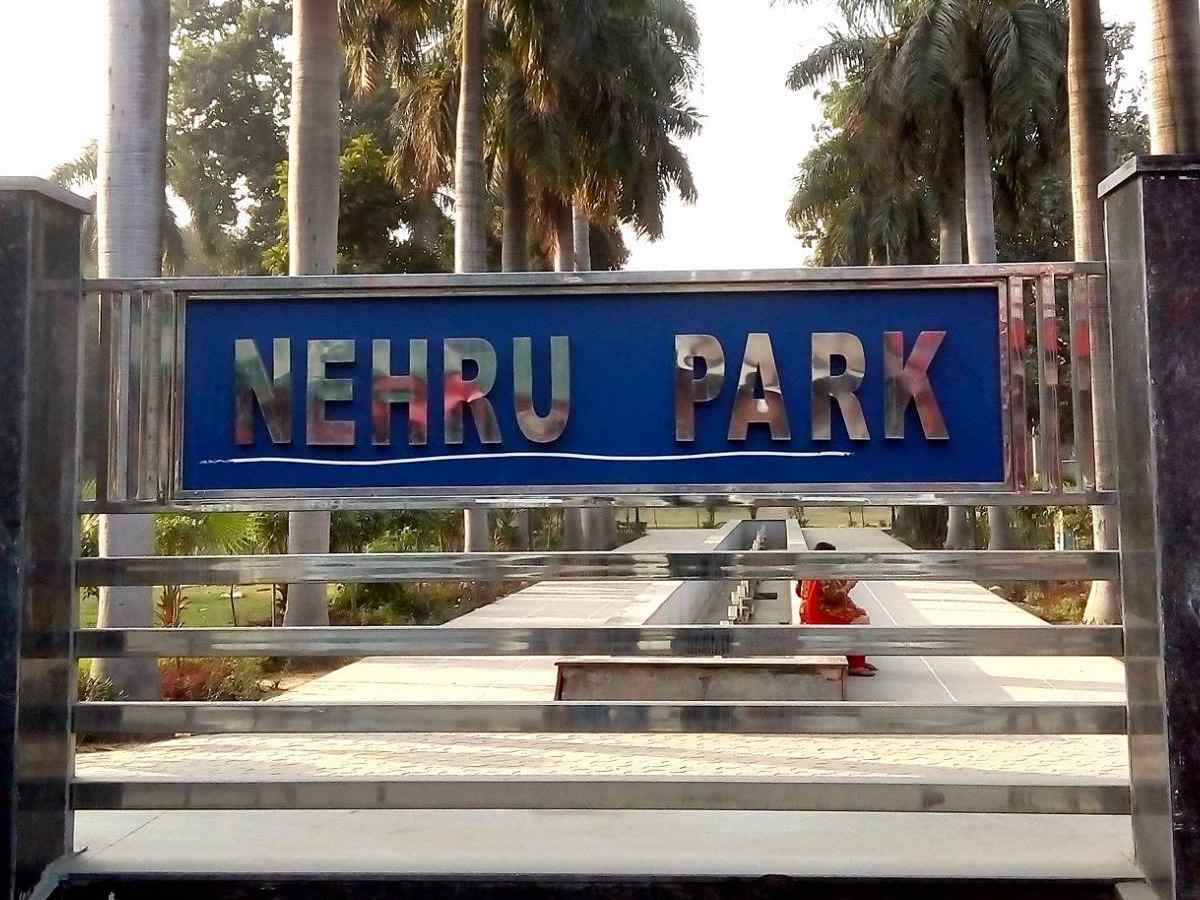
Nehru Park
After an extended rainy season that had kept regulars away, Nehru Park in Delhi is once again bustling with activity. With the skies clear, walkers, joggers, and yoga enthusiasts have returned to this iconic park, established in 1965. In one quiet corner, a reader sits under the shade of a tree, immersed in a novel, adding to the park’s serene charm.
Spanning 75 acres, Nehru Park was developed at a cost of Rs 20 lakh in 1965. Prime Minister Lal Bahadur Shastri laid its foundation on February 25, 1965, and it opened to the public that September. As the park celebrates its 60th anniversary in 2025, it remains a testament to India’s post-independence vision for public green spaces.
A symbol of modern India
Unlike Lodhi Garden, a remnant of the Raj era, or Qudsia Garden with its Mughal legacy, Nehru Park represents a new India striving for excellence. Alongside Buddha Jayanti Park, it showcases the creativity of Indian designers, gardeners, and horticultural experts in the post-colonial period.
The park was the brainchild of Srichand Chhabra, then head of the New Delhi Municipal Council (NDMC). Its design was executed by S S Malik and K C Sharma, the Deputy Director of Horticulture. During his two-year tenure at the NDMC, Chhabra also beautified Delhi’s roundabouts with fountains, leaving behind a distinctive legacy.
Global and national connections
Nehru Park enjoys ties with both Indian Prime Ministers and international leaders. A life-size statue of Russian revolutionary Vladimir Ilyich Lenin, installed in November 1987 to mark the 70th anniversary of the October Revolution, remains one of its most striking features. The unveiling was attended by Soviet Premier Nikolai Ryzhkov, Prime Minister Rajiv Gandhi, and Sonia Gandhi.
Every April 22, leaders and activists from left-leaning parties gather here to honour Lenin on his birth anniversary, noted Pritam Dhariwal, a local social worker.
The park is also linked to India’s first Prime Minister, Jawaharlal Nehru. On November 14, 1968—Nehru’s birthday—Prime Minister Indira Gandhi inaugurated Shishudhara, a dedicated children’s area featuring Nehru’s messages carved on rocks, reflecting his enduring love for young minds.
Also Read: Yamuna floods leave Delhi residents stranded and struggling
From dump yard to green haven
Before its transformation, the site where Nehru Park now stands was a garbage dump littered with jhuggis. Former NDMC Director Madan Thapliyal recalled it as “shabby, dirty, and stinking.” Turning this wasteland into a lush park was no small feat, but the NDMC rose to the challenge.
Thapliyal also noted that in the 1960s, the diplomatic enclave around the park—including areas such as Kautilya Marg and Malcha Marg—was sparsely populated and deserted in the evenings, with only the Ashok Hotel standing out as a landmark.
Today, Nehru Park is home to more than 3,700 trees from 110 species, including Gulmohar, Neem, Champa, Arjun, Alstonia, Kachnar, Eucalyptus, Ashok, Casuarina, Banyan, Jacaranda, Dhak, Jamun, Ficus, and Shahtoot. Its landscape is carefully designed to provide a vibrant display of flowers throughout the year, making it Delhi’s only all-season flower park.
Among the highlights are delicate Linum (flax) species in shades of blue, yellow, and pink, as well as the breathtaking tulip displays often referred to as “Tulipomania,” remembered by Babu Khan, a former NDMC Director.
Regular visitors also develop intimate bonds with the trees. Zafar Iqbal, a former IAS officer, described the habit of returning to the same spot daily: “There’s something special about sitting under the same tree every day.”
A cultural hub in the heart of Delhi
Beyond its natural beauty, Nehru Park serves as a cultural and artistic space. The Srijan Artists Corner, an open-air gallery, allows professional artists to exhibit their work every Sunday from 10 am to 7 pm at no cost. Initiatives like this, observers note, could inspire larger projects such as Art of the Garden, exploring the role of gardens as spaces for relaxation and inspiration.
The park has hosted memorable cultural events, including a 2008 concert by tabla maestro Ustad Zakir Hussain and santoor maestro Pandit Shiv Kumar Sharma—an evening fondly recalled by former Delhi cricketer Pawan Arora.
Also read: Over 200 waterlogging incidents recorded in Delhi till September
A green oasis with a legacy
Nehru Park remains an essential space for physical and mental well-being, attracting Delhi residents as well as the diplomatic community. With its seasonal flowers, diverse trees, and rich cultural offerings, it is not just a park but a living monument to India’s aspirations, creativity, and enduring love for nature.
Coforge opened its first library in Noida in February 2024; it now claims a combined…
Of the 237 spa centres across 10 zones with valid MCD licences, the South East…
CTI chairman Brijesh Goyal said the Rahul Gandhi rally could affect wholesale and retail markets…
Established to mark the university’s 25 years, Jubilee Hall has witnessed generations of student life.…
Delhi inaugurates the 70th National School Games, hosting over 14,000 participants in 14 sports across…
Delhi High Court asked "Doosra" filmmakers to respond to Sourav Ganguly's plea over alleged violation…

