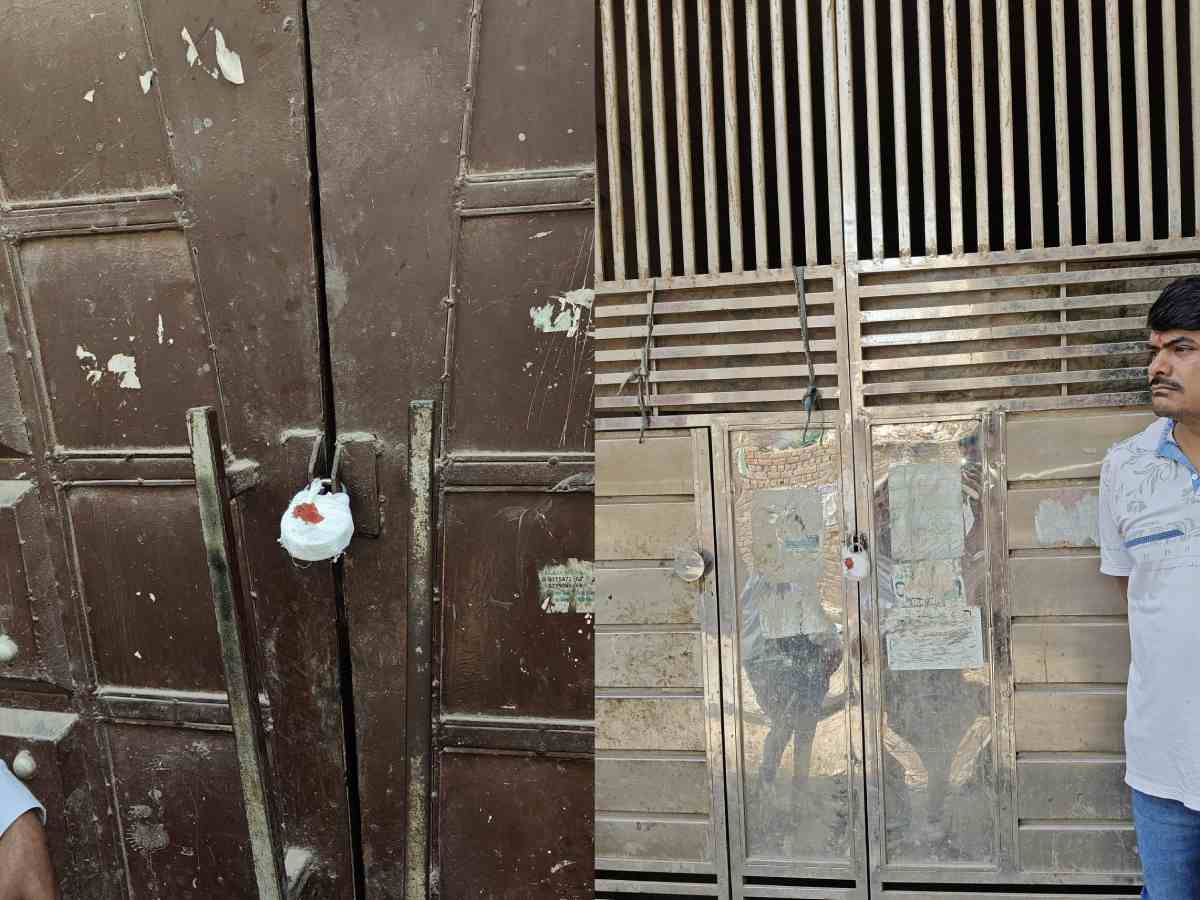
Delhi: Agencies in the national Capital have begun sealing illegal dyeing units operating in various localities across Delhi. The crackdown follows an investigative report by Patriot published on March 10, 2025, which exposed 500 illegal dyeing units depleting groundwater and polluting the Yamuna River.
Government action after Patriot exposé
According to the minutes of the meeting (MOM), “A meeting was held under the Chairmanship of Additional District Magistrate, District North-East at Conference Hall, K-Block, DC Office, Nand Nagari, Delhi 110093, on March 19, 2025, regarding the ‘500 illegal dyeing units in Delhi draining groundwater and polluting the Yamuna River’, published in Patriot.”
The meeting was attended by key officials, including Amod Barthwal, Sub-Divisional Magistrate (SDM) of Karawal Nagar; Inspector Sandeep Kumar from Delhi Police; UK Upadhyay and Sanjib Pal from BSES Yamuna Power Limited (BSES-YPL), along with representatives from other relevant departments.
Also read: How Ramadan is observed at the mosque in Rashtrapati Bhavan
Several key decisions were made during the meeting, including a joint inspection that commenced on March 25, involving officials from the municipal corporation, pollution department, revenue department, Delhi Police, discoms, and Delhi Jal Board (DJB). The MOM stated that the inspection would continue the following day if necessary.
Officials confirmed that no prior notice would be issued as these illegal dyeing units are operating in contempt of the Supreme Court’s order dated May 7, 2024, in the MC Mehta vs Union of India & Ors case. Any illegal unit found during the inspection will be immediately closed and sealed by the joint team.
During the meeting, DJB was directed to disconnect water supply and seal any illegal borewells, while BSES was instructed to cut off electricity supply on the spot. Officials further stated that the Delhi Pollution Control Committee (DPCC) will impose and recover Environmental Damage Compensation (EDC) from these units. Additionally, Delhi Police has been tasked with providing security and support to ensure smooth execution of the operation while maintaining law and order. The Revenue Department will ensure that the concerned Tehsildar is part of the inspection team, according to the minutes.
An estimated 500 illegal dyeing units are operating across Delhi, consuming approximately 100 million litres of water daily and releasing untreated wastewater into city drains, Patriot reported. Environmentalists warn that these units are significantly depleting the city’s groundwater, exacerbating the severe water shortages residents face every summer. Many are forced to wait hours for water tankers to meet their daily needs.
The yarn and textile processing industry—including bleaching, dyeing, printing, and colouring—is classified as a red-category industry due to its high pollution levels. Such industries require approvals under the Water Act (1974), the Air Act (1981), and the Hazardous Waste Rules. The issue has gained renewed attention as the newly elected BJP-led Delhi government prioritises efforts to clean the Yamuna River.
Environmental activist Varun Gulati highlighted that these illegal dyeing units are not confined to Seelampur and Sonia Vihar but are also operating in multiple locations across Delhi. Several other areas are affected, including Bindapur, Matiala, Khyala, Meethapur, Mukundpur, Narela, Kanjhawla, Kirar, Bawana, Badli, Mayapuri, Sarita Vihar, Ghazipur, and Aali Vihar.
Also read: Delhi industrial waste crisis: How lack of treatment plants ail Yamuna, people
Initial sealing operations
According to a statement released by the Municipal Corporation of Delhi (MCD), authorities have already taken action against illegal dyeing units. Two jeans dyeing compounds on 1 Pushta Road in Sonia Vihar, Shahdara North Zone, were sealed.
The statement further noted that the operation was carried out with the joint cooperation of the Delhi Municipal Corporation, Delhi Jal Board, SDM, BSES, and DPCC. During the sealing process, electricity and water connections were also disconnected.
With authorities now cracking down on illegal dyeing units, environmentalists and residents alike await the long-term impact of these measures on groundwater preservation and pollution control in the city.
Also read: Yamuna boating plan: Next big tourism hub or an ecological disaster?
MCD expects the first batch of additional road-cleaning machines by mid-November, with 55 more to…
From expensive gas tandoors to idle diesel generators, micro-entrepreneurs say the winter pollution restrictions are…
A solo exhibition by Asurvedh explores how metal can move beyond its rigid form to…
Delhi will annually ban non-BS-VI vehicles from other states from November 1 to January 31…
Two more bodies were retrieved from an Old Delhi building collapse site on Saturday, taking…
DTF has urged Delhi University to release updated evaluation guidelines for its 4th-year UG research…
