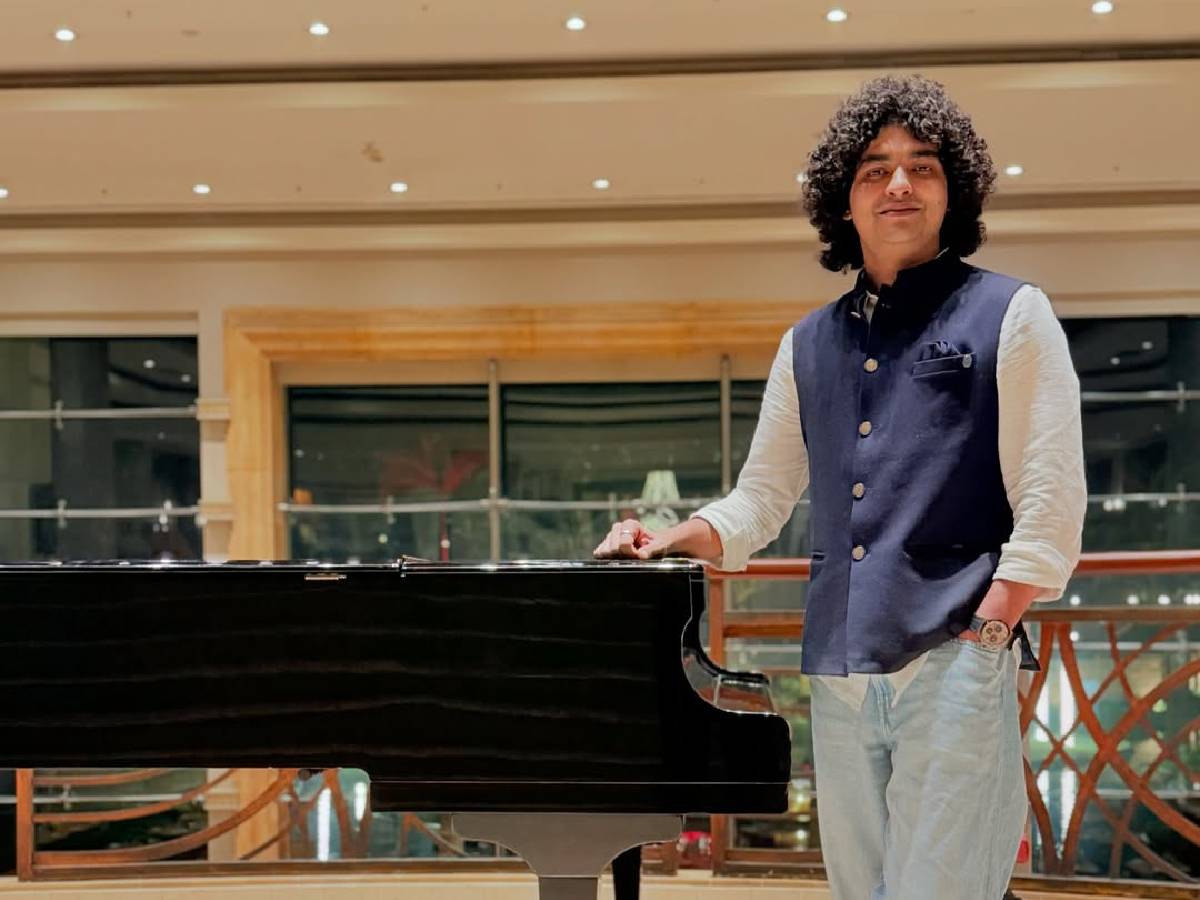
In the world of Sufi Qawwali, where tradition flows across centuries, Rais Anis Sabri has carved a space for himself as one of the youngest torchbearers of the art. Born on September 25, 1993, in Najibabad, Uttar Pradesh, he began learning Qawwali under his father, Rais Sabri, at just four years old. His father had trained under the renowned Qawwal Aslam Sabri.
By six, Rais Anis was already performing before audiences, and by twelve, he was on stage at the Amir Khusro Sangeet Academy in Chennai. His voice has since travelled from dargahs and mosques to international stages and Bollywood studios, yet his essence remains rooted in the Chishti Rang—the devotional tradition of Khwaja Moinuddin Chishti, Nizamuddin Auliya, and Amir Khusro.
He has sung in Bollywood hits such as Junoon Hai (Khuda Haafiz 2) and Lamhaien. What sets him apart is his ability to balance heritage Qawwali with contemporary music, making Sufi traditions relevant to modern audiences.
Struggles and Delhi roots
Recollecting his early struggles, Sabri said his journey began when his father moved the family to Delhi in 2002. They soon shifted to Nagpur, where, he recalled, “My struggle started when I was five or six years old. My name began growing in our community. Two of my albums were released there, and then Sonic Enterprises signed me up. After that, I never looked back.”
By twelve, he was performing Qawwalis, Naats, and stage shows. Schooling, however, soon took a back seat. “I tried studying but didn’t continue after class. I used to bunk classes and go to singing,” he admitted.
The family later settled in Old Delhi. “We moved to Ansari Road. In between, I settled in Bombay, but I didn’t like it. There were many opportunities, but there is nothing like Old Delhi. I love the culture so much that I come to Fatehpuri Mosque every Friday. Even Jama Masjid is scenic. Everything about the place is beautiful—language, culture, food, people.”
One of his Naats, sung over two decades ago, continues to be played at Nizamuddin Dargah, Ajmer Sharif, and in many Muslim neighbourhoods. The lines Apne maa ka dil a dukha are still remembered by children.
Social media and Bollywood
The turning point came with social media. “Since 2016, my zone has changed. My popularity began with my music going viral. More people started coming to my shows. That’s how I learned to balance Qawwali and modern singing together,” he said.
His foray into Bollywood was tied to his family’s musical lineage. “We came to Bollywood from Qawwali and to Sufi from Bollywood. Sajid Wajid is my brother-in-law. My brother-in-law Farhan is a famous singer—you must have heard of Bol Kaffara. Toshi, Sharib, Shadab Faridi, and Altamash Faridi are all from my family.”
He recalled his breakthrough: “We started with Dua Qabool. AR Sir Rehman called me in 2007. He recorded me for Lamhaien. In 2008, I received an award from Amir Khusro Sangeet Academy. Since then, I have been going regularly. My Ghazal Dil Tute Awaaz Na Aye got more than 100 million views. That is how my journey started.”
Also Read: Hemant Pandey: rooted in Delhi, thriving on stage and screen
An 800-year legacy
For Sabri, Qawwali is not merely performance—it is inheritance. “We have been doing this for 800 years. The base is always Qawwali. My great-grandfather sang for kings. My grandfather performed near Haridwar for 45 years. My mother wanted to teach me,” he said.
Her insistence shaped his career. “Nagpur used to be a hub for Qawwali. My mother told me to go because I was very naughty. When I sang there, people liked it so much that I became the main lead. I started getting shows and then albums.”
Reviving Khusro’s poetry
Sabri’s most recent project has been reviving a centuries-old Persian poem by Hazrat Amir Khusro, Nami Danam. “Jahan Kal Raat Ko Hum The, presented by the Sulaiman Khateeb Trust, was produced by Khwaja Khateeb and composed by Jaspal Moni. I’m thrilled to see how much love this song has received. Though it was composed centuries ago, it still holds significance in the modern world,” he said.
Initially, he was invited only to sing scratch portions, with Javed Ali slated to lead. But the producer changed his mind after hearing him. “They invited me only to sing Taan and Sargam. But when Khwaja Khateeb from New Jersey heard it, he liked it so much that he said, ‘We have to cancel Javed Ali and continue with this singer.’ Richa Sharma and I recorded two versions.”
Carrying the torch
With more than 35 albums, millions of YouTube views, and collaborations in Bollywood, Rais Anis Sabri has emerged as one of the strongest young torchbearers of Sufiana Qawwali. Known for his emotionally rich renditions in the Chishti Rang style, his performances have taken him from India to Johannesburg, ensuring that the centuries-old tradition remains alive and resonant in the modern age.
Five arrested, including bouncers, after a man was brutally thrashed to death at a Delhi…
MCD rolled out 12 multi-purpose anti-smog vehicles to suppress dust, wash roads, and tackle rising…
NSUI staged a dharna outside CP police station, alleging Delhi Police assaulted and detained women…
Delhi HC will hear a PIL on Oct 16 seeking to allow peaceful protests at…
DU has approved a ₹5,889 crore plan to build and reconstruct hostels, creating residential accommodation…
Delhi LG said the capital’s development priorities are interconnected, stressing that PPPs must be chosen…

