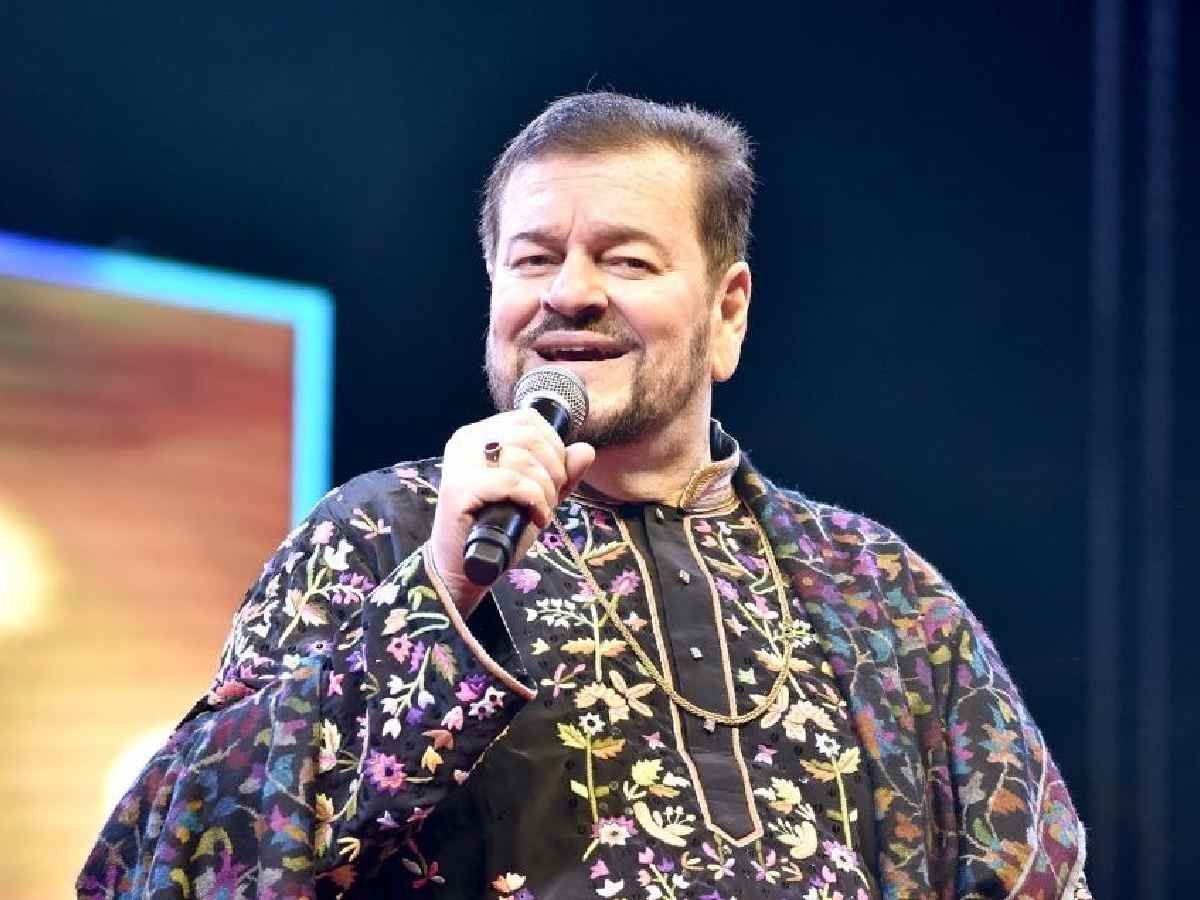
Nitin Mukesh
For Nitin Mukesh, music has never been just a profession—it was a calling shaped by his father, legendary playback singer Mukesh. Now, as he prepares to pay homage on the 102nd birth anniversary with a tribute concert in Delhi, he reflects on a life steeped in song and spiritual rhythm.
Organised by the Scindia Old Boys Association (SOBA), the concert will be held at Siri Fort Auditorium on August 2.
“This is my first performance since my father’s centenary celebrations,” he says. “It’s deeply emotional. Though I’ve never lived in Delhi, I’ve always felt connected—it’s where my father was born and raised.”
The SOBA connection is personal. “I passed out of Scindia School 60 years ago,” he adds. “To have SOBA Delhi organise this makes it even more meaningful.”
‘I knew I wanted to sing from the beginning’
Nitin Mukesh grew up surrounded by iconic voices.
“When I was five, I began accompanying my father to his shows and recordings. By nine, I was already on stage with him,” he recalls. “I grew up listening to legendary music directors and singers. My vision was clear—I wanted to sing.”
He went on to lend his voice to So Gaya Yeh Jahan from Tezaab, My Name Is Lakhan from Ram Lakhan, Zindagi Ki Na Toote Ladi from Kranti, and Tu Mujhe Suna from Chandni. His voice became a fixture for actors like Anil Kapoor, Jackie Shroff, Jeetendra and Manoj Kumar.
Also Read: India Couture Week brings stars, style and tradition to Delhi
“It humbles me that people still cherish these songs,” he says. “When audiences remember me through them, it’s the greatest reward.”
Songs with soul, not just sound
Despite his legacy, Nitin remains concerned about today’s film music.
“Today, it’s more about sound than soul,” he says. “Back then, a film would have ten songs—each memorable, each emotionally rich. Now we’re lucky to get even one that lasts.”
He has mixed feelings about remixes of older hits. “Remixes show how enduring the originals are, and I do enjoy some reinterpretations. But I’m not comfortable with how they’re portrayed. The visuals often take away from the song’s depth.”
He cites the remake of So Gaya Yeh Jahan. “Many artists have sung it again. But the way they shoot it now doesn’t resonate with the emotion I originally tried to convey.”
Working with musical giants
Nitin Mukesh’s career was shaped by collaborations with legends.
“Working with Laxmikant-Pyarelal, Khayyam Sahab, and Rajesh Roshan was a privilege. They shaped me as a singer.”
He fondly recalls Zindagi Ki Na Toote Ladi and Batao Tumhen Pyar Kaise Karoon with Laxmikant-Pyarelal, and duets with Lata Mangeshkar under Khayyam—Humein Tumse Mohabbat Hai from Nakhuda, and Ab Jaan Rahe Ya Jaye from Sawaal.
“They paid so much attention to detail—every note, every word mattered.”
A spiritual shift in his journey
In recent years, Nitin has turned to devotional music.
“I’ve worked with Saregama, Tips, Venus. I find peace in singing spiritual music,” he says.
Among his most cherished projects is Sampoorna Sundar Kand, a recitation from the Ramcharitmanas.
“These recordings aren’t just about music—they’re about faith. And that’s where I’m headed now—towards music that uplifts.”
He credits his father’s humility as a lifelong guide. “He lived humbly, often took local transport, and never let fame change him. He taught me: be a good human first. That stayed with me.”
‘The 90s had a different magic’
Asked about today’s Bollywood music, Nitin is candid.
“I do listen to today’s music. Some of it is good. But the 90s had a different magic—a creative richness that is missing today. Now it feels like we’re chasing trends, forgetting emotions.”
Still, he remains hopeful. “There are great composers and singers out there. The timeless melodies of my father, Kishore Kumar, Rafi Sahab, Lata Ji—those are still loved. That gives me hope.”
Also read: Rekhta Foundation marks 44 years of Umrao Jaan with special 4K screening
A tribute beyond performance
As he prepares for the Delhi concert, Nitin Mukesh is clear.
“This isn’t just a performance—it’s my way of saying thank you to my father, and to the people who’ve kept our songs alive.”
Looking back at a career that has spanned decades and evolved from cinema to spirituality, he remains a singer shaped not just by music, but by meaning.
“I’m still learning,” he says with a smile. “And I’ll keep singing—for as long as people want to listen.”
Elected to the Delhi Golf Club general committee, Mansher Singh says he wants to build…
A $780 million market built on pavements, where the pleasure of reading meets the price…
Supreme Court advocate Abhishek Pawar alleges women were denied washroom access for seven to eight…
Each day of closure costs shops in Khan Market and Connaught Place between Rs 60,000…
Delhi generates nearly 15,000 tonnes of waste daily, prompting the government to deploy 1,000 mechanical…
Delhi Police has issued an NOC for the Congress rally at Ramlila Maidan on November…
