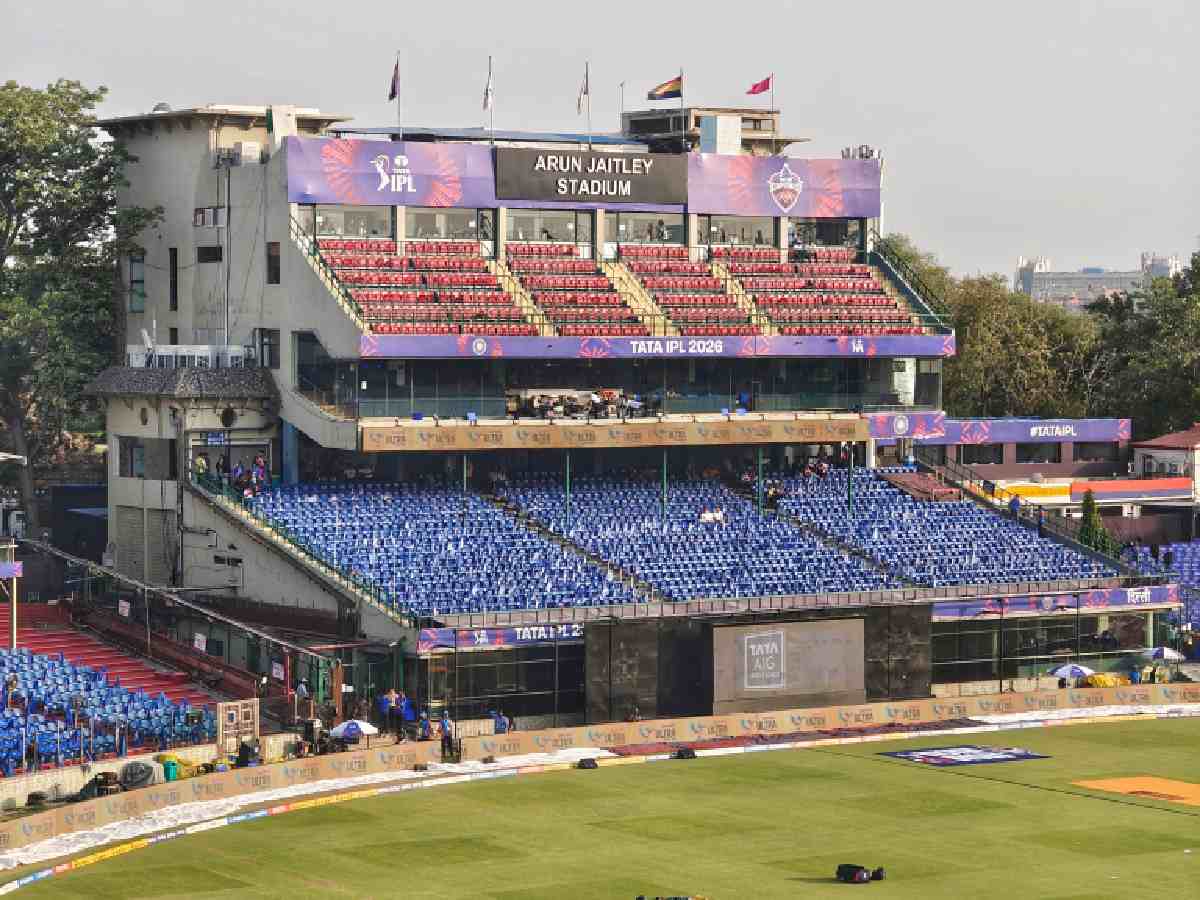
Affiliated clubs of the Delhi and District Cricket Association (DDCA) are eagerly awaiting implementation of the new National Sports Governance Act (NSGA) 2025. Although the Act, promulgated in August last year, is taking a long time to take full effect, most of the 110 clubs are biding their time before making their next move in their push to become DDCA members with voting rights. They are anticipating something good from the NSGA.
DDCA, registered as a company, is perhaps the only state cricket body in India where affiliated clubs, registered under the Societies Act, are not its members and thus ineligible to vote in elections. In all other major state associations like Mumbai, Bengal, Tamil Nadu, and Goa etc, clubs with voting rights form the majority of the general body.
Also Read: Diwali melas: full stalls, thin margins
Over the years, some DDCA clubs have raised the issue of membership intermittently, but for one reason or another, they have not presented a united front to back their demands. One reason is that some club officials – mostly secretaries, who manage them – are DDCA’s individual members with voting rights. So they are less forceful and do not push the clubs’ membership issue with full zest.
The schism became evident a few days ago when secretaries of 20-odd clubs met, but, strangely, they didn’t discuss the membership issue. TV Subramaniam, secretary of Pelican Cricket Club and a DDCA member since 1990, says it was just a “get-together,” while a source present said they discussed less important issues and have not circulated minutes so far.
“Some club secretaries present declined to mark their attendance by signing the sheet while others present outside the meeting room didn’t bother to attend,” said the source, pointing to the vertical divide among the clubs.
No relief from courts
However, efforts have been made over the decades to secure the elusive DDCA membership. More recently, 17 clubs filed an interlocutory application in the Supreme Court in 2019 in the famous cricket reforms case between the Board of Control for Cricket in India (BCCI) and the Cricket Association of Bihar. The court eventually directed them to seek remedies from an appropriate legal authority.
Then, perhaps encouraged by the fact that the Supreme Court didn’t outright reject their prayer, 44 clubs moved the Delhi High Court. In September 2024, the court advised them to approach the National Company Law Tribunal (NCLT). However, some clubs were unsure whether they would get “justice” even from the NCLT, so they never approached it.
At the same time, talk of a National Sports Governance Bill started, and it was introduced in July last year; it became an Act the following month. “We are now waiting for NSGA to be implemented so that we can then approach its tribunal, as it would perhaps be an appropriate authority to address such grievances,” says Subramaniam.
However, it is still unclear whether the BCCI – and by extension its affiliates – would agree to come under the NSGA, as that would also mean being answerable to the Right to Information Act, something the Board has steadfastly resisted.
Lost opportunity
DDCA clubs had a golden opportunity when Arun Jaitley was its president (1999-2013) and his party was in power at the centre. As Union Minister for Information and Broadcasting (1999-2000) and Union Minister of Law and Justice (2000-04), he could easily have amended the DDCA constitution to grant the clubs membership.
Also Read: Is the momo edging out the samosa in Delhi?
“He could have done anything when he was a Union Minister. But when he saw how the DDCA functioned, he felt it might not be worth granting them membership. At the same time, hardly any club sought DDCA membership, though some club individuals were made members. There was also infighting among the clubs. Then, the Sports Committee came into being in 1995, and the clubs seemingly forgot to press for membership,” says Pramod Jain, president of Sarojini Nagar Gymkhana and vice-president of Rohtak Road Gymkhana.
Mumbai shows the way
Bodies such as Mumbai, Bengal, Tamil Nadu and Goa draw their strength and talent from member clubs with voting rights and wholeheartedly fund them. Also, unlike DDCA, most constituent members of these associations are clubs that can decisively change the course of elections.
DDCA earned Rs 4.15 lakh in membership fees from its affiliated clubs in the financial year 2023-24 and Rs 3.27 lakh in 2024-25. In contrast, other state associations are a source of continued sustenance for their clubs.
For example, the Mumbai Cricket Association (MCA) provided financial assistance of Rs 4.89 crore to its clubs in 2024-25, while in 2023-24 it gave Rs 5.71 crore. This year, the MCA, which conducts 51 tournaments annually, set up a Rs 100 crore corpus for its clubs and introduced a Mediclaim policy for club representatives. DDCA has no such policy.
Delhi recorded an AQI of 350, its highest in 287 days, with pollution levels reaching…
Delhi Chief Minister Rekha Gupta calls for government-private sector partnership to expand hospital infrastructure and…
A survey found that 57 per cent of Delhi-NCR residents rated enforcement of restrictions on…
A Delhi court acquitted five men accused of vandalising and setting fire to Allah Wali…
Delhi Police has deployed a face recognition van in Sadar Bazar and intensified patrolling to…
Artist Smitaa V Jain explores the connection between architecture, memory and personal experiences through paintings…

