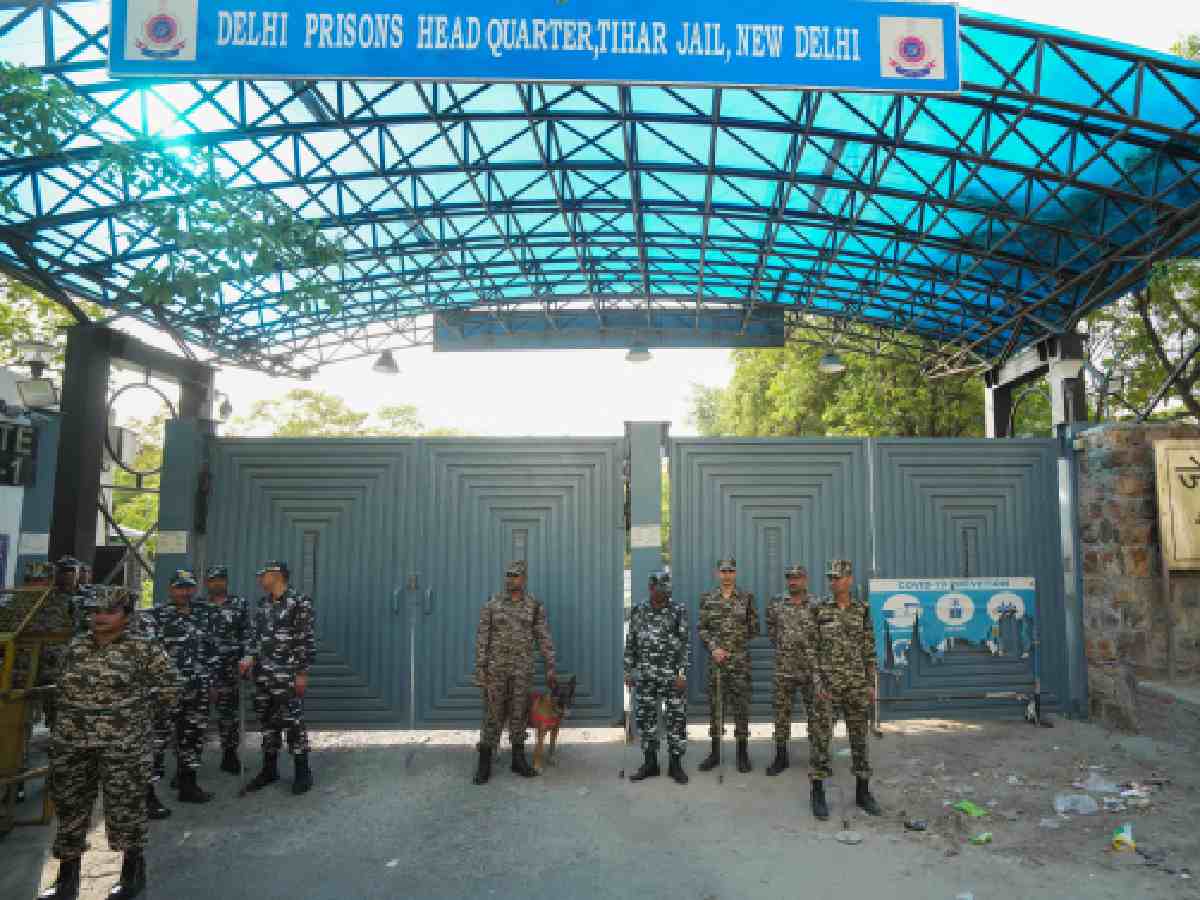
A steady stream of custodial deaths in Delhi’s prisons has raised serious concerns about safety lapses and official accountability, with India’s largest prison complex in Tihar witnessing several incidents of deaths, including suicides, over the past months.
23 custodial deaths
According to the National Human Rights Commission (NHRC), 23 custodial deaths have been recorded in Delhi between January 1 and November 3, 2025 — similar to the toll during the same period last year. Prison authorities attributed many of these deaths to medical complications and reported some as suicides. However, a few cases remain unexplained.
The NHRC has repeatedly flagged delayed or missing reports despite mandatory reporting requirements. Deaths at Deen Dayal Upadhyay Hospital prompted the Commission to seek detailed reports from the Prison Department, the District Magistrate concerned, and the Deputy Commissioner of Police (DCP) of the West district. None have been submitted so far.
One such case involved the death of Brijesh, an undertrial prisoner who died during treatment on February 27. The NHRC sought a detailed report, including medical records, post-mortem findings, and a magisterial inquiry. However, the agencies are yet to submit all details.
The Commission is also awaiting documents in the case of Mohammed Shabaj, who died in Tihar Jail on March 19. The NHRC had set a six-week deadline for the District Magistrate, DCP West, and the Superintendent of Jail Number 3 to submit the relevant papers.
A senior Tihar official, speaking on condition of anonymity, said that most reports were prepared on time but were not vetted by other departments as scheduled. “Moreover,” he added, “hospitals take time to prepare medico-legal case reports, especially in cases of violence or suicide, which delays our submissions.”
‘Safety lapses’
On July 14, undertrial prisoner Ramesh Karmakar was found hanging from a window at the prison hospital. Karmakar, who had been lodged in Jail Number 4, had been undergoing treatment in the hospital at Jail Number 3 since May 28.
In another case, Saquib Nachan, a terror accused linked to ISIS, died at Safdarjung Hospital in judicial custody. Nachan, convicted for the 2002 and 2003 Mumbai bomb blasts, had been lodged at Tihar Jail since 2023. The National Investigation Agency (NIA) described him as a “self-styled Amir-e-Hind” of ISIS in India. In June 2024, he and 16 operatives were charged with recruiting and radicalising youth and producing improvised explosive devices in the Delhi-Padgha ISIS module case.
On April 30, a 19-year-old man died and a 28-year-old was injured after allegedly jumping from a moving police vehicle in Vasant Kunj North while being transported after their arrest. The two men — Ravi Sahni (alias Ravi Kaliya) and Vikas (alias Majnu) — both residents of Samalkha, had been detained in connection with a vehicle theft.
The police said that after medical examination, the two were being driven in a government vehicle when they jumped out in an attempt to escape. Ravi was declared dead on arrival at IGI Hospital, while Vikas sustained minor abrasions and is undergoing treatment. The families, however, alleged that the men were taken from home, beaten in a forested area, and killed in police custody. They blocked the Samalkha-Kapashera road, pelted stones at police, and demanded strict action.
Ugandan prisoner’s case
The custodial death of Moureen Katusiime, a Ugandan prisoner, on January 10, 2024, also remains unresolved. The NHRC has repeatedly complained of missing documents, including medical records, post-mortem reports, and an explanation for a 15-day delay in conducting the post-mortem.
The Commission noted that while the forensic report cited cardiac arrest due to coronary artery disease as the cause of death, there were no records of treatment for cardiac issues, only for minor ailments. It warned that if the pending reports were not submitted within six weeks, it would invoke its coercive powers under Section 13 of the Protection of Human Rights Act, 1993.
“Pursuant to earlier directives, the Commission received a magisterial inquiry report and inquest report dated March 24, 2025, from ACJ/ARC, North-West District, Rohini Courts, but some documents are illegible, and the complete medical treatment record and post-mortem examination CD remain pending. The Commission now issues a fresh reminder to the District Magistrate, West District, Delhi, the Deputy Commissioner of Police, West District, Delhi, and the Superintendent, Central Jail No. 6, Tihar, to submit or clarify the complete medical treatment record, the post-mortem examination CD, and an explanation for the 15-day post-mortem delay within six weeks, failing which the Commission will invoke its coercive powers under Section 13 of the PHR Act, 1993,” the order read.
Relatives of deceased prisoners have alleged apathy and delays in handing over bodies. “We kept asking for my brother’s body, but they delayed for over 15 days, saying a post-mortem was pending. It almost felt like they were hiding something,” said a family member of a deceased undertrial.
The Prison Statistics India 2022 report by the National Crime Records Bureau showed that Delhi recorded 13 unnatural deaths in its prisons. The recent spate of deaths, coupled with alleged bureaucratic delays and lack of transparency, has further raised questions over custodial safety in the capital’s prisons.
Delhi inaugurates the 70th National School Games, hosting over 14,000 participants in 14 sports across…
Delhi High Court asked "Doosra" filmmakers to respond to Sourav Ganguly's plea over alleged violation…
Delhi L-G appointed Paralympian Suvarna Raj as State Commissioner for PwDs following her gold win…
DDA is planning Delhi's longest 24-km cycling track along the Yamuna floodplain, linking key eco-projects…
Police detained several anti-SIR protesters heading to the ECI headquarters in Delhi as mass gatherings…
An exhibition that revisits the significance of Indian Modernism through works from earlier and defining…
