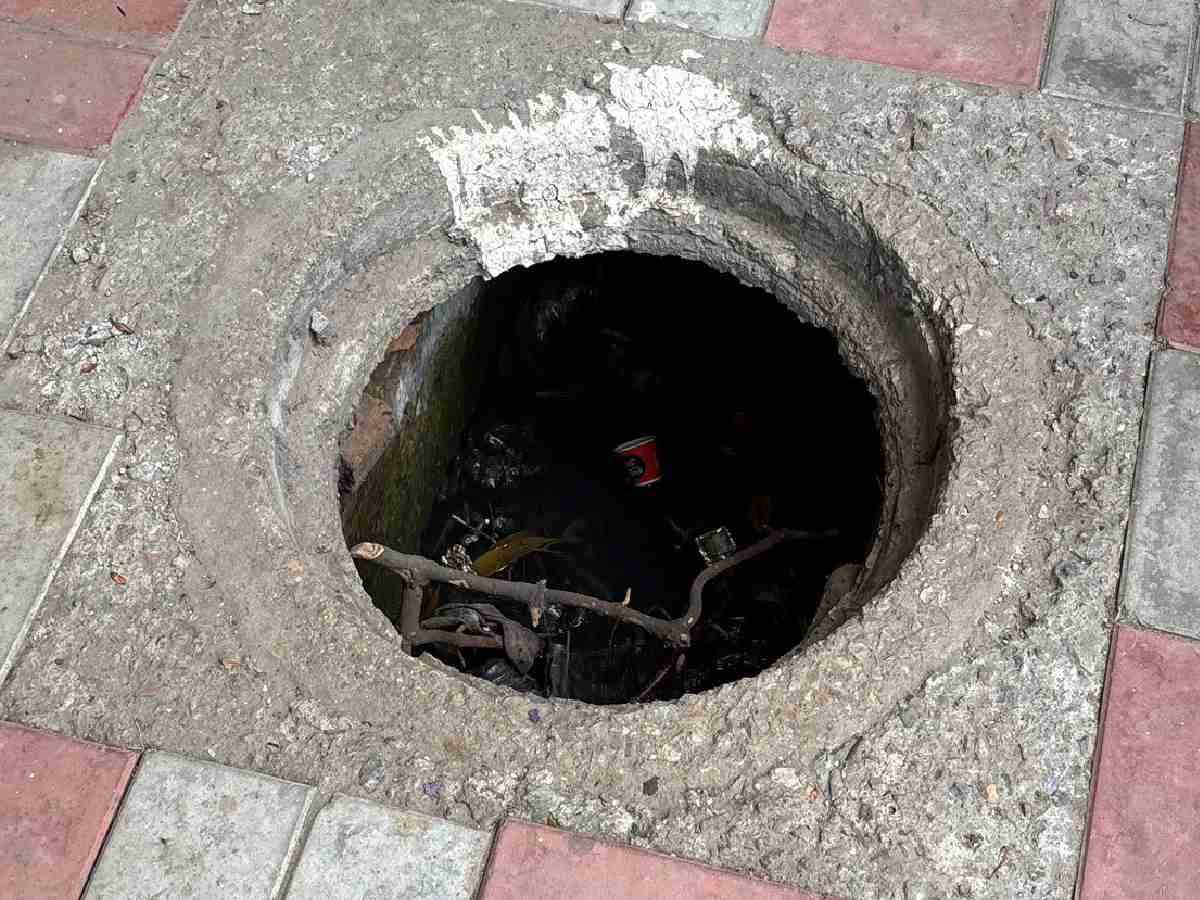
Delhi and the National Capital Region (NCR) have been battered by relentless rain, submerging entire localities and turning roads into treacherous stretches. Vehicular movement has become increasingly risky, with accidents surging and crumbling infrastructure posing lethal threats to commuters.
A night of tragedy in Gurugram
On the night of July 9, Gurugram’s streets turned into rivers of floodwater. Among the victims was Shailendra, a 27-year-old autorickshaw driver, who died after his vehicle hit an open manhole. His pregnant wife, Sumalata, is inconsolable.
At 8:19 PM that night, Shailendra had called her, promising to return soon after dropping a passenger. But all her calls afterwards went unanswered. Desperate, Sumalata reached out to their landlord, Babulal, who informed the police at 3 AM. Around 7 AM, delivery workers stumbled upon Shailendra’s body in Sector 47, lying in an open sewer.
His autorickshaw had overturned after colliding with the uncovered manhole on a waterlogged street. Bystanders rushed him to Park Hospital, but he had succumbed to his injuries.
Drainage crisis in Delhi
While this tragedy occurred in Gurugram, Delhi faces similar dangers from broken drains and pothole-ridden roads. According to the Public Works Department’s (PWD) Seva website, there are 76 unresolved sanitation-related complaints this year. Uncovered manholes—despite their proven danger—are relegated to the “Others” category, raising serious safety concerns.
Since January 1, 26 complaints specifically about uncovered or broken manholes remain unresolved. Complainants allege that the PWD often marks such complaints as “resolved” virtually, without addressing them on the ground.
Much of the issue has been highlighted by the Jeevan Dhara Welfare Society, a Delhi-based NGO. The organisation has repeatedly flagged hazards such as open and damaged manholes, warning of long-term consequences if left unaddressed.
Officials acknowledge recurring problems
PWD officials admit that such problems persist every monsoon. “The issue is ever prevalent. Every other year, there is some damage or the other to the manholes. Sometimes these go missing as well. This year itself we have received around three complaints regarding missing concrete sewer slabs. There are a lot of thieves around who keep stealing these,” an official said.
Delhi Police patrol teams have also flagged missing manhole covers. Residents’ groups, however, accuse the PWD of negligence. Ramvilas Sharma, a member of the Sawan Park Residents Welfare Association (RWA) in Ashok Vihar, said, “The drain at the Swaminarayan underpass leading to Satyavati Colony road has been either broken or stolen. We had flagged the issue on July 21, but till now there has been no update on it.”
Activists from Jeevan Dhara Welfare Society echoed similar concerns. Raghuveer Singh, one of the group’s members, said they had flagged an uncovered manhole left open after desilting work by PWD staff. According to him, the workers neither removed the silt nor replaced the missing cover. “It has been over a month since desilting was done there. Moreover, the desilting has not been proper either, which has made it almost impossible for the water to drain out effectively. No wonder there are as many accidents in the national capital,” Singh said.
Deadly toll of broken roads
Delhi’s failing infrastructure is reflected in its grim accident statistics. Fatal accidents surged by 4.7% in 2024, claiming 1,504 lives compared to 1,432 in 2023, according to Delhi Police data. Pedestrians accounted for 43% of these deaths, while two-wheeler riders made up 38%.
Notorious accident-prone spots include ISBT Kashmere Gate and NH-8. Overspeeding, drunk driving, and ignoring traffic rules remain primary causes, while potholes worsen the situation. Joint Commissioner of Police Kime Kaming, however, downplayed the impact of potholes, saying reckless behaviour remains the biggest contributor to fatalities.
Despite repeated appeals by Delhi Traffic Police, the PWD has delayed critical road repairs. Residents such as Arun Chadha have criticised the agency for shoddy work, saying it creates perilous conditions, particularly for two-wheelers.
The PWD has begun trials with a new ECOFIX pothole repair system and has mandated inspections, but progress is slow. By April 2025, only half of the 7,678 reported potholes had been fixed. With the monsoon now in full swing, experts warn that commuters remain dangerously exposed.
Waterlogging and monsoon accidents
The Drain Road near Dabri roundabout in west Delhi is currently the city’s deadliest waterlogged stretch, recording an average of 11 road accidents annually between July and September, according to Delhi Traffic Police.
Also Read: ‘Next big flood in Delhi is inevitable’: MoJS report ‘overlooks’ key risks
Last year, 193 other waterlogging hotspots together recorded nearly 400 incidents, with officials identifying waterlogging as a key factor in almost every case.
To curb such accidents, the traffic police shared a list of 194 high-risk locations with civic agencies during pre-monsoon meetings. The Delhi Jal Board, PWD, Municipal Corporation of Delhi, and Delhi Development Authority were urged to address poor drainage at these sites.
Earlier on June 20, the PWD flagged 71 critical locations out of 350 waterlogging-prone areas where water removal remains particularly difficult despite continuous drainage efforts.
DMRC says zero reduction in train trips, attributes decline to security measures and public apprehension…
A Delhi court denied bail to a former DU professor accused of raping a student,…
Delhi Police charged seven dhaba workers in the fatal beating of a Manipuri musician who…
Seven Delhi STPs failed DPCC standards in September, dumping high levels of faecal coliform and…
AISA chief Neha Bora petitioned the Delhi HC against a police notice requiring a peace…
Average AQI of 171 in the first week of this month; falling temperatures and stubble…

