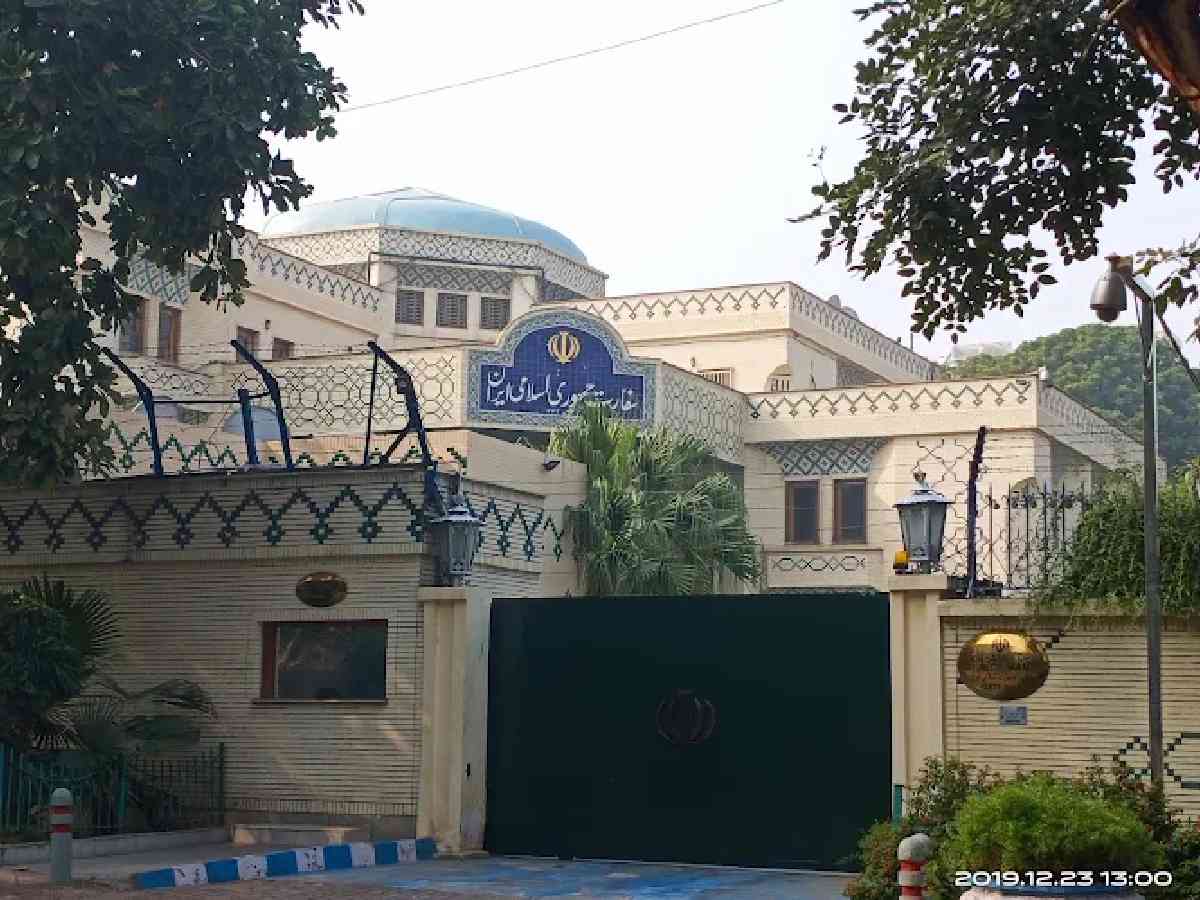
As Iran is engulfed in one of its most widespread upheavals in decades over soaring inflation, persistent unemployment and crippling energy shortages, the spirit of Iran endures—quietly and resiliently—in Delhi. Here, centuries-old architectural landmarks and active cultural institutions preserve a deep Persian legacy intertwined with Indian history since the Mughal era. These enduring symbols show how cultures can transcend borders, conflict and time, sustaining a shared heritage untouched by contemporary turmoil.
Persian stone
These symbols remind us that cultures transcend borders and upheaval, weaving a shared Indo-Iranian history dating back to the Mughal era. The most striking embodiment of Iranian influence is Humayun’s Tomb, Delhi’s grandest Persian-inspired monument. Built in the 1560s under the patronage of Emperor Humayun’s widow, Bega Begum, it was designed by Persian architects Mirak Mirza Ghiyas and his son, Sayyid Muhammad.
The tomb’s architecture draws heavily from Iranian traditions, featuring the iconic charbagh layout—a paradise garden divided into four quadrants by water channels and pathways—symbolising the Islamic concept of Jannat, or heavenly gardens. The soaring double dome, clad in white marble atop red sandstone, along with intricate jaali work and geometric patterns, evokes the mosques and mausoleums of historic Persian cities.
Visitors often describe a sense of stepping into Iran itself. Iranian tourists strolling through the serene gardens or reading Persian inscriptions often speak of an immediate emotional connection, as though transported back to their homeland.
Shared forms
This Persian imprint extends beyond Humayun’s Tomb. At the Qutub complex, early Islamic arches and decorative elements reflect Persian stylistic influences from the dawn of Delhi’s Sultanate period.
The Jama Masjid showcases Persian-style arches and inscriptions, while Mughal gardens at sites such as the Red Fort adapt the charbagh design, channelling the symmetry central to Iranian landscape architecture.
Living culture
Beyond stone and mortar, Iran’s cultural presence thrives in modern Delhi. The Iran Culture House on Tilak Marg has long served as a hub for Persian language classes, a large library, film festivals, music performances and art exhibitions. Indian students regularly enrol here to learn Farsi, immersing themselves in Persian poetry, music and traditions, and strengthening people-to-people ties.
Run by the Embassy of Iran, the distinctive petal-shaped structure is especially striking at sunset. It houses a rich library of over 40,000 books on Persian studies, along with audiovisual resources and handicrafts, and hosts poetry readings—featuring Hafiz and Rumi—film screenings and cultural programmes. Persian was once the court language of Mughal India, a reminder of the depth of these historical links.
The Iranian Embassy on Barakhamba Road further reinforces these connections through diplomatic and cultural engagement.
According to historian Firoz Bakhat Ahmad, these monuments and institutions are more than architectural relics. “They are living testaments to the fusion of two great civilisations,” he notes. “They remind us that cultures connect beyond boundaries, enriching one another across time.”
Modern lotus
The Bahá’í Lotus Temple, designed by Iranian architect Fariborz Sahba and completed in 1986, represents a contemporary Iranian connection. Its iconic lotus-shaped form draws on universal spiritual symbolism, while its clean, elegant lines reflect modern Iranian architectural sensibilities. Open to all faiths, the structure symbolises peace and unity—values shared across Persian and Indian cultures.
Shared streets
Historical connections run deeper still. In the early 1980s, a large number of Iranian students studied at Delhi University. During the build-up to Iran’s 1979 Islamic Revolution under Ayatollah Khomeini, many organised marches from Ramlila Maidan through central Delhi, joined by local activists, teachers and intellectuals in solidarity against the monarchy.
For decades, the Iran School in Golf Links educated the children of Iranian diplomats and staff from 1964 onward. Walls adorned with Persian proverbs and portraits of Iranian leaders created a slice of home. In 2008, former Iranian President Mahmoud Ahmadinejad visited the school to meet nearly 600 Iranians living in Delhi, including diplomats and students. The school remained a focal point of community life until it closed during the COVID-19 pandemic.
Today, as Iran faces profound uncertainty, Delhi continues to quietly preserve these threads of Persian legacy—reminders of a shared past that endures even in times of upheaval.
Elected to the Delhi Golf Club general committee, Mansher Singh says he wants to build…
A $780 million market built on pavements, where the pleasure of reading meets the price…
Supreme Court advocate Abhishek Pawar alleges women were denied washroom access for seven to eight…
Each day of closure costs shops in Khan Market and Connaught Place between Rs 60,000…
Delhi generates nearly 15,000 tonnes of waste daily, prompting the government to deploy 1,000 mechanical…
Delhi Police has issued an NOC for the Congress rally at Ramlila Maidan on November…

