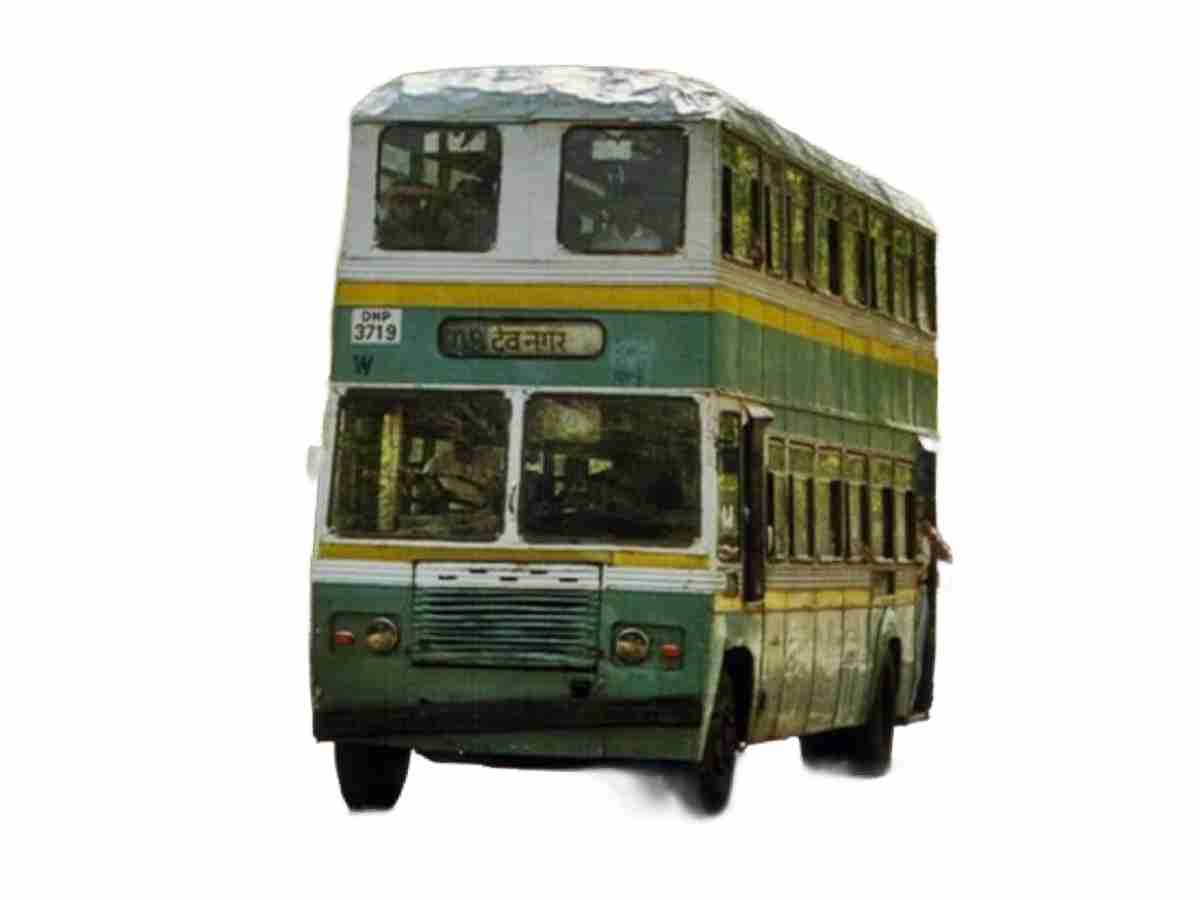
Double-decker buses
It is entirely possible that today’s 35–40-year-old residents of the Capital have only heard that double-decker buses once ran on Delhi’s streets. These vehicles plied on routes such as Sarojini Nagar to Karol Bagh, Jama Masjid to Qutub Road, Kendriya Terminal to Dev Nagar, and Shadipur Depot to Central Terminal.
Now, after their disappearance in 1989, the Delhi Transport Corporation (DTC) has initiated efforts to bring them back—this time in an electric avatar.
The double-deckers, often painted in their iconic red livery, were branded under the “Suvidha” service. Fares were affordable: a ticket from Jama Masjid to Qutub Road cost just 15 paise. By the 1970s, they had become a familiar sight, accommodating 70–80 passengers per bus, with the upper deck offering panoramic views of the city.
The glory days of double-decker buses
“As a hard-core Dilliwala, I used to travel on double-decker buses often,” recalls veteran media professional Chandrasekhar Nailwal. He said the buses were towering, and when they took sharp turns, passengers could only pray to their gods. For him, they symbolised efficient public transportation in the national capital, carrying commuters, families, and sightseers alike through the city’s evolving landscape.
The buses became a symbol of the simpler joys of Delhi life in an era before the metro and private cars dominated. Yet their story was short-lived, introduced amid growing urbanisation but phased out due to practical challenges.
Surprisingly, they never plied in East Delhi. The reason remains unclear, though many believe that until the 1980s East Delhi was treated as the poor cousin of the Capital. At the time, there was even a saying: Jitne dukhiya, sab Jamna Paar. The situation, however, changed once Mayur Vihar and other residential ‘Vihars’ developed along Vikas Marg.
A ride to remember
From the 1970s to the late 1980s, double-decker buses were a memorable part of the DTC fleet. Primarily imported from British Leyland, they were limited in number and operated only on select routes. Each bus could carry 80–100 passengers, making them vital in addressing the city’s growing traffic demands.
Travelling on these buses was a thrilling experience. Children and youngsters especially loved sitting on the upper deck, which offered an unmatched view of Delhi’s skyline. Ashok Pipal, a former Jawaharlal Nehru University student, fondly remembers his journeys. Travelling on the upper deck in the evenings, he recalled, was a different pleasure altogether—the breeze, the sense of height, and the view of the streets below offered passengers a unique joy. However, during peak hours, climbing the narrow stairs or standing on the crowded lower deck could be difficult.
Challenges and the end of an era
Urban transport expert Kamaljit Singh explained that increasing traffic congestion, narrow roads, low-hanging wires, and new flyovers made navigation difficult for these buses. Maintenance costs also rose steeply—spare parts for the imported models were scarce and expensive, while the buses consumed large amounts of fuel, straining DTC’s budget.
They also required extra staff, including a second conductor for the upper deck, adding to operational expenses. As private vehicles such as the Maruti 800 became more affordable in 1984, public reliance on buses waned. Meanwhile, with the metro entering planning stages in the 1980s, the focus shifted to modern transport systems.
Also Read: Delhi’s Old Secretariat: a witness to India’s political journey
Still, double-deckers remained a popular choice for Delhi sightseeing tours. Tourists relished views of the Red Fort, India Gate, and other landmarks from the upper deck, even if the buses were relatively slow.
A modern revival
For many, the memory of double-decker buses remains an enduring source of nostalgia. Today, the DTC is planning to reintroduce electric double-decker buses—eco-friendly vehicles that blend modern technology with old memories.
That earlier era gave Delhi’s public transport a distinctive dimension, one that still lives in the city’s collective heart.
Delhi inaugurates the 70th National School Games, hosting over 14,000 participants in 14 sports across…
Delhi High Court asked "Doosra" filmmakers to respond to Sourav Ganguly's plea over alleged violation…
Delhi L-G appointed Paralympian Suvarna Raj as State Commissioner for PwDs following her gold win…
DDA is planning Delhi's longest 24-km cycling track along the Yamuna floodplain, linking key eco-projects…
Police detained several anti-SIR protesters heading to the ECI headquarters in Delhi as mass gatherings…
An exhibition that revisits the significance of Indian Modernism through works from earlier and defining…

