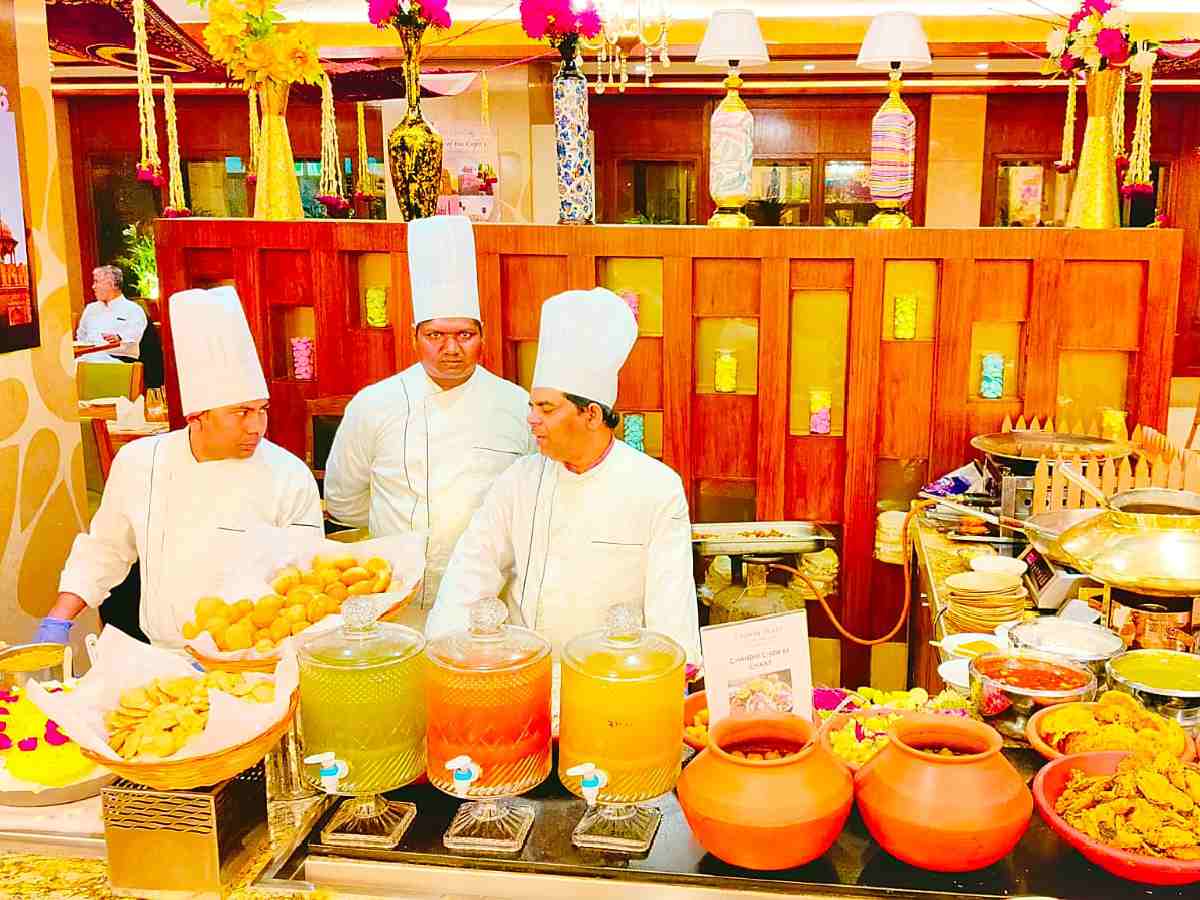
Delhi’s food is rarely just about taste. It is about recognition, flavours that feel familiar the moment they arrive at the table. That sense of memory sits at the centre of Dilli 6 – Ishq-e-Dilli, the Old Delhi food festival currently underway at Edesia, Crowne Plaza Today New Delhi Okhla.
Running from February 16 to March 1 at Crowne Plaza Today New Delhi Okhla, the festival brings together dishes associated with Delhi’s historic food districts and presents them in a setting that allows the flavours to speak without distraction.
The experience does not begin with presentation. It begins with aroma. Even before reaching the counters, the air carries the fragrance of slow-cooked gravies, warm spices and freshly prepared breads. It feels less like entering a restaurant and more like stepping into a familiar culinary rhythm, one that moves from street snacks to rich mains and ends with desserts rooted in tradition.
The opening spread: chaat and everyday comfort
The meal begins with chaat, and the progression feels deliberate. Patta chaat arrives crisp, lightly spiced and balanced with chutneys that do not overpower. Papdi chaat follows with its expected contrast of crunch, cooling curd and mild sweetness. Bhalla chaat brings softness, the lentil dumplings absorbing flavour without losing structure.
The variety expands quickly. Kaanji vada introduces a sharp fermented note that cuts through earlier richness, refreshing the palate. Tokri chaat layers texture, crisp shell, spiced filling and cooling toppings, creating a more complex bite. Ram laddu appears warm and lightly coarse, paired with grated radish that adds freshness. Matar kulcha remains simple yet deeply satisfying, the soft bread soaking up the spiced chickpeas in a way that feels unmistakably Delhi.
Also Read: Awadhi flavours take centre stage at Delhi Aerocity
Nothing in this section attempts reinvention. The dishes are presented as they are known, recognisable, balanced and grounded in everyday eating.
Moving towards Jama Masjid’s flavour memory
As the chaat counters settle into a steady rhythm, the live cooking stations begin drawing attention. The inspiration is clearly rooted in the culinary environment around Jama Masjid, where food is defined as much by aroma as by taste.
Fried chicken and fish are prepared continuously, the sound of oil and spice announcing their arrival before the dishes reach the plate. Nearby, paya soup simmers steadily, its fragrance warm and slow-building. The aroma alone creates anticipation.
Tawa kaleji and bheja fry are served hot, deeply flavoured and soft in texture. These dishes carry intensity but remain controlled, avoiding heaviness. Boti kebab provides structure, smoky exterior and tender interior, while haleem offers a denser, slower experience, its texture thick and cohesive from prolonged cooking.
A lightly seasoned fish salad introduces contrast, preventing the sequence from becoming uniform in flavour. The shift from chaat to live cooking feels natural, a movement from tangy freshness to warmth and depth.
The heart of the meal: slow gravies and Mughlai mains
The main course unfolds gradually, built around slow-cooked gravies and rice preparations. Mutton nihari appears rich and glossy, its flavour layered through time rather than spice intensity. The gravy coats without overwhelming, and the meat remains tender.
Chicken korma follows with softer spice and smooth richness, while paneer pakeeza offers a vegetarian alternative that feels equally layered. Each dish reflects patience, the kind of cooking that prioritises slow simmering over immediate impact.
Chicken biryani and mutton biryani arrive fragrant, the rice absorbing flavour rather than carrying sharp spice. Murgh salan accompanies the biryani with a robust gravy that ties the plate together. The combination feels comforting rather than heavy, structured rather than indulgent.
Bread that shapes the experience
A dedicated bread counter reinforces how central texture is to the meal. Roghani naan appears soft and slightly rich, absorbing gravies easily. Khameeri roti carries a subtle fermented depth, adding character without sharpness. Sheermalintroduces mild sweetness, offering contrast to savoury preparations.
These breads do not function as sides. They complete the structure of the meal, shaping how flavours are experienced.
Desserts that carry Old Delhi forward
The dessert section remains rooted in tradition. Kimami sewaiyan brings aromatic sweetness without excess. Zarda offers warmth and colour with balanced sugar. Habshi halwa, also known as halwa sohan, provides a dense, slow-finished conclusion, a dessert associated with heritage sweet-making rather than modern presentation.
The progression from savoury to sweet feels natural, not abrupt, maintaining the overall rhythm of the meal.
The ambience remains calm and unobtrusive. Warm lighting, simple décor and soft instrumental music allow the focus to remain on food rather than environment. The setting does not attempt to recreate Old Delhi visually. Instead, it recreates its pace. The experience unfolds slowly, encouraging diners to move from one section to another without urgency.
What stands out most is not a single dish but the sequence itself. The meal moves exactly how many Delhi food journeys do, chaat first, then kebabs, then slow gravies, then bread, then dessert. It is a pattern shaped by habit rather than design.
At Ishq-e-Dilli, the emphasis is on continuity. The flavours feel lived-in, the dishes familiar, and the experience grounded in what Delhi returns to repeatedly: food that is remembered as much as it is eaten.
By the end of the meal, what lingers is not novelty but recognition, the quiet satisfaction of encountering flavours that feel deeply known.
At least 50 cases have already been reported this month; NCPCR guidelines mandate help desks,…
DMRC says zero reduction in train trips, attributes decline to security measures and public apprehension…
A Delhi court denied bail to a former DU professor accused of raping a student,…
Delhi Police charged seven dhaba workers in the fatal beating of a Manipuri musician who…
Seven Delhi STPs failed DPCC standards in September, dumping high levels of faecal coliform and…
AISA chief Neha Bora petitioned the Delhi HC against a police notice requiring a peace…


