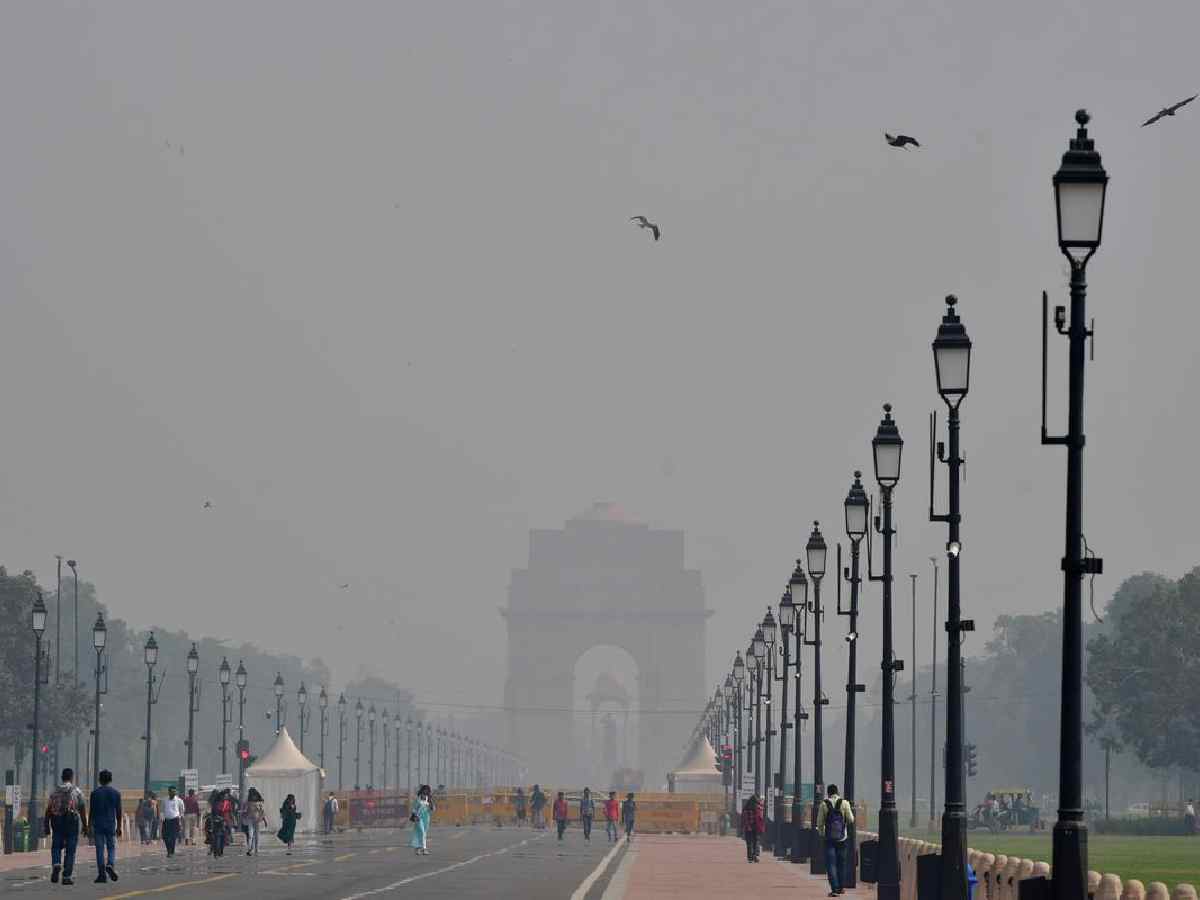
The Centre’s panel on Delhi-NCR’s air quality lifted restrictions under Stage 3 of the Graded Response Action Plan (GRAP) on Monday, following a decline in pollution due to favourable meteorological conditions, as per an official order.
Delhi’s average Air Quality Index (AQI) fell below 300, creating conditions conducive to pollutant dispersion. This prompted the Commission for Air Quality Management (CAQM) to withdraw the curbs under Stage 3 of GRAP.
Stage 3 of GRAP imposes a ban on non-essential construction activities. Schools up to grade V are required to transition to a hybrid learning mode, allowing parents and students to opt for online education wherever available.
Additionally, Stage 3 restricts the use of BS-III petrol and BS-IV diesel four-wheelers in Delhi and nearby NCR districts, with exemptions for persons with disabilities. It also prohibits non-essential diesel-operated medium goods vehicles with BS-IV or older standards from operating in Delhi.
During winter, the Delhi-NCR region enforces GRAP restrictions, which classify air quality into four categories: Stage I (Poor, AQI 201-300), Stage II (Very Poor, AQI 301-400), Stage III (Severe, AQI 401-450), and Stage IV (Severe Plus, AQI above 450).
Also Read: Delhi polls: Party manifestos fall short of addressing pollution
Adverse meteorological conditions, coupled with emissions from vehicles, paddy-straw burning, firecrackers, and other local pollution sources, contribute to hazardous air quality levels in Delhi-NCR during the winter season.
(With inputs from PTI)
Delhi government plans an underwater sonar survey of the Yamuna to assess silt accumulation, river…
Delhi’s unusual ‘Fat Dogs of Delhi’ contest crowned 75-kg community dog Gola, also known as…
Delhi records clear skies, 23.2 degrees Celsius minimum temperature; air quality remains in moderate category…
114 senior citizens in Delhi-NCR will receive 662 assistive devices worth over Rs 10 lakh…
Prohibitory orders restrict gatherings, protests and processions in New Delhi as police step up security…
Delhi Metro closes 11 stations, including Rajiv Chowk and Central Secretariat, as student unions and…
