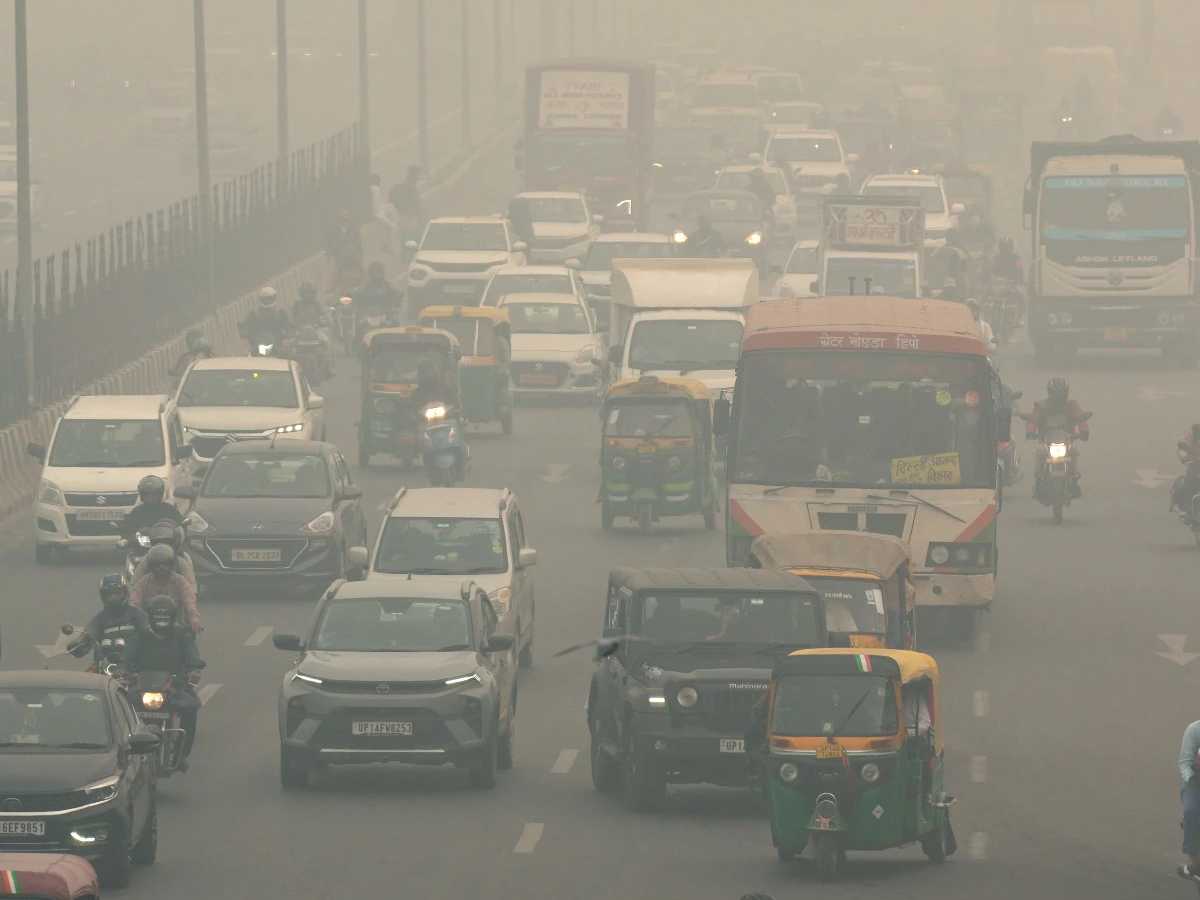
A report highlights that the pollution crisis in Delhi requires a significant change in agricultural waste management, with compressed biogas (CBG) emerging as a sustainable solution for addressing both stubble burning and vehicular emissions. According to the report by Nomura Research Institute Consulting & Solutions India, vehicles are responsible for 20% of Delhi’s pollution in the summer and stubble burning accounts for 16%. These figures increase to 30% and 23%, respectively, during winter.
The report further notes that during the peak stubble-burning season, emissions from biomass burning often exceed 30%. It adds that Delhi’s toxic air comes from multiple sources, including vehicle emissions, construction dust, biomass burning (such as paddy straw stubble burning), and industrial emissions.
Emphasising CBG’s role in combating air pollution, the report states that a CBG plant producing 10 tons of CBG daily requires 90 tons of paddy straw. By repurposing this biomass instead of burning it, around 270 kilograms of particulate matter (PM) emissions can be avoided every day.
The report also mentions that 67% of the PM from stubble burning in Punjab and Haryana is carried into the Delhi NCR region, significantly worsening the air quality in winter. Preventing paddy straw burning with a CBG plant producing 10 tons per day can eliminate 11,000 to 12,000 kilograms of PM emissions annually, which is equivalent to taking 150,000 to 175,000 petrol cars off the roads by switching to electric vehicles. This would contribute to cleaner and healthier air in Delhi. Furthermore, this is also comparable to removing approximately 25,000 high-polluting, older vehicles (pre-BS-VI) from circulation.
The benefits of CBG go beyond pollution control, as it is a renewable fuel that can directly replace fossil-based CNG and PNG in transportation, industrial, and household uses.
However, the report stresses that for CBG to be widely adopted and remain effective in the long term, a collaborative effort between the government, private sector, and farmers is essential. To effectively combat pollution in Delhi NCR using CBG, a mix of demand-side and supply-side measures is required.
Also Read: Yamuna pollution: Lethal cocktail of toxins and government apathy
On the supply side, the report suggests that additional policy incentives, infrastructure development, and financial support are needed to scale up CBG production. On the demand side, it calls for mandatory blending policies with penalties, as well as incentives for industries and the transport sector, to promote the adoption of CBG as a cleaner alternative to fossil fuels. (With inputs from PTI)
Coforge opened its first library in Noida in February 2024; it now claims a combined…
Of the 237 spa centres across 10 zones with valid MCD licences, the South East…
CTI chairman Brijesh Goyal said the Rahul Gandhi rally could affect wholesale and retail markets…
Established to mark the university’s 25 years, Jubilee Hall has witnessed generations of student life.…
Delhi inaugurates the 70th National School Games, hosting over 14,000 participants in 14 sports across…
Delhi High Court asked "Doosra" filmmakers to respond to Sourav Ganguly's plea over alleged violation…
