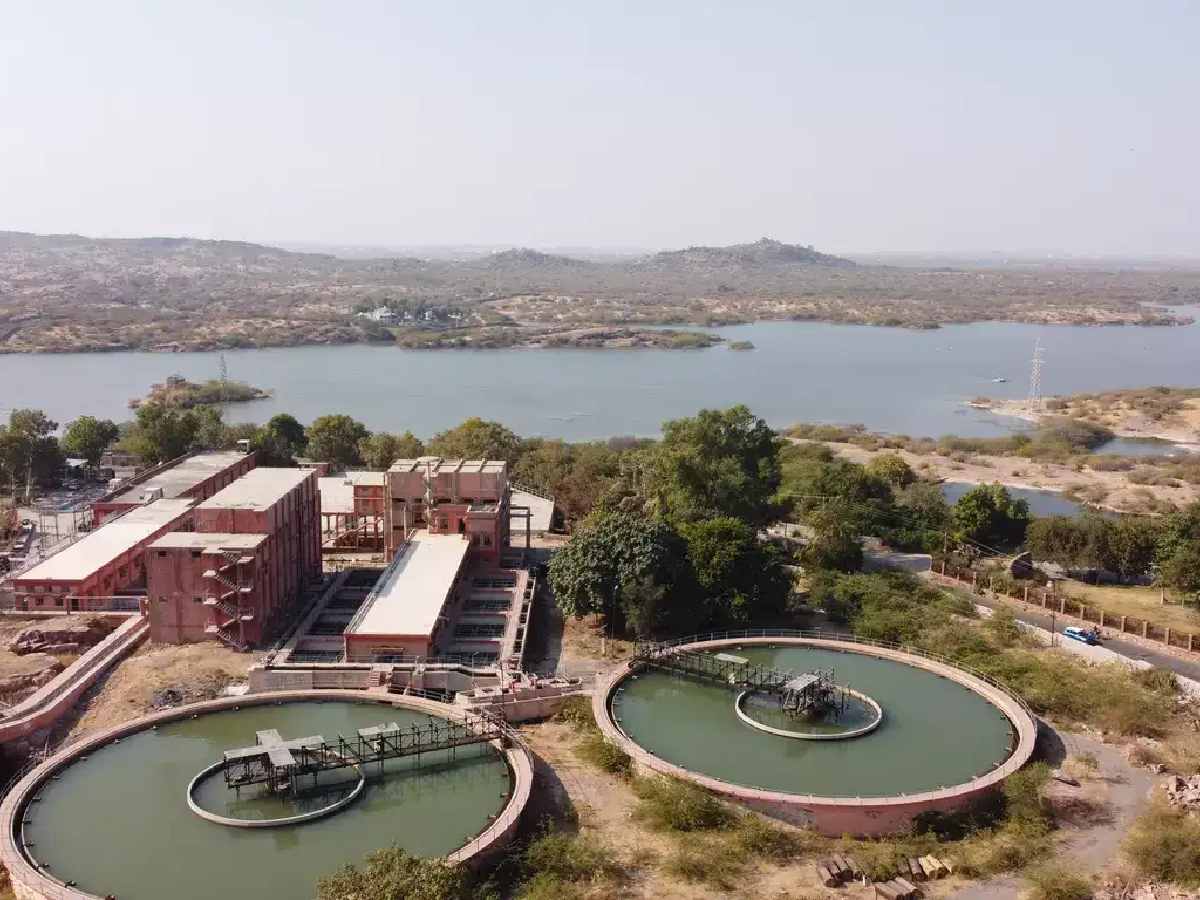
The Delhi government has approved a Rs 17,969-crore “One Zone, One Operator” project aimed at overhauling the city’s sewerage infrastructure and improving maintenance and complaint resolution, Water Minister Parvesh Verma said on Wednesday.
The decision was taken at a Delhi Jal Board (DJB) meeting, which also approved the Delhi Water and Sewer (Tariff and Metering) Regulations, 2026, replacing the existing 2012 regulations.
Under the new regulations, the government plans to introduce simplified and fairer billing provisions for non-functional, locked or inaccessible water meters and streamline the process for obtaining new water and sewer connections, Verma said.
Under the “One Zone, One Operator” model, Delhi will be divided into six zones, with a single operator in each zone responsible for the end-to-end management of sewer lines, manholes, pumping stations and complaints.
“For a Delhi resident, it should not matter which officer, division, or contractor is responsible for a sewer. If there is a problem, the system should know about it; someone should be responsible for fixing it, and the work should be tracked until its completion. That is the change we want to bring,” Verma said.
The system will shift from reactive, complaint-based repairs to planned preventive maintenance, with geo-tagged inspections and real-time monitoring through a central command centre, an official said.
It will also provide for 100 per cent mechanical and robotic cleaning of sewers.
The DJB currently maintains 11,212 kilometres of sewer lines, 6.68 lakh manholes and 145 pumping stations across 68 assembly constituencies.
The new model will also link payments to operators with their performance, with the aim of ensuring faster complaint resolution and reducing sewer overflows, Verma said.
The Board also approved a Rs 6,044.05-crore project for a comprehensive transformation of South Delhi’s water supply infrastructure.
The project will cover 247 square kilometres across 12 assembly constituencies and serve 2,44,381 domestic consumers.
Smart meters, bulk flow meters, and chlorine and pressure sensors will be installed under the project for real-time monitoring, accurate metering and water auditing.
The project aims to provide reliable continuous water supply, achieve zero contamination and reduce non-revenue water to below 15 per cent, Verma said.
The project is proposed to be funded through the Urban Challenge Fund of the Centre, which will contribute 25 per cent, the Delhi government with another 25 per cent and loans accounting for the remaining 50 per cent.
Non-revenue water refers to water supplied by the DJB that does not generate revenue, including water lost or stolen during transmission, officials said.
The DJB also approved the Rainwater Harvesting (RWH) Policy, 2026, which will be aligned with the recently approved Master Plan of Delhi 2047.
Under the new policy, buildings will be categorised based on their area and the ease with which water can be absorbed in the locality, officials said.
All government buildings will be brought under mandatory rainwater-harvesting compliance, with defined institutional responsibilities and a roadmap for implementation.
The policy also links rainwater harvesting with drainage and flood management, with the aim of addressing waterlogging and groundwater recharge together, officials said.
The DJB further approved a proposal to sanction individual water connections to domestic and non-domestic units wherever technically feasible and prescribed conditions are met, irrespective of the height of the building.
To reduce the discharge of untreated sewage into the Yamuna, the DJB is also constructing 13 new sewage treatment plants under projects funded through the National Mission for Clean Ganga, with an outlay of Rs 7,373 crore.
Delhi CM Rekha Gupta joined the 'Swachhta Hi Seva' drive at Kamla Nehru Ridge as…
Woman arrested in Delhi's Chanakyapuri for allegedly using her 14-year-old son to sell ganja; police…
Delhi recorded a minimum temperature of 24°C as the air quality remained in the moderate…
Bench directs district-wise teams within four weeks, vulnerability maps, audits of lighting and CCTV; police…
NDMC set up a panel to review employee transfers since January over alleged anomalies, freezing…
From rare vinyl and vintage Bollywood posters to Y2K fashion and reworked denim, discover five…
