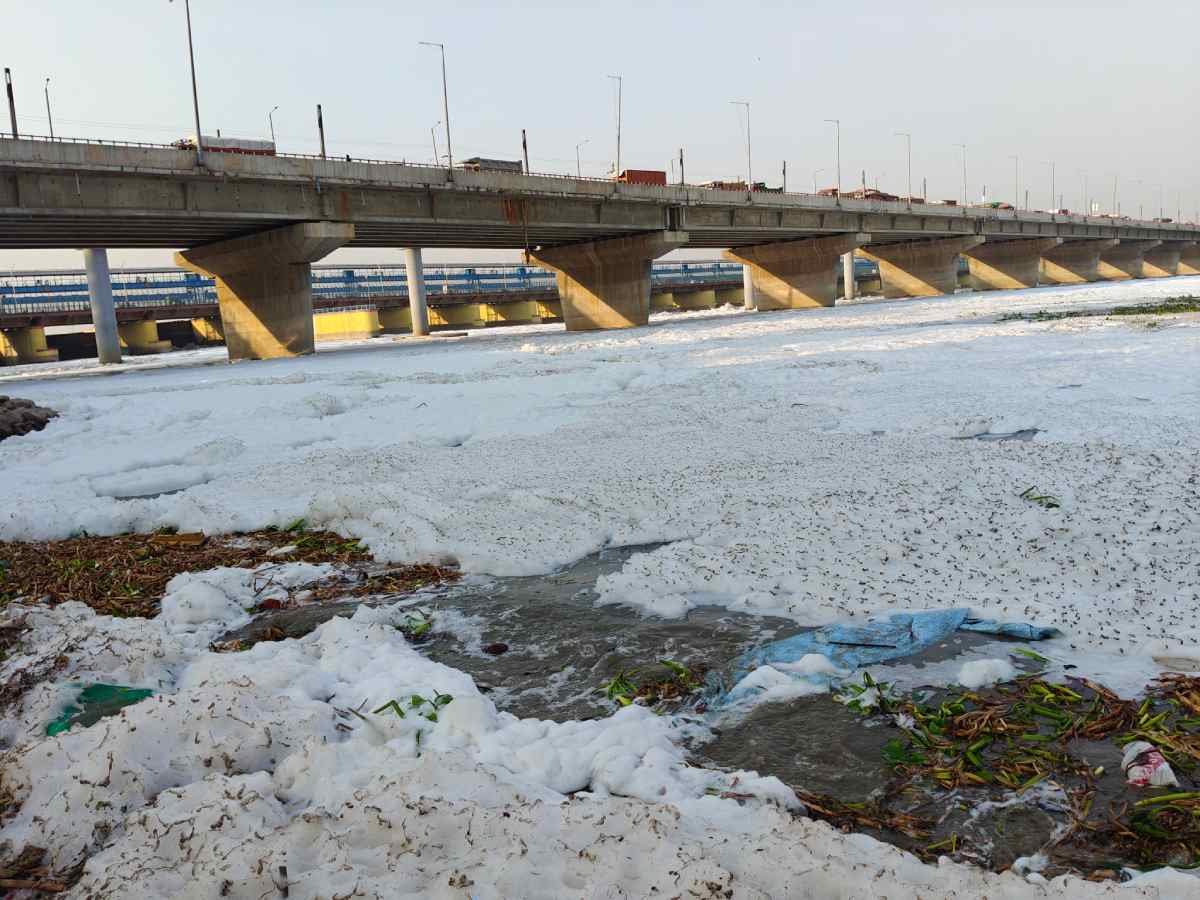
The Delhi government has begun a drone survey of smaller drains that discharge untreated waste into larger drainage systems as part of its efforts to clean the Yamuna, Water Minister Parvesh Verma said on Tuesday.
The city has 22 big drains, including the biggest Najafgarh drain, the Shahdara drain and the Supplementary drain, which empties into the Yamuna.
Verma informed reporters that there are around 300 sub-drains that end up in these large drains, adding to the overall pollution load.
“We are doing drone surveys of all the sub-drains that are adding waste to larger drains. It is important for us to know the origin, entire map and outflow of each of these drains for a comprehensive policy,” he said.
“After we identify the source and the full length of these drains, further steps like installation of D-STPs (decentralised sewage treatment plants) will be taken up,” Verma added.
The Irrigation and Flood Control Department and the Delhi Jal Board (DJB) are working on desilting the big drains and treating the waste flowing in them.
In areas where large STPs (sewage treatment plants) cannot be built due to space constraints, the DJB plans to install 40 D-STPs, ensuring localised waste management. Tenders have already been floated for this.
The Delhi government’s 45-point action plan to clean the Yamuna, announced earlier, includes completing the Interceptor Sewer Project (ISP) by the end of this year. The project involves connecting all drains to sewage treatment plants.
According to officials, interconnections between stormwater drains and sewerage systems affect the carrying capacity of stormwater drains, causing waterlogging.
Also Read: Plan to clean Yamuna by diverting Ganga water draws experts’ flak
“The survey will also help in delinking of sewerage lines and storm water drains, as well as the repair of faulty interconnections, which is crucial to the overall reduction in pollution,” an official said.
Beyond infrastructure development, the government is focusing on the Najafgarh drain, once the Sahibi River, which has become the largest source of pollution entering the Yamuna.
In Delhi, the Yamuna flows for 52 kilometres, of which a critical 22 km segment — from Wazirabad to Okhla — is highly polluted and has become the focal point of multiple planning and policy efforts.
Officials say the drain now carries approximately 800 MGD (million gallons per day) of untreated sewage into the Yamuna.
At least 50 cases have already been reported this month; NCPCR guidelines mandate help desks,…
DMRC says zero reduction in train trips, attributes decline to security measures and public apprehension…
A Delhi court denied bail to a former DU professor accused of raping a student,…
Delhi Police charged seven dhaba workers in the fatal beating of a Manipuri musician who…
Seven Delhi STPs failed DPCC standards in September, dumping high levels of faecal coliform and…
AISA chief Neha Bora petitioned the Delhi HC against a police notice requiring a peace…
