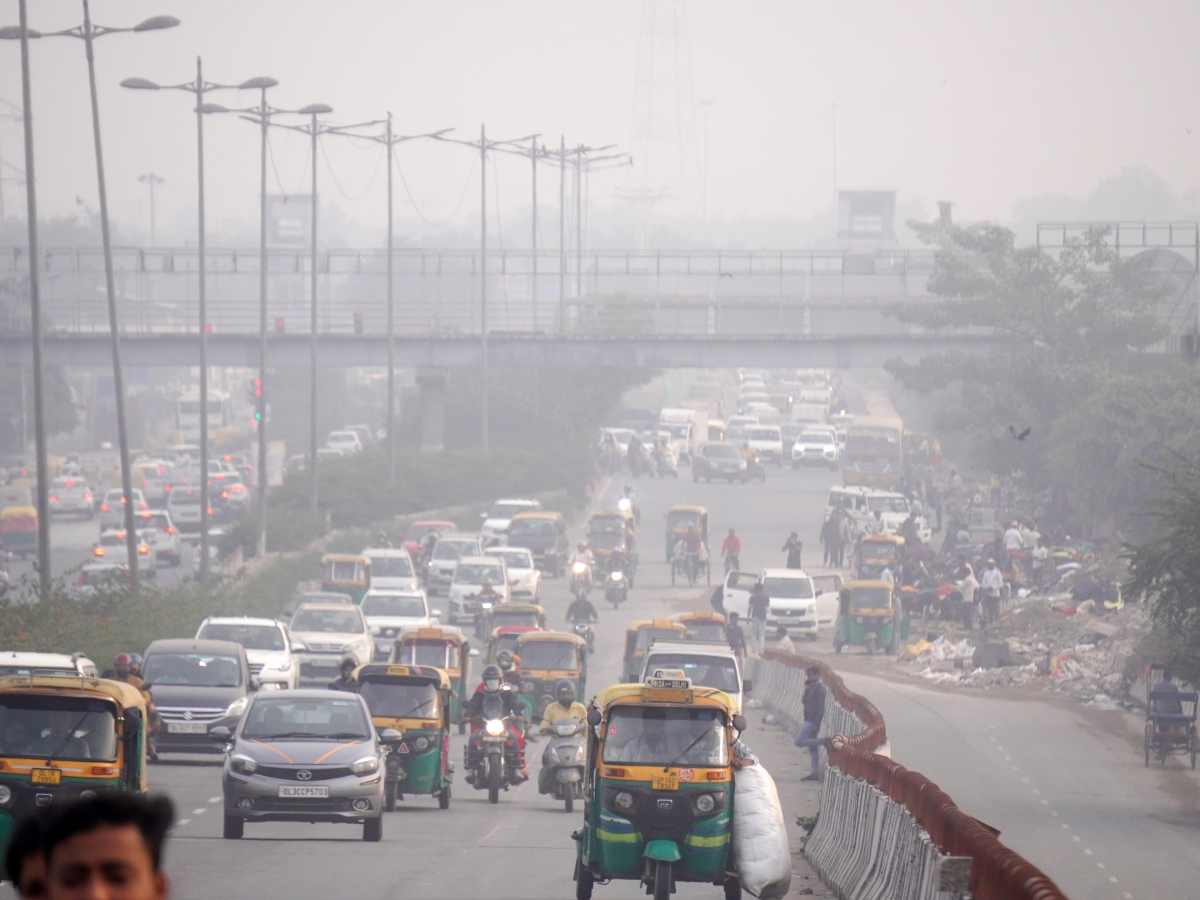
Delhi experienced a chilly morning on Saturday as the minimum temperature dropped to 13.4 degrees Celsius, slightly below the season’s average.
At 8:30 AM, the relative humidity was recorded at 63 per cent. The India Meteorological Department (IMD) has predicted a mainly clear sky throughout the day, with the maximum temperature expected to touch 30 degrees Celsius.
The city’s air quality remained in the ‘moderate’ category, with the Air Quality Index (AQI) recorded at 163 at 9 AM. As per the Central Pollution Control Board (CPCB), an AQI between 0 and 50 is classified as ‘good’, 51 to 100 as ‘satisfactory’, 101 to 200 as ‘moderate’, 201 to 300 as ‘poor’, 301 to 400 as ‘very poor’, and 401 to 500 as ‘severe’.
Also Read: A canvas of climate: Delhi Street Art unveils weather-themed murals
On Friday, the IMD reported a minimum temperature of 10.2 degrees Celsius, with humidity levels fluctuating between 13 and 63 per cent. The weather department had forecast mist in the morning on Saturday, accompanied by strong surface winds during the day. The maximum and minimum temperatures were expected to be around 31 and 12 degrees Celsius, respectively.
Meanwhile, after a week of ‘moderate’ air quality, Delhi’s AQI worsened on Friday evening, reaching 202, which falls under the ‘poor’ category, according to CPCB data.
The CPCB classifies AQI levels as follows: 0-50 (‘good’), 51-100 (‘satisfactory’), 101-200 (‘moderate’), 201-300 (‘poor’), 301-400 (‘very poor’), and 401-500 (‘severe’).
(With inputs from PTI)
BNSS caps custody at 24 hours and requires production before a Magistrate; force permitted only…
An SEM court reserved its order on extending the judicial custody of CJP leaders Saurav…
Delhi recorded its first 'poor' air day of the season on Wednesday as AQI hit…
Stage I of GRAP was invoked later this year in Delhi due to govt's preventive…
DDA plans to resume tethered hot air balloon rides at Baanseera park from Nov 14,…
NDMC is consulting RWAs and traders on draft 2026 property tax bye-laws, seeking feedback on…
