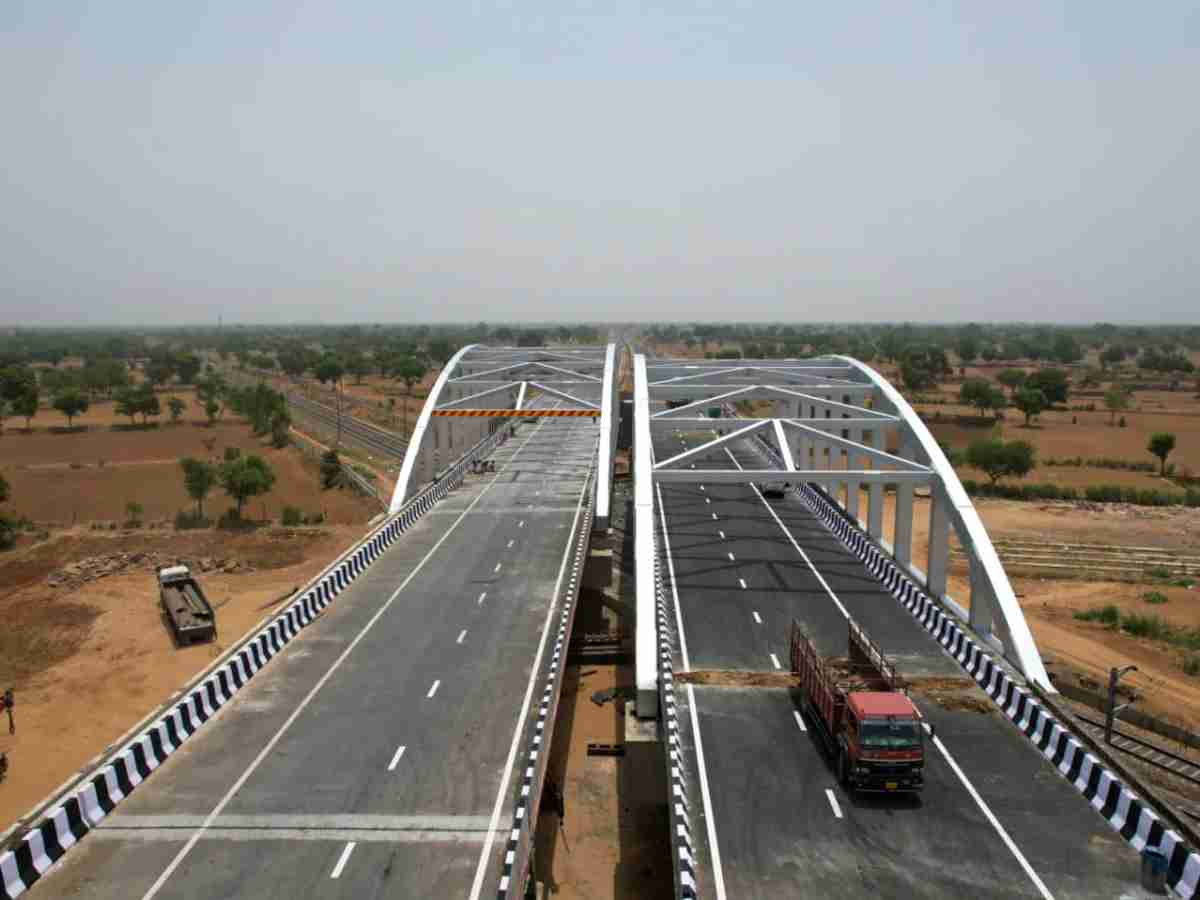
Delhi: Jaipur — A major milestone in highway connectivity was achieved on Wednesday with the commencement of the trial run on the Bandikui-Jaipur Expressway, a crucial link connecting the Delhi-Mumbai Expressway to Rajasthan’s capital. The newly built roadway is expected to significantly cut travel time between Jaipur and Delhi, reducing the journey to just 2.5 to 3 hours.
The trial operation began at 8 a.m. and will continue for ten days. During this period, vehicles can use the expressway free of cost, as toll collection has been temporarily suspended. Officials from the National Highways Authority of India (NHAI) said the trial phase is being used to evaluate road quality, test support systems, and ensure safety standards before commercial operations officially begin.
Also read: Struggles behind the dream: Indian students abroad face reality checks
On day one, the road was opened to regular traffic without restrictions, allowing motorists a firsthand experience of the expressway’s speed and convenience. Authorities also activated the Khuri Interchange, which facilitates traffic flow from the Manoharpur-Kauthun highway. If operations continue smoothly, more interchanges are expected to be brought into use in the coming days.
Key Highlights of the New Link Road
The Bandikui-Jaipur Expressway spans approximately 67 kilometres and features a four-lane, access-controlled design aimed at providing uninterrupted, high-speed travel. The stretch starts from Bandikui in Rajasthan’s Dausa district and ends near Jaipur. Once fully operational, the expressway will reduce travel time between Bandikui and Jaipur to just 25–30 minutes, compared to over an hour previously.
With a design speed limit of 120 km/h, the expressway offers a rapid alternative for commuters and logistics operators. The roadway has been constructed ahead of schedule, underscoring the push for fast-tracked infrastructure under the Bharatmala project.
Additionally, the expressway’s integration with the Delhi-Mumbai Expressway is expected to dramatically cut travel times across the region. For instance, the journey from Gurugram to Bandikui will now take approximately three hours, a substantial improvement over current travel times.
Strategic Connectivity Points
The expressway is being connected to multiple key routes, including:
Delhi-Mumbai Expressway
Manoharpur-Kauthun Highway (via Khuri Interchange)
Additional interchanges, which will be opened soon based on performance during the trial run
These connections aim to improve traffic flow not just between Jaipur and Delhi but also across important freight and passenger corridors in northern and western India.
Also read: Delhi University: NCWEB opens UG admissions offering over 15,000 seats
Cost and Construction Details
The expressway, which measures 66.91 km, has been built at an estimated cost of Rs 1,368 crore, according to NHAI officials. Designed for high-speed transit, the expressway includes features such as limited entry and exit points, robust security infrastructure, and advanced signage for safer travel.
During the trial run, most vehicles are permitted to access the road. However, tractors, two-wheelers, and certain restricted vehicle categories are currently not allowed to ensure safety during the initial testing phase.
Toll Collection Plans and Expected Tariffs
Preparations for toll operations have already been finalised. Project Director B.S. Joiya from NHAI’s Dausa Unit confirmed that toll collection will commence as soon as approval is granted by higher authorities.
Tentative toll charges for private cars are as follows:
Rs 150 for the Bandikui to Jaipur stretch (66.91 km)
Rs 550–Rs 560 for the combined Bandikui-Jaipur-Sohna section
Rs 130 for the Sohna to Gurugram six-lane highway
Rs 680–Rs 690 total toll from Jaipur to Delhi
These rates aim to ensure cost-effective access to high-speed travel while funding ongoing maintenance and operations.
Impact on Travel and Regional Development
The expressway is poised to become a game-changer for commuters, tourists, and freight operators. By drastically reducing travel time between major hubs like Jaipur, Gurugram, and Delhi, the route is expected to decongest older national highways and stimulate economic activity along its corridor.
The new road infrastructure is also likely to benefit surrounding towns and rural areas by improving connectivity and attracting commercial investment. With improved logistics and reduced transit time, the expressway may also boost industries such as tourism, warehousing, and transport.
Alankrita Sahai on moving beyond pageants and modelling, finding substance in diverse roles and the…
A house under renovation collapsed in east Delhi's Tahirpur on Tuesday, killing one person and…
Police arrested two injured criminals after a Paharganj gunfight. The duo was wanted for a…
Delhi LG directed NSUT to develop tech solutions for civic issues like traffic, sanitation, and…
A suspected thief was killed after locals allegedly thrashed him and two others on suspicion…
Delhi Traffic Police issued 634 challans and removed 192 roadside carts and stalls during a…
