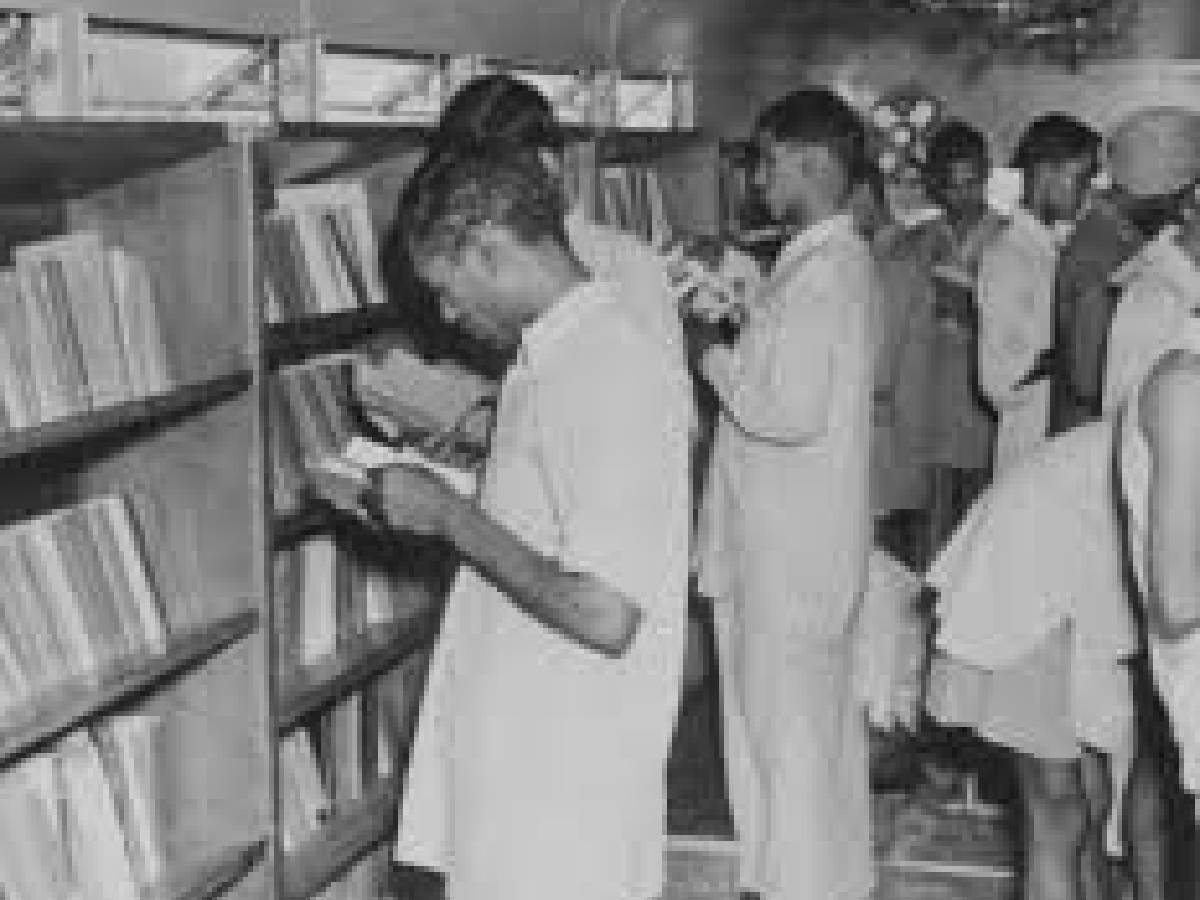
For generations of Delhi’s readers, the Delhi Public Library (DPL) has provided access to books and reading spaces across the Capital. Established on October 27, 1951, the institution marked its 75th anniversary on October 27, 2026.
The story of the DPL began with a modest library in Chandni Chowk, near the Old Delhi Railway Station. Over the decades, it grew into a network of libraries serving different parts of the city, with branches in areas such as Sarojini Nagar, Patel Nagar and Karol Bagh.
Today, the library has a collection of more than 1.4 million books covering a wide range of subjects. Its holdings include books in Hindi, English, Urdu, Punjabi and several other Indian languages. Readers visit its branches to read newspapers, consult reference books, prepare for examinations and borrow books.
A NETWORK BEYOND BOOK LENDING
The DPL has developed an extensive network comprising regional libraries, branches and sub-branches, rehabilitation colony libraries, community libraries and Braille libraries. Its services are free, making books and library facilities accessible regardless of a reader’s financial circumstances.
Book circulation remains its principal activity, but the institution’s work extends beyond lending. It organises lectures, debates, exhibitions and other cultural and educational programmes, as well as activities for children to encourage reading from an early age.
The library also provides books and reading materials to visually impaired readers and prison inmates, extending its services to groups that may face additional barriers to accessing educational resources.
Also Read: City markets present uneven picture of pre-Deepavali clean-up
LIBRARIES ON WHEELS
An important chapter in the DPL’s history was the introduction of its mobile library service in the early 1960s. Mobile library vans brought books directly to neighbourhoods across the capital, allowing residents to borrow them without having to travel to a permanent library.
One such van used to park in Shakti Nagar, in front of Government School No. 1, near Nagia Park. The house of Kul Anand Bharti, then a Municipal Corporation councillor and later a minister in the Delhi government, stood opposite the spot.
Writer and architect Ashok Goel recalls how residents would gather around the van when it arrived to select books. Borrowing them required a special pink membership card. Applicants needed the signature of a gazetted government officer or a municipal councillor to obtain one.
Bharti helped residents meet this requirement. Those who approached him with an application could generally obtain his signature, making it easier for them to become members and borrow books.
Another mobile library regularly visited the market area near Sector 4 in RK Puram. It served readers from Sectors 4 and 5 as well as Munirka village. The service was discontinued in the eighties, but it remains part of the reading experiences of residents who used the vans.
BRANCHES THAT SHAPED READERS
The DPL’s branches have played a critical role in shaping individual reading habits. Harish Chandra Yadav, a senior journalist, credits the Patel Nagar branch with helping him develop his interest in reading. He began visiting the library in the early 1980s, mainly to borrow biographies, and recalls that the staff was helpful.
Similar experiences unfolded at other branches.
The Sarojini Nagar branch served readers from neighbouring localities, including Kidwai Nagar, Laxmibai Nagar and Safdarjung Enclave. Author and drama critic Anil Goel recalls borrowing books from the branch over several decades. For him, the library offered access to books and opportunities to explore different subjects and literary works.
Also Read: City markets present uneven picture of pre-Deepavali clean-up
LIBRARIES STILL MATTER
Public libraries continue to serve a purpose even as reading habits and access to information change. Professor Harmeet Singh, former principal of Khalsa College, says: “In an age dominated by smartphones, social media and digital entertainment, public libraries continue to have a special relevance. They offer something that digital platforms often cannot: a quiet environment for concentration, the pleasure of browsing through physical books and opportunities for people to discover literature beyond their usual interests.”
As the DPL completes 75 years, its history reflects the development of a public library network that has served readers across Delhi. Its branches, mobile library service and initiatives beyond book lending demonstrate how a public institution can make reading and learning accessible to different sections of society.
Delhi poll body to issue fresh forms for 47.56 lakh excluded voters in re-verification drive…
Delhi Police will file a 500+ page chargesheet within a week in the Aastha Kunj…
3-storey building collapses in Old Delhi's Hauz Qazi; toll rises to 3 as rescue ops…
Lajpat Nagar appears relatively clean, but garbage persists in Chandni Chowk and Sadar Bazar; traders…
South Delhi Kia showroom fire injures 7 and guts cars; 12-15 rescued as 10 fire…
Massive fire guts South Delhi's Kia showroom in Saidulajab; 10 fire tenders deployed and 2…
