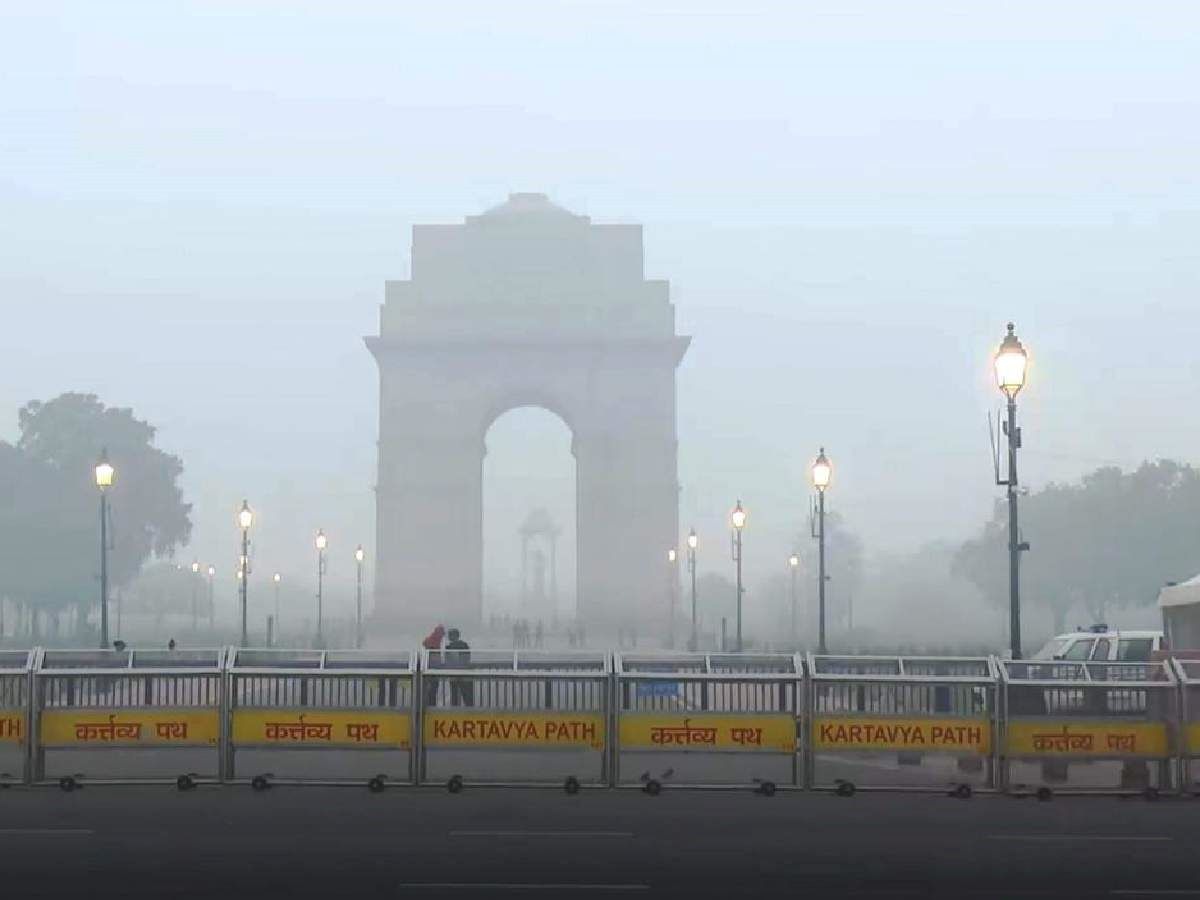
Delhi woke up to ‘very poor’ air on Tuesday, with the city’s AQI touching 344 and four stations reporting ‘severe’ pollution levels, the Central Pollution Control Board (CPCB) data showed.
Out of 37 monitoring stations, Bawana (426), Wazirpur (412), Jahangirpuri (418) and Vivek Vihar (402) were in the ‘severe’ range.
According to the forecast, the air quality is expected to remain in the ‘very poor’ category over the next few days.
An AQI between 0 and 50 is considered “good”, 51 to 100 “satisfactory”, 101 to 200 “moderate”, 201 to 300 “poor”, 301 to 400 “very poor” and 401 to 500 “severe”, as per the CPCB classification.
Also Read: ED raids Al Falah University, linked persons in Delhi Red Fort blast case
On the weather front, the minimum temperature settled at 9.6 degrees Celsius, 2.7 notches below the season’s average, and the maximum temperature is likely to hover around 26 degrees Celsius.
Meanwhile, the Decision Support System (DSS), a mechanism used by the Indian Institute of Tropical Meteorology (IITM), Pune, for air quality analysis and forecast, showed that vehicular emissions contributed around 18 per cent to the city’s pollution on Monday, while stubble burning accounted for 8.2 per cent.
For Tuesday, these parameters are projected to comprise 17.9 per cent and 8.3 per cent, respectively, of Delhi’s pollution.
Satellite imaging detected 95 farm fire incidents in Punjab, 47 in Haryana, and 461 in Uttar Pradesh on Sunday.
According to the Air Quality Early Warning System of the Ministry of Earth Sciences, the city’s AQI is likely to remain in the ‘very poor’ range for the next six days.
Elected to the Delhi Golf Club general committee, Mansher Singh says he wants to build…
A $780 million market built on pavements, where the pleasure of reading meets the price…
Supreme Court advocate Abhishek Pawar alleges women were denied washroom access for seven to eight…
Each day of closure costs shops in Khan Market and Connaught Place between Rs 60,000…
Delhi generates nearly 15,000 tonnes of waste daily, prompting the government to deploy 1,000 mechanical…
Delhi Police has issued an NOC for the Congress rally at Ramlila Maidan on November…
