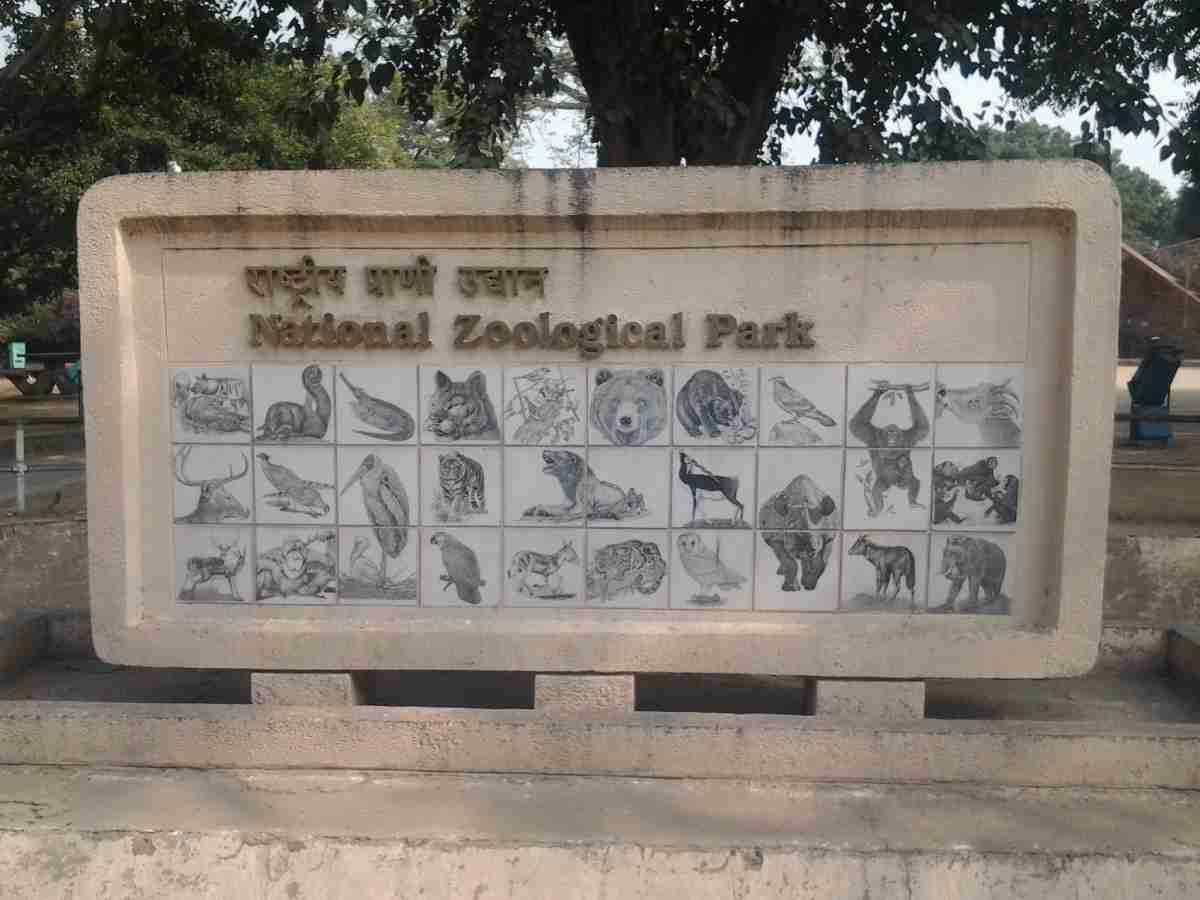
National Zoological Park Delhi
The National Zoological Park in Delhi witnessed a significant milestone on Sunday with the birth of four Asiatic lion cubs — the first successful breeding of the endangered species at the zoo since 2009. However, the moment of celebration was marred by the death of one cub and the fragile condition of another, currently under veterinary care.
Officials confirmed on Tuesday that one of the cubs, born underdeveloped, died a day after birth. Another showed signs of weak health on Monday evening and was moved to the zoo’s veterinary hospital for hand-rearing and close monitoring.
“The cub is being fed a specially formulated milk designed for feline species and is responding positively to treatment,” a senior zoo official said.
The remaining two cubs are healthy and continue to stay with their five-year-old mother, Mahagauri, under round-the-clock observation. This was her first litter, making the situation especially delicate. Zoo director Sanjeet Kumar said CCTV surveillance is in place to ensure the wellbeing of the lioness and her cubs.
Mahagauri and the cubs’ father, Maheshwar, were brought to Delhi from Gujarat’s Junagadh in 2021 as part of a breeding programme aimed at conserving the endangered species. The Asiatic lion is listed as ‘Endangered’ on the International Union for Conservation of Nature (IUCN) Red List and is found only in the Gir Forest region of Gujarat, which as of the last 2020 census is home to 674 individuals.
Also Read: 609 water birds of 19 species recorded in Delhi Zoo census exercise
The last successful birth of lion cubs at Delhi Zoo occurred in May 2009, when a lioness gave birth to two cubs.
While the new births are a hopeful sign, the zoo has come under scrutiny recently due to a series of animal deaths. This month alone, a Thamin deer, a Gaur calf, and an Albino Blackbuck have died. In March, a female Dhole passed away, and February saw the deaths of a 15-year-old leopard, a 22-year-old jaguar, and a 15-year-old nilgai.
In the midst of these losses, the birth of the lion cubs — along with other recent big cat births such as two Royal Bengal tiger cubs in May 2023 and three white tiger cubs in August 2022 — offers a ray of optimism for the zoo’s conservation efforts.
Established in 1959, the National Zoological Park currently houses 95 species of animals and birds. It received its first lion pair in 1969 and has since played a modest role in the conservation of India’s native big cats.
Meanwhile, the national effort to protect the Asiatic lion continues. In March, Prime Minister Narendra Modi announced the start of the 16th Asiatic lion population estimation exercise, scheduled for May. These surveys are conducted every five years, with the previous one held in 2020.
Once on the brink of extinction, the Asiatic lion was moved from ‘Critically Endangered’ to ‘Endangered’ status in 2008 thanks to sustained conservation efforts — a designation that underscores both progress made and the fragility that remains.
Protests against CEC Gyanesh Kumar over the SIR of electoral rolls started on October 10.…
Delhi Police books journalist under SC/ST Act for casteist remarks against ACP during a Jantar…
Hindu College staff protests against principal, demanding DU takeover over financial and admission irregularities and…
Delhi Cabinet approves Industrial Policy 2026 with Rs 1,000 crore for top sectors to turn…
Delhi launches DJB command centre with GPS tanker tracking and AI tools to manage water…
ABVP protests at JNU against Congress MP Akoijam over sexual harassment claims, demanding the party…
