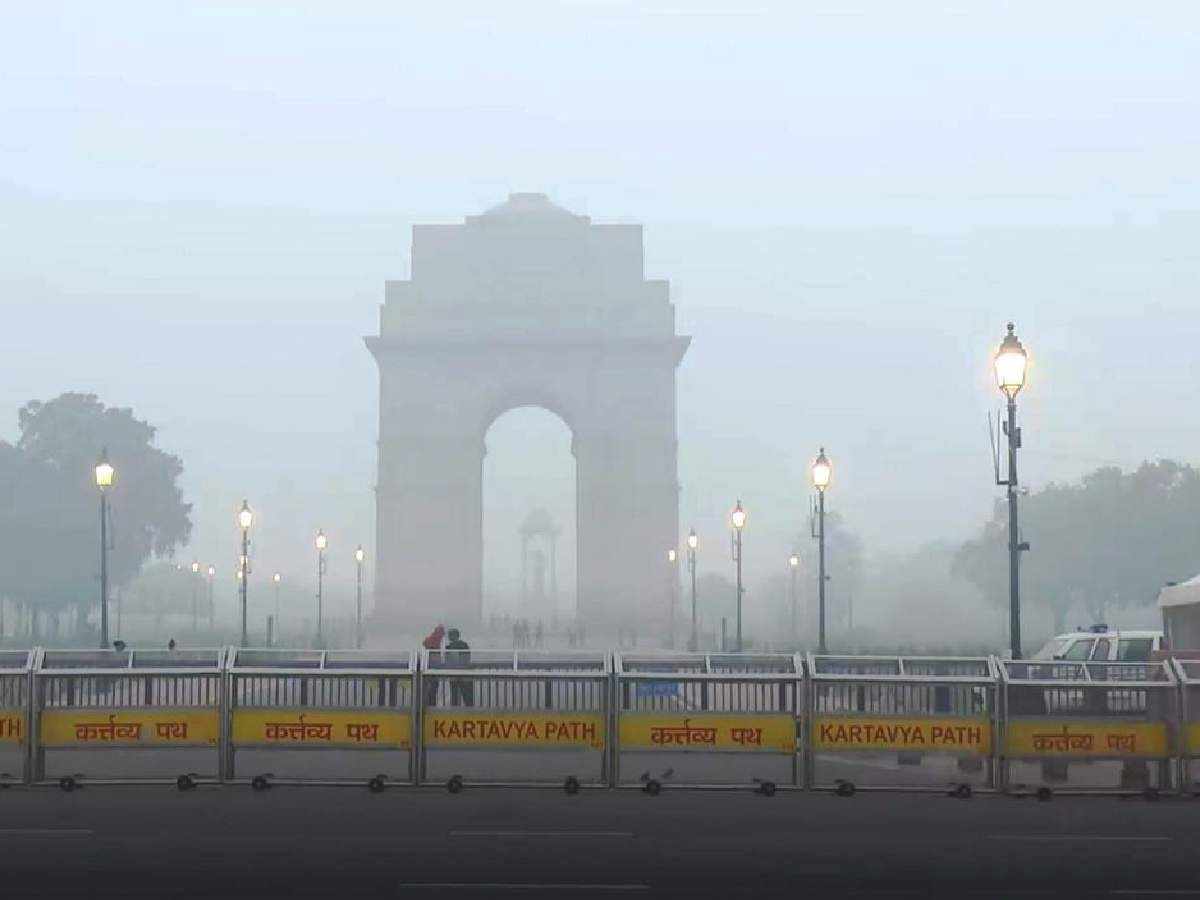
The air quality in the national capital was categorised as “severe” on Friday morning, with an AQI of 433, according to the Central Pollution Control Board (CPCB). An AQI ranging from 0-50 is considered ‘good’, 51-100 ‘satisfactory’, 101-200 ‘moderate’, 201-300 ‘poor’, 301-400 ‘very poor’, and 401-500 ‘severe’.
Delhi recorded a minimum temperature of 7.5 degrees Celsius, which was 2.5 degrees above the seasonal average, as per the India Meteorological Department (IMD). The humidity level at 8:30 a.m. stood at 100%.
On Thursday, the Delhi government announced a “perpetual ban” on the manufacture, sale, and use of firecrackers, including online sales, through an official order. Principal Secretary (Environment) A K Singh invoked the ban under the Environment (Protection) Act, 1986. The ban encompasses the manufacturing, storage, sale, and bursting of all types of firecrackers, including those sold online.
This decision comes as Delhi continues to battle hazardous air pollution, prompting restrictions like a ban on construction activities and the entry of trucks. “Delhi experiences severe air pollution, especially during the winter, with PM2.5 and PM10 levels often exceeding prescribed air quality standards,” the order stated.
Also Read: False promises, freezing nights: Delhi shelter board’s claims exposed
Delhi has been designated as an Air Pollution Control area under Section 19(1) of the Air (Prevention & Control of Pollution) Act, 1981. Since 2020, the Delhi government has imposed a complete ban on firecrackers during the festive season to curb air pollution. However, past trends of air quality deterioration between October and January have prompted a more comprehensive ban on manufacturing, storage, sale (including online platforms), and use of firecrackers.
The Supreme Court recently directed the Delhi government to take effective steps to ensure the firecracker ban is fully enforced and to consider implementing a perpetual ban. The latest order pointed out that earlier bans, limited to specific periods, were not entirely effective due to prior manufacturing and storage activities, leading to the establishment of a supply chain.
The government emphasised that a year-round ban under the Environment (Protection) Act, 1986, would send a strong message to stakeholders and facilitate better enforcement. The Delhi Police and Divisional Commissioner have been tasked with ensuring strict implementation of the directives. Violations of the order will be punishable under Section 15 of the Environment (Protection) Act, 1986.
Meanwhile, the IMD predicted partly cloudy skies for the day, with the maximum temperature likely to reach 24 degrees Celsius.
(With inputs from PTI)
CP protests hit businesses severely, leading to zero sales on some days during festive season;…
Delhi Police serves notice to CJP's Abhijeet Dipke, barring Connaught Place march as over 6,000…
CJP founder Abhijit Dipke defends 'Lehra Do Tiranga' march, saying govt curbs hurt businesses, not…
Fire breaks out at a private office in Kalkaji, Delhi. Eight fire tenders rushed to…
Supreme Court adjourns 2020 Delhi riots UAPA case bail plea of accused Athar Khan for…
NSUI president Vinod Jakhar was detained during a protest demanding an FIR over alleged assault…
